
Dutch Landscape — History & Facts
Can beauty exist without sorrow? In Dutch Landscape, the interplay of light and shadow whispers the answer, evoking a poignant truth that resonates through the ages. Focus first on the horizon, where soft pastels blend seamlessly with the rich greens of the fields, inviting the viewer into a realm that feels both tranquil and transient. Notice how the gentle ripples of the water reflect the sky’s palette, creating a delicate balance between earth and sky. Roelofs’ brushwork captures the fleeting light of the day, each stroke revealing a harmony that distracts from the passage of time, yet acknowledges its presence. As you delve deeper, consider the lone figure wandering through the landscape—an emblem of solitude amid the expansive beauty.
This solitary presence serves as a bridge between the viewer and the expanse, suggesting a connection to nature that is both intimate and isolating. The vibrant fields exude life, yet they are tinged with an undercurrent of melancholy, urging us to confront the dichotomy of joy and loss inherent in life’s fleeting moments. Willem Roelofs painted this piece during a time of personal and artistic exploration in the 19th century. Living in the Netherlands amidst an evolving art scene, he was influenced by the burgeoning Romantic movement that celebrated the sublime in nature.
This was a period when artists began to emphasize emotional depth and the beauty of the natural world, and Roelofs’ landscapes would come to reflect both the external beauty and internal complexities of existence.
More Artworks by Willem Roelofs
Browse all →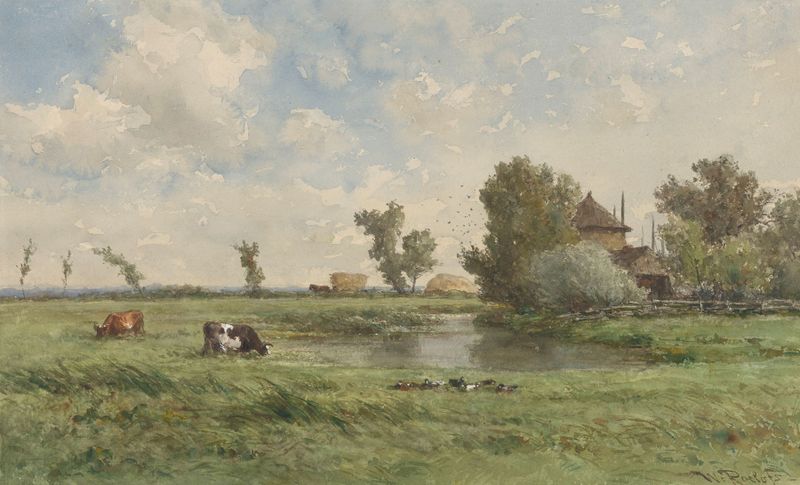
Weiland met koeien
Willem Roelofs
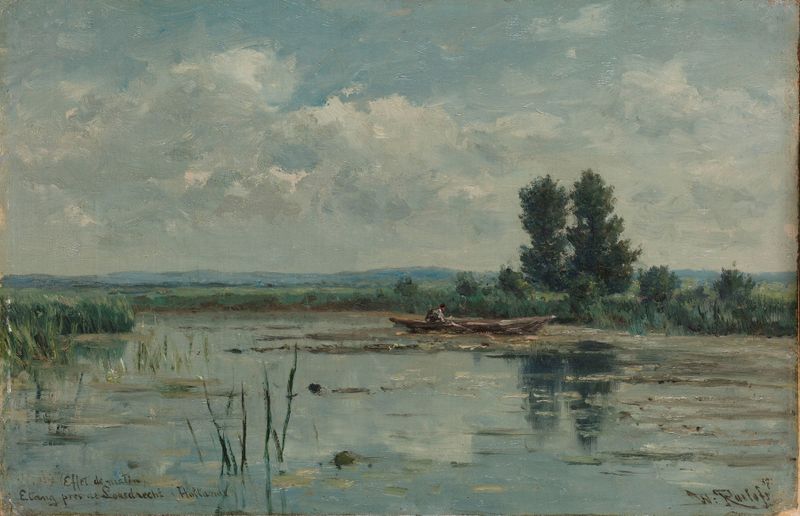
Lake near Loosdrecht
Willem Roelofs
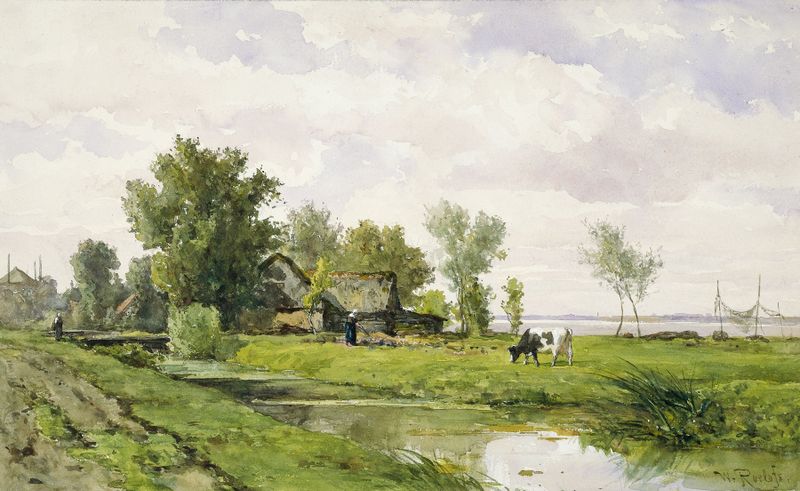
Farmhouse by a Ditch
Willem Roelofs
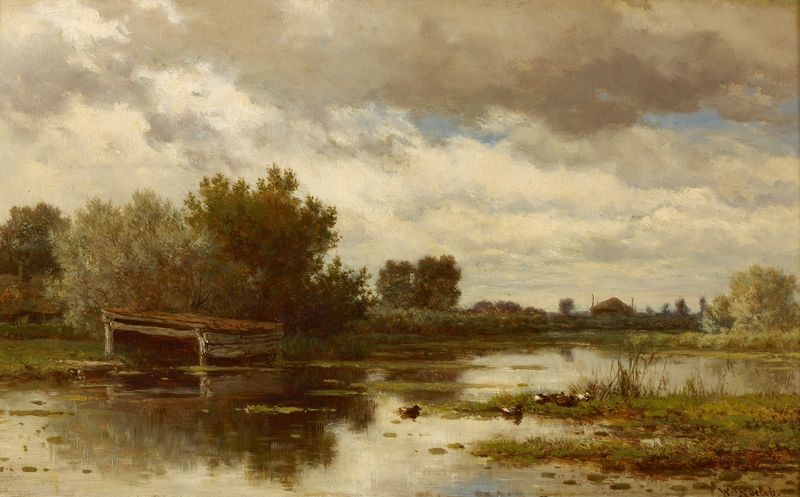
Landschap met moeras
Willem Roelofs
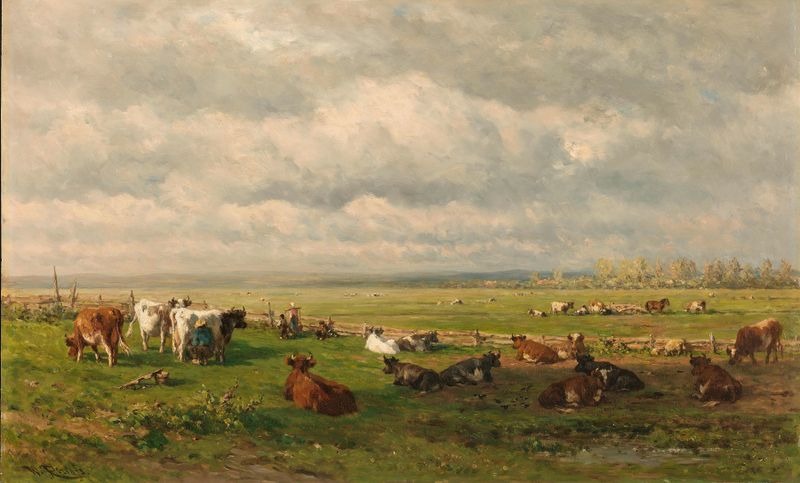
Meadow Landscape with Cattle
Willem Roelofs
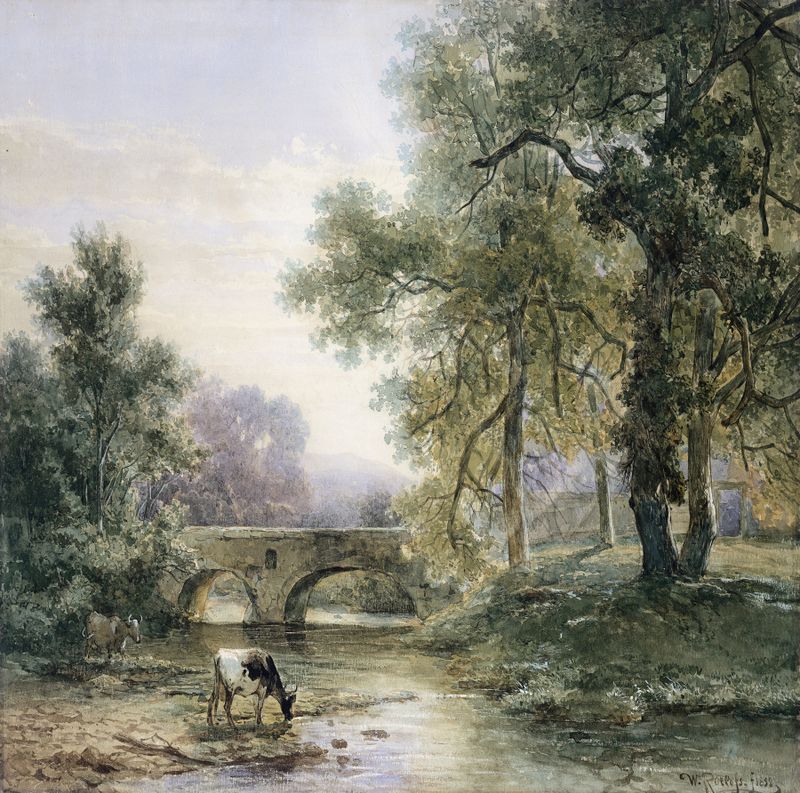
Boomrijk landschap met stenen brug over een rivier
Willem Roelofs
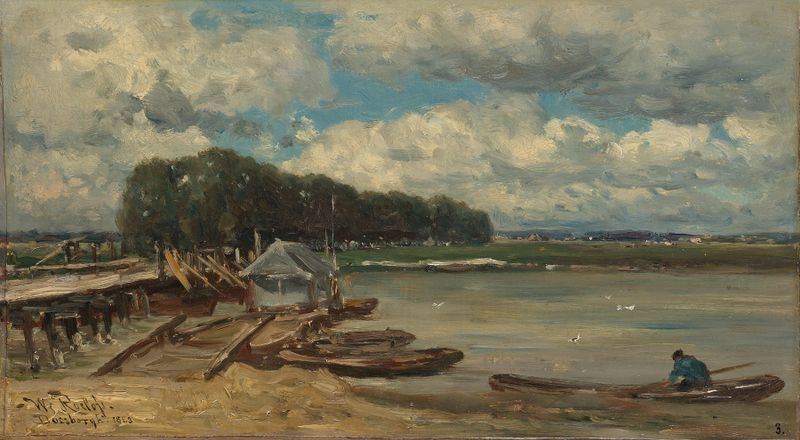
De brug over de IJssel bij Doesburg
Willem Roelofs
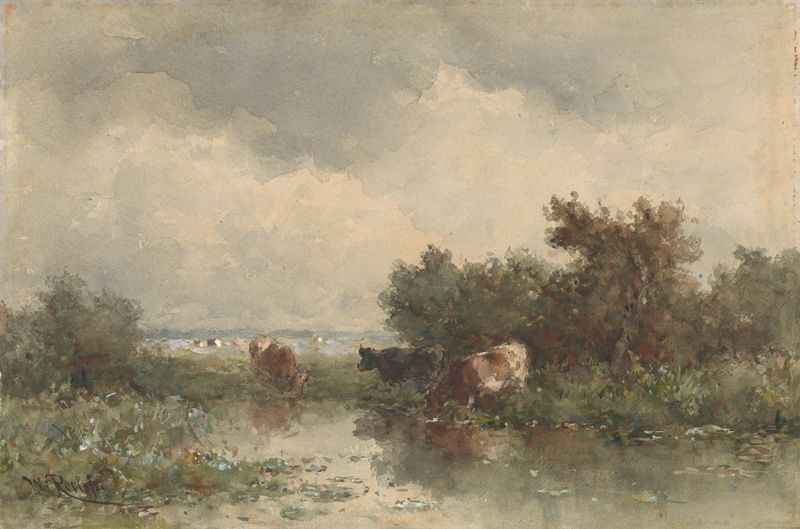
Drie koeien aan een plas
Willem Roelofs
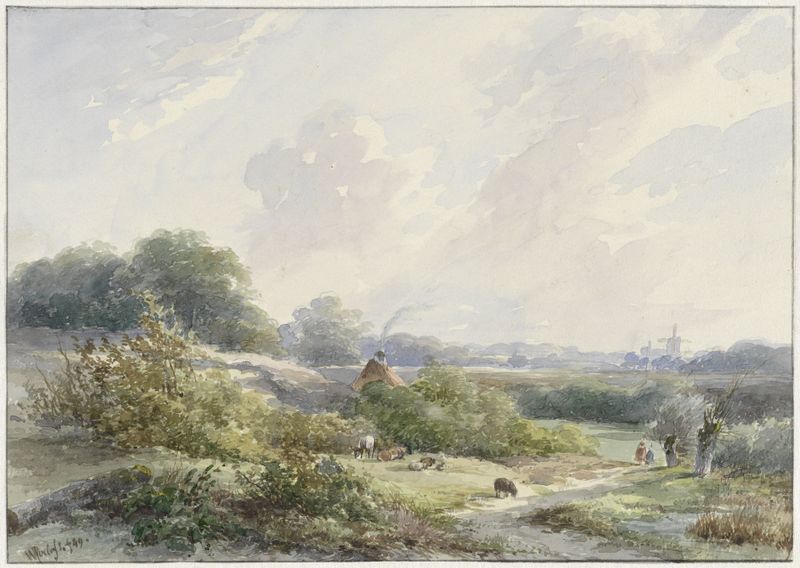
Landschap met boerderij en vee
Willem Roelofs
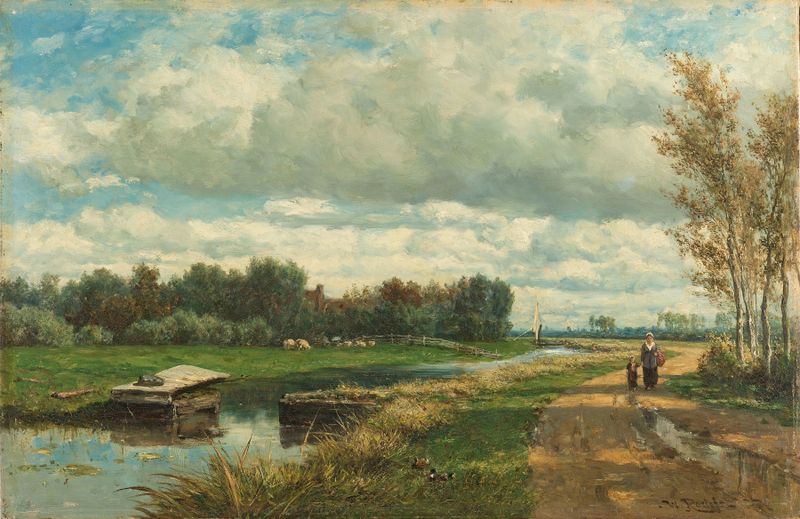
Landscape in the Environs of The Hague
Willem Roelofs





