Eine Blume Tritt Auf (A Flower Performs) — History & Facts
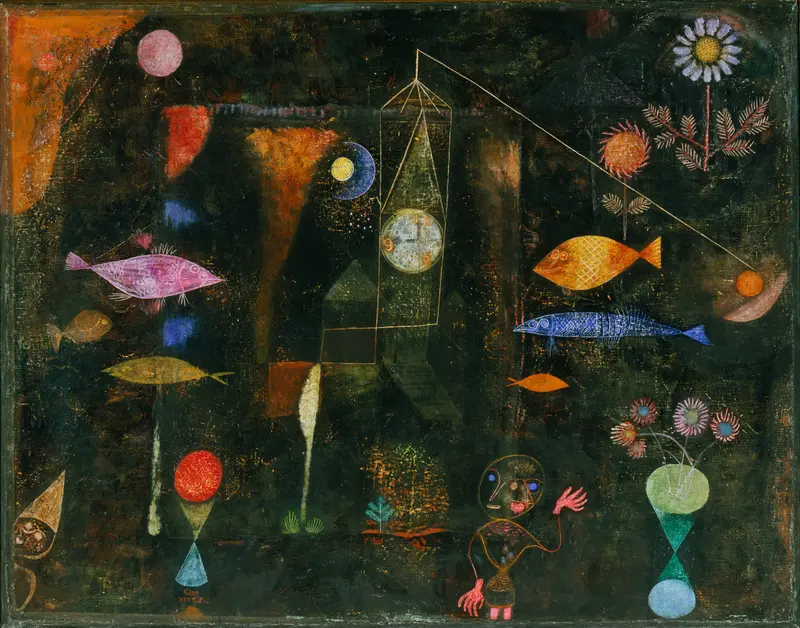
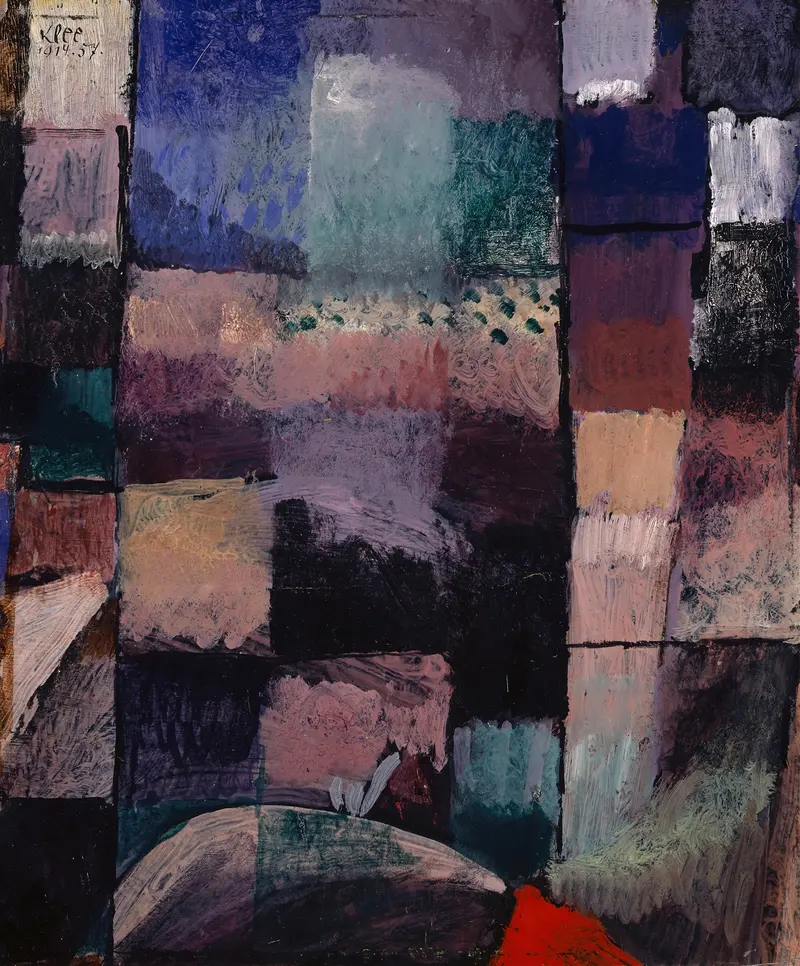
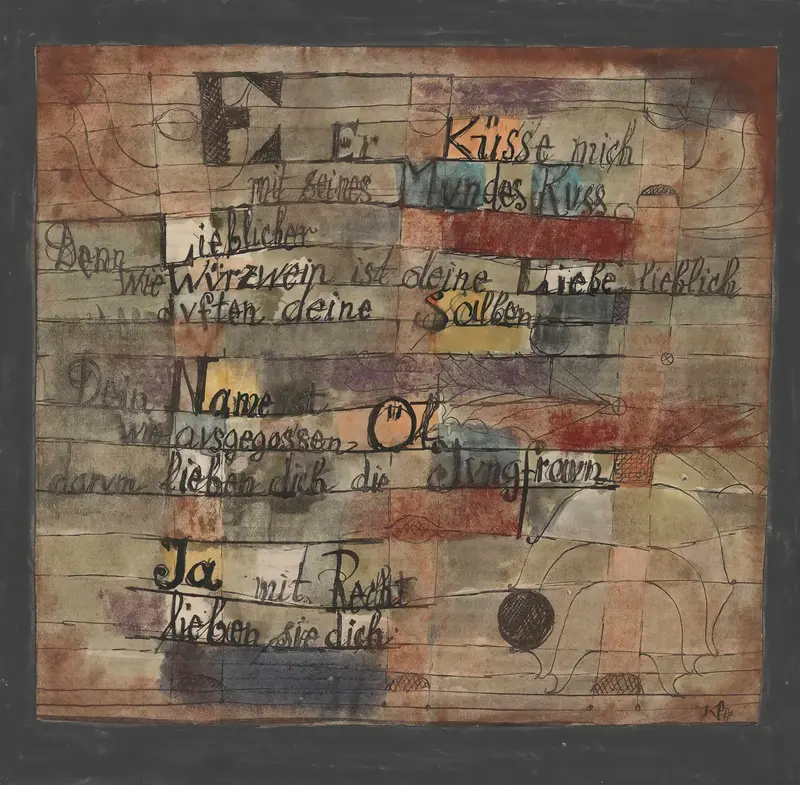
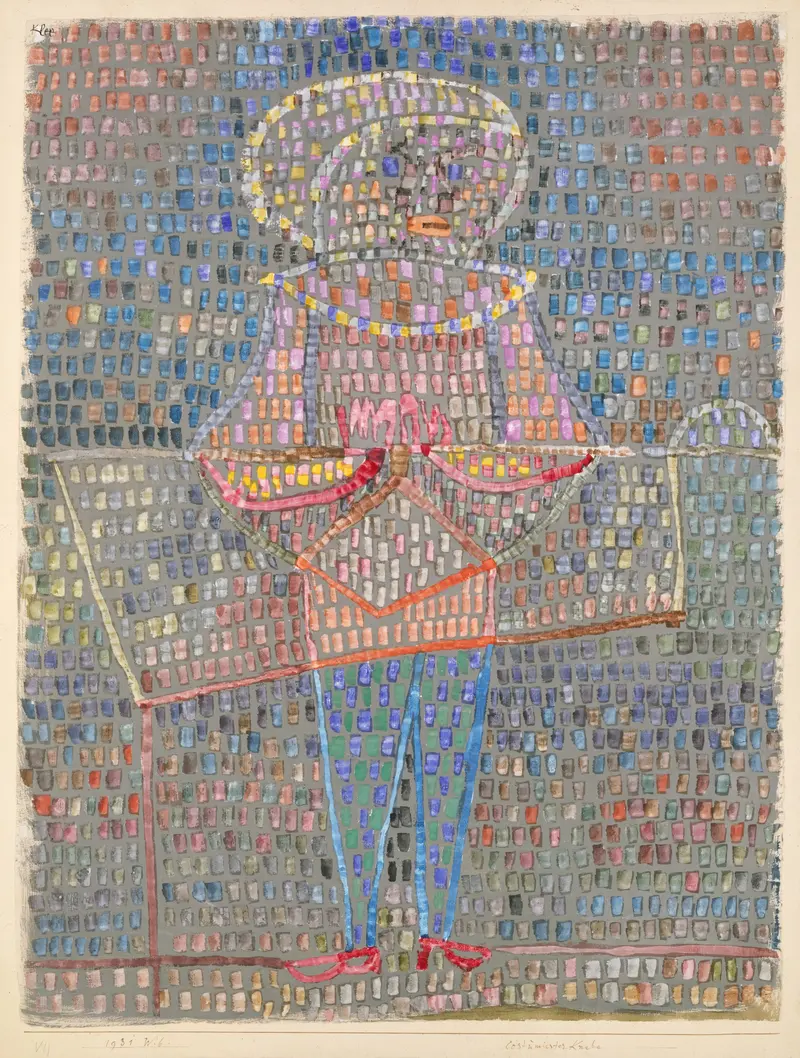
In Eine Blume Tritt Auf, vibrant colors dominate the canvas, with a striking flower at the center. The flower appears to be performing, surrounded by whimsical shapes and patterns. Klee uses a palette of bright yellows, reds, and greens, creating a lively atmosphere.
The background features abstract forms that enhance the sense of movement and energy. The painting is executed in oil on canvas, showcasing Klee's unique style that blends abstraction with representation. Viewers can observe the intricate details in the flower's petals, which are rendered with bold brushstrokes. The use of color is particularly notable, as Klee employs contrasting hues to create depth and interest.
This work is approximately 50 x 70 cm in size, making it a medium-sized piece. Paul Klee, a Swiss artist associated with Expressionism, created this work during the 1920s. Known for his playful and imaginative style, Klee often drew inspiration from nature and dreams. Eine Blume Tritt Auf reflects his fascination with the organic world and the idea of art as a performance.
An interesting fact about this painting is that it exemplifies Klee's belief in the emotional power of color.