
Elisabeth at the desk — History & Facts
What first catches the eye in Elisabeth at the desk is the intimacy of its quiet moment, caught in a blaze of color and shadow. The figure leans forward, intent on her task, her form almost merging with the deep blue of her dress and the shadowed side of the room. The sweep of her back draws us in, while the bright, patterned carpet beneath her feet and the vivid pink of the chair’s upholstery break the hush with a lively pulse.
Light falls from the left, pooling on the desk and picking out the curve of her arm, suggesting the focus and absorption of work or letter-writing. The palette is rich but never garish, and the brushwork is loose, letting the viewer feel the energy of the painter’s hand as much as the stillness of the sitter. Painted between circa 1909 and 1910, this work belongs to a world on the cusp of change, when artists like August Macke were pushing away from strict realism toward a more expressive, color-driven vision. Such scenes of domestic life—especially women at work or leisure indoors—were a favored subject for artists exploring the private sphere and the new freedoms of modernity.
History has kept few traces of this particular painting, now in the Wuselig collection, but its mood and manner place it firmly in the era’s search for beauty in the everyday. The longer you look, the more the details—carpet, chair, the turn of a shoulder—invite you to imagine the silent world behind the surface.
More Artworks by August Macke
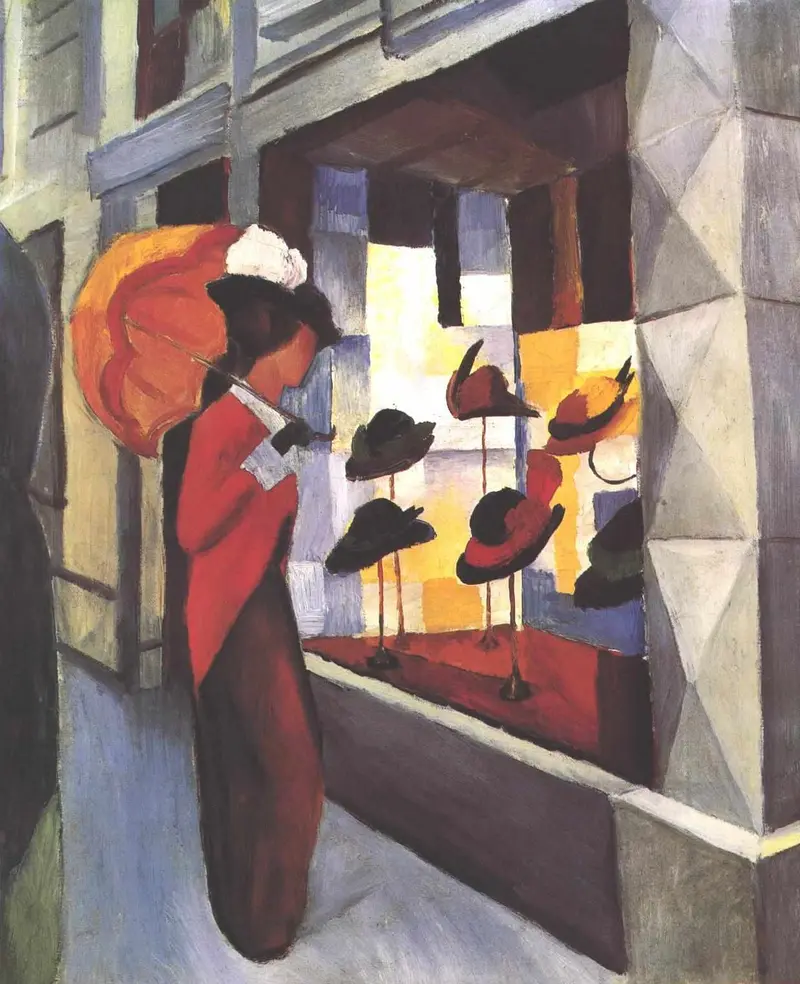
Woman with a Parasol in Front of a Hat Shop
August Macke

Street with Church in Kandern
August Macke
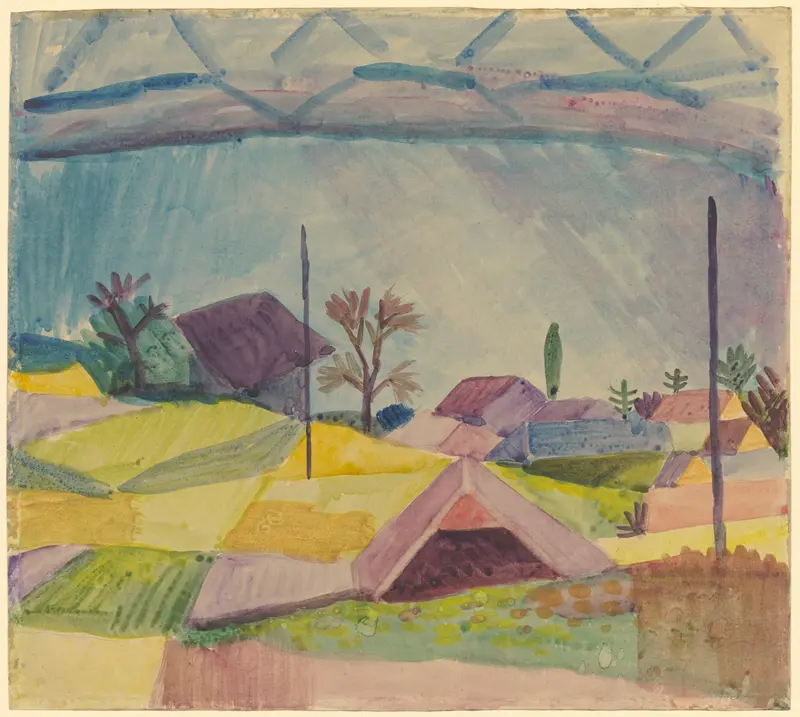
View of Hilterfingen
August Macke

Paar im Nachen
August Macke
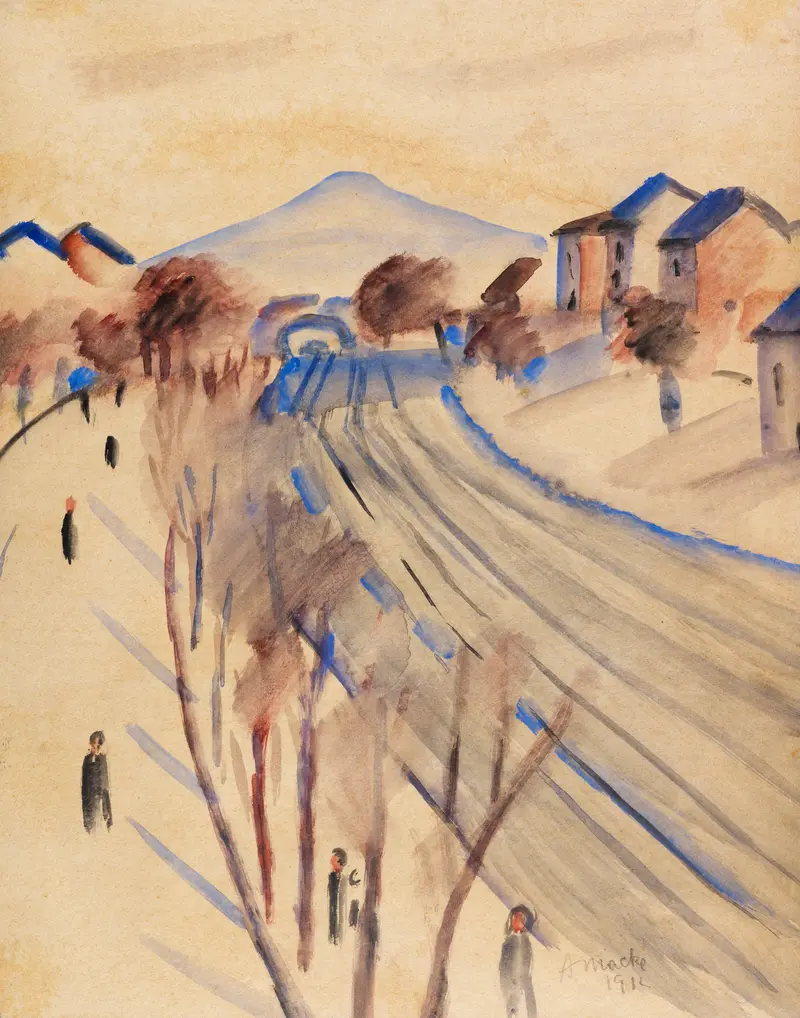
Ölberg mit Bahngleisen II
August Macke
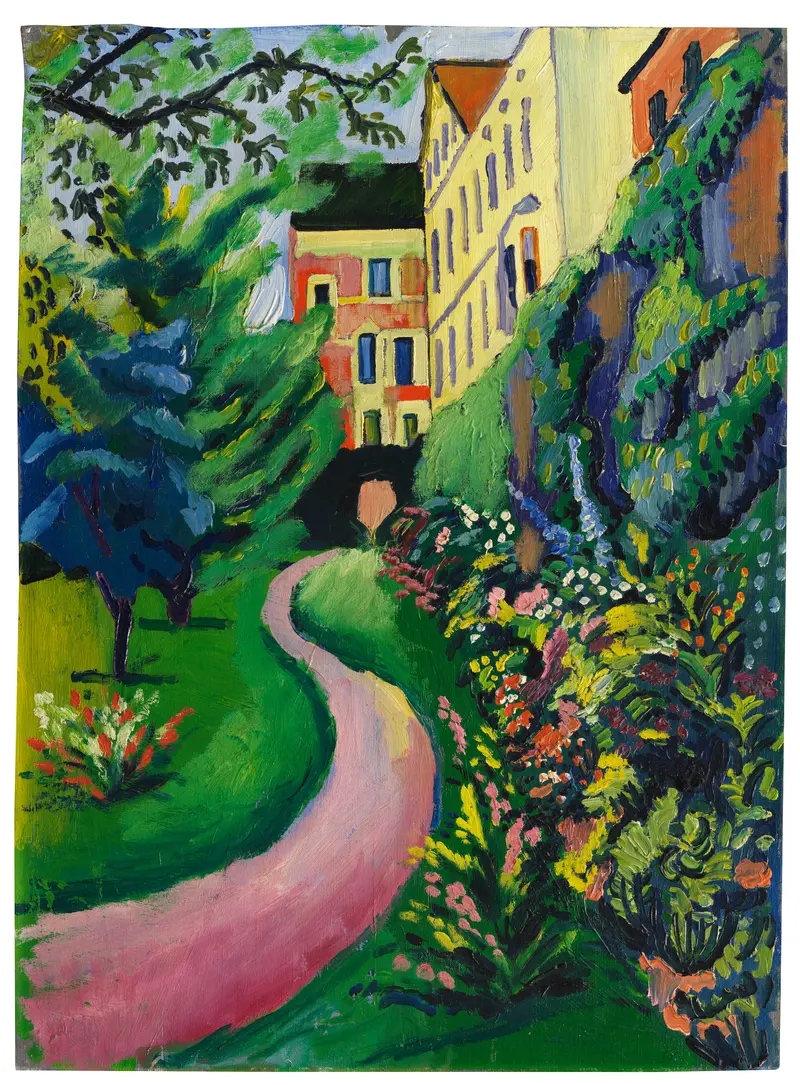
Unser Garten mit blühenden Rabatten
August Macke
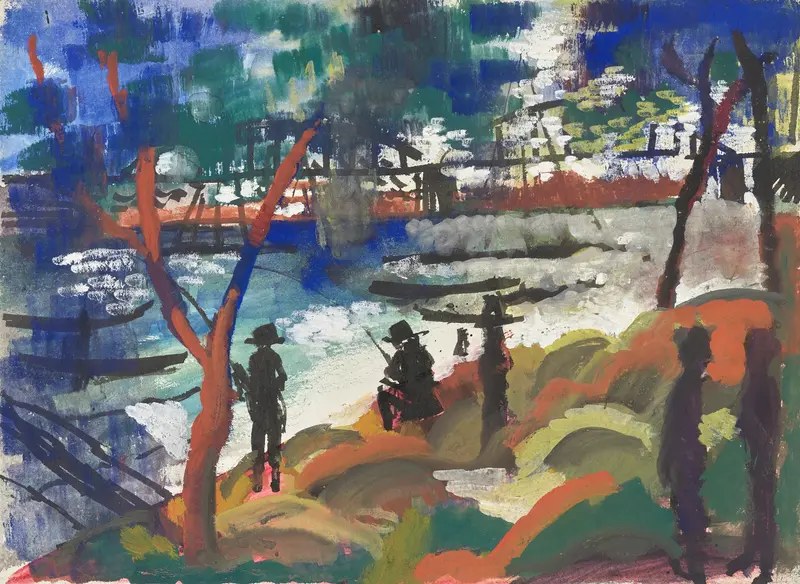
Angler am Fluss
August Macke
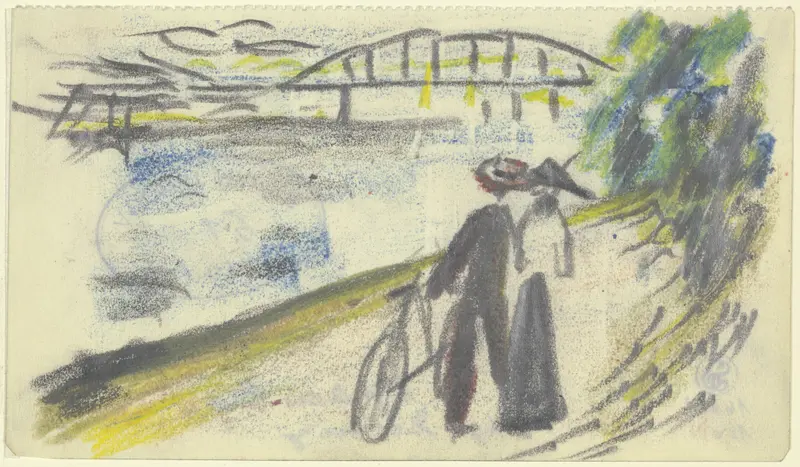
Path at the Rhine
August Macke
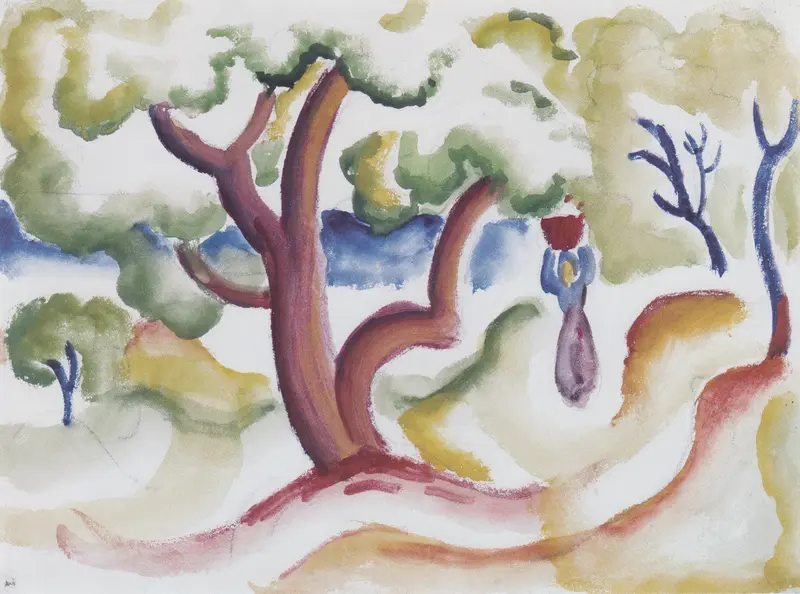
Frau mit Krug unter Bäumen
August Macke
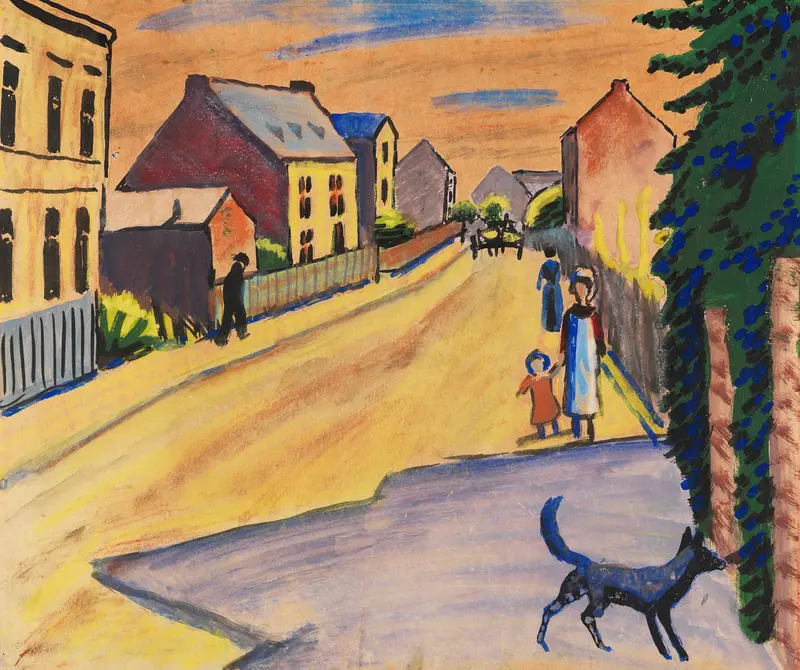
Sonnige Straße mit Hund
August Macke





