
Enten — History & Facts
What first catches the eye in Enten by Alexander Koester is the way light glances off the backs of the ducks, turning their feathers into shifting mosaics of cream and lavender. The scene is alive with motion: ducks gather and drift on a shaded pond, their bodies forming a loose, conversational circle. The water, painted in broad, confident strokes, mirrors the birds’ white plumage with ripples of violet and blue, while the reeds and lily pads crowd in from the banks, framing the gathering like an audience.
Every gesture—the tilt of a head, the dip of a beak—seems to signal a moment of quiet negotiation or curiosity among the flock. Painted around 1890, this work belongs to a period when artists across Europe were turning their attention to the everyday and the natural, often outdoors and in direct study of light. Koester became known for his fascination with ducks, a subject he returned to repeatedly, finding endless variety in their forms and habits. Such paintings were prized by collectors who sought a sense of rural peace and immediacy, a window onto the gentle rhythms of country life at a time when industrialization was reshaping the world.
Though history has kept few traces of this particular painting beyond its reproduction in an art book, its lively brushwork and attentive observation invite us to linger, letting our gaze follow the play of light and movement across the pond.
More Artworks by Alexander Koester

Ducks on the Lakeside
Alexander Koester
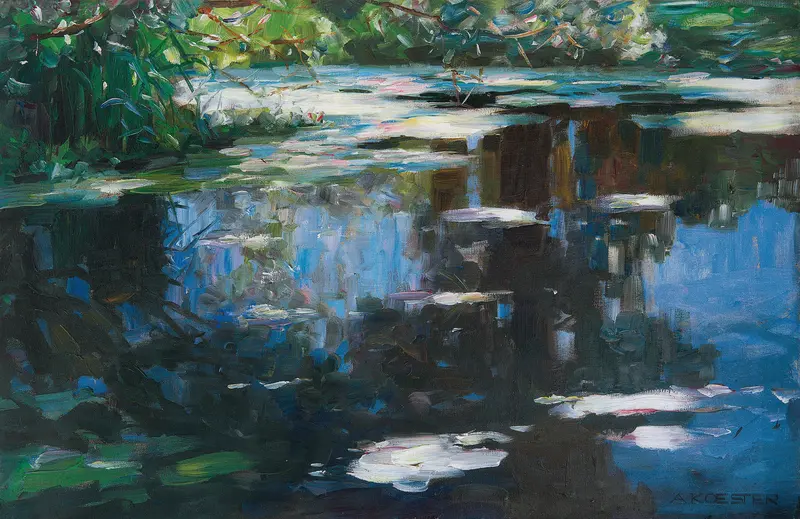
Teichblüten – Altwasser bei Brixen
Alexander Koester
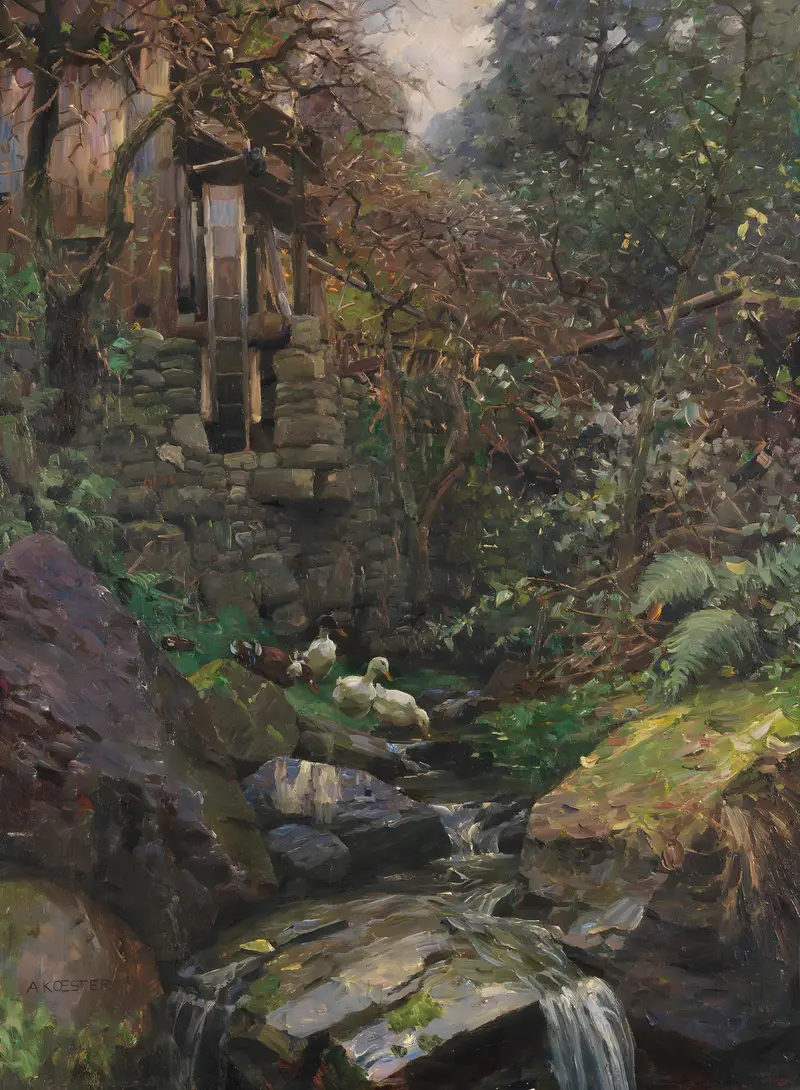
Im Mühlengrund
Alexander Koester
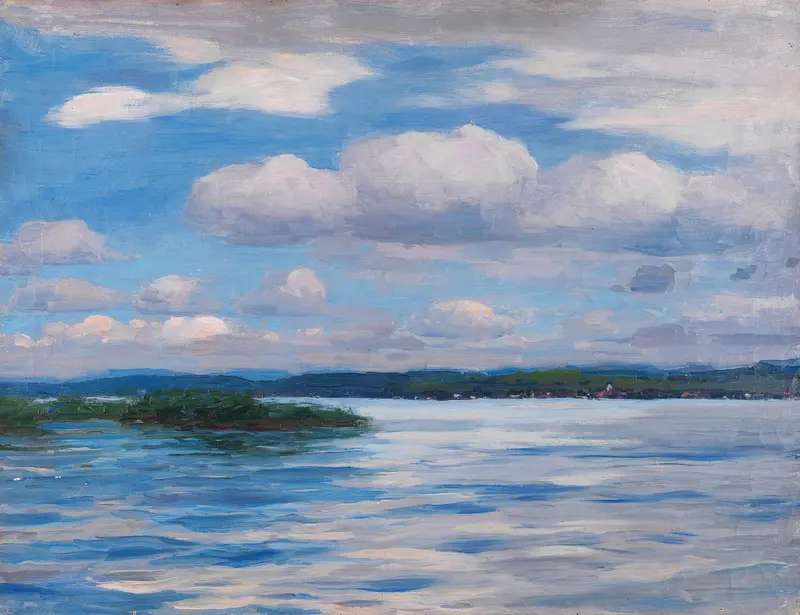
See mit Wetterwolken
Alexander Koester
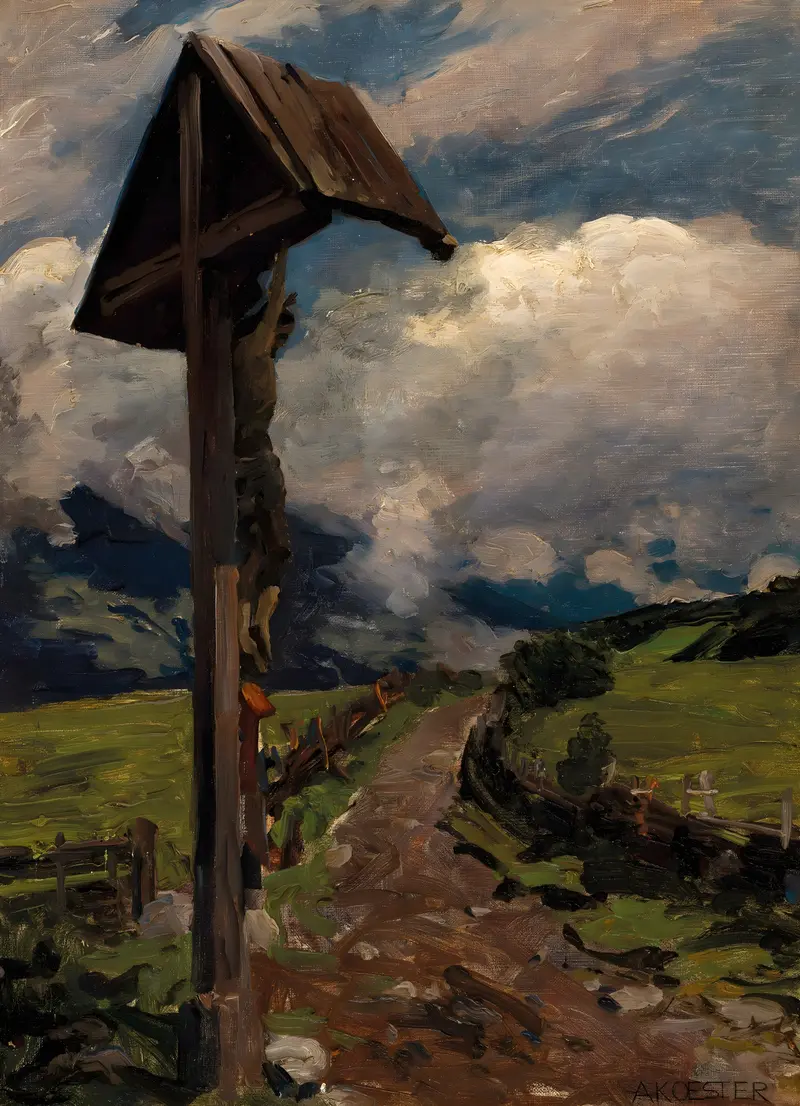
A Wayside Shrine
Alexander Koester
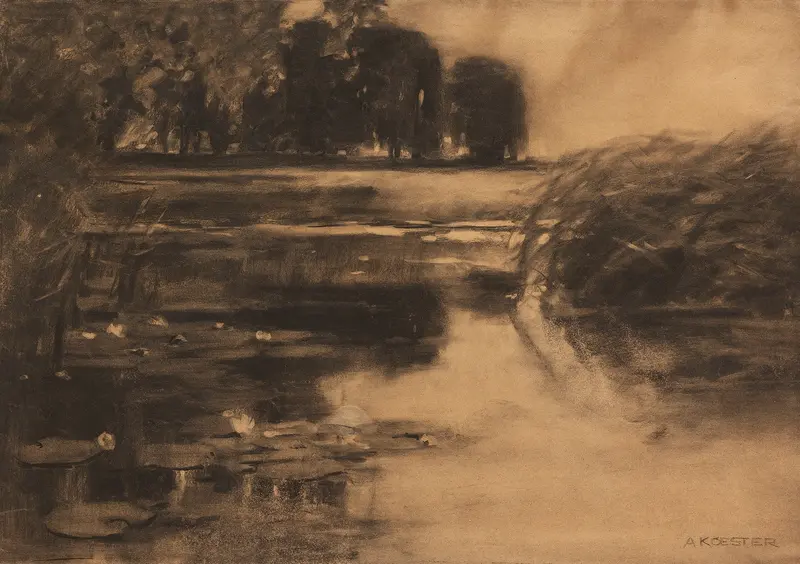
Wasserlandschaft
Alexander Koester
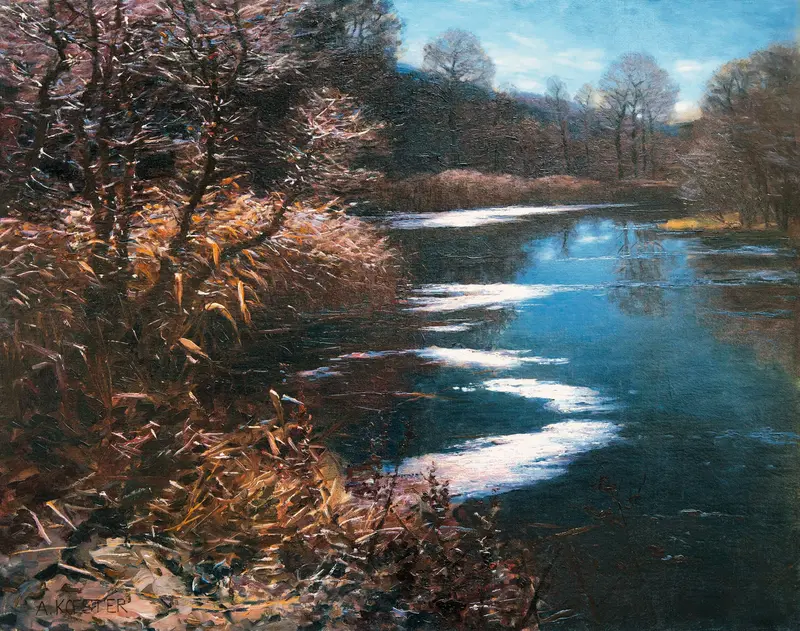
Altwasser bei Brixen
Alexander Koester
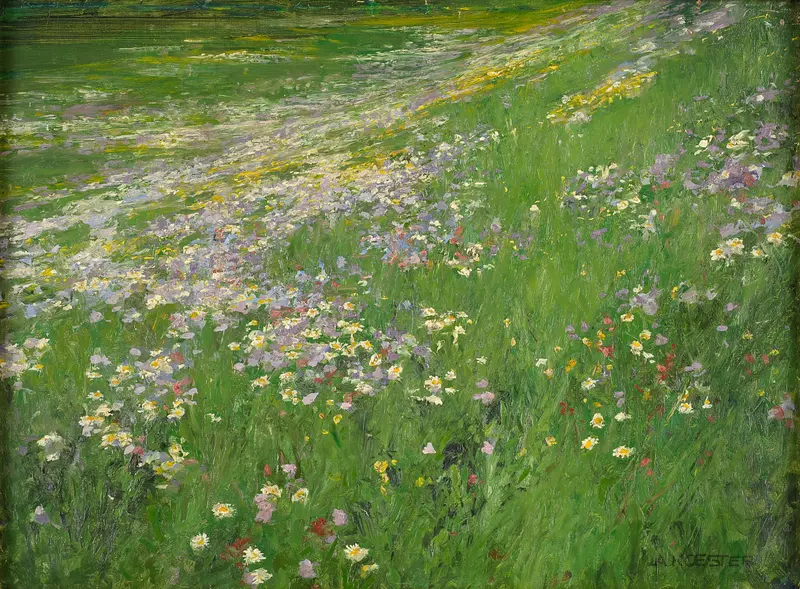
Blumenwiese bei Weßling
Alexander Koester
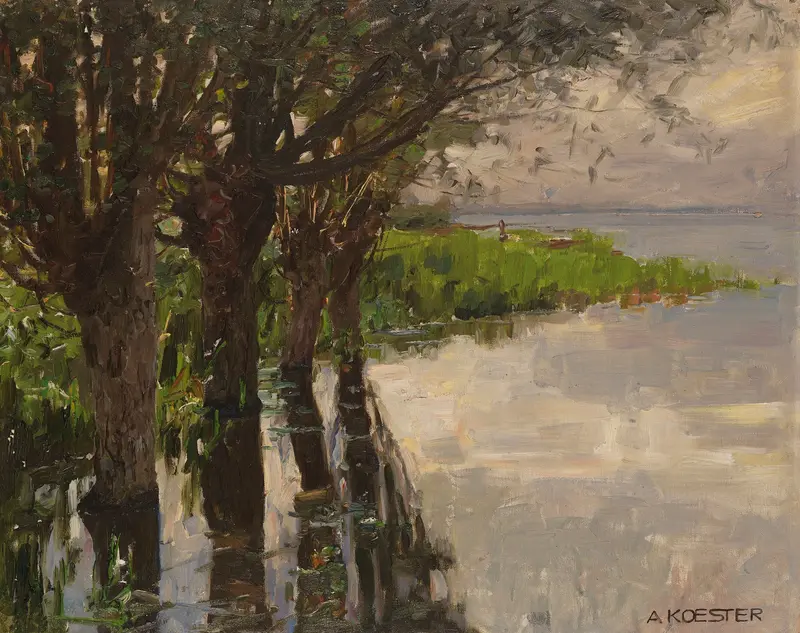
Reichenau, Weiden am See, Sonne
Alexander Koester
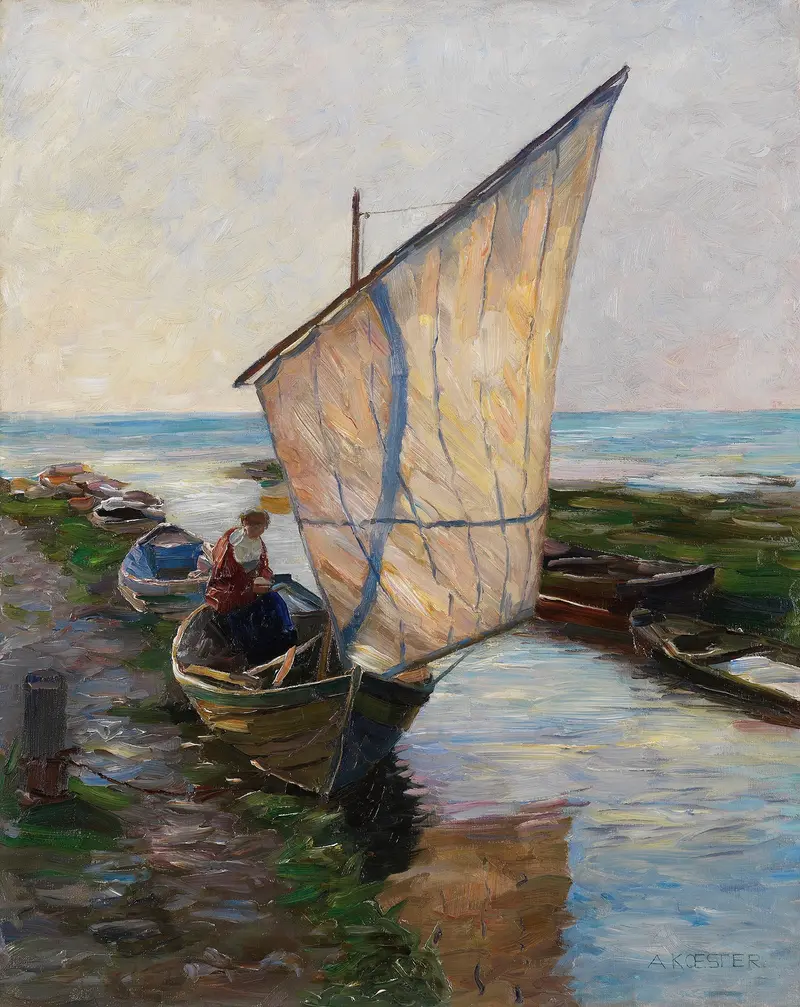
Segelboot, Holland
Alexander Koester





