
Enten am Ufer — History & Facts
What first catches the eye in Enten am Ufer is the way the ducks seem to glow, their white plumage catching and scattering the light as if the very air is alive with reflections. The artist, Alexander Koester, draws the viewer into a moment of quiet congregation at the water’s edge, where the ducks press together in a gentle, almost choreographed huddle. The water, painted in deep blues and luminous golds, mirrors the sky above, so that the boundary between earth and air feels fluid and shifting.
Each duck is rendered with a specificity that invites close looking—a beak dipped in water, a head turned in curiosity—while the drama of the clouds overhead hints at a world beyond this tranquil gathering. Painted by 1932, this work belongs to a tradition that delighted in the observation of nature’s everyday spectacles, a genre that found particular resonance in late nineteenth- and early twentieth-century Germany. Koester became celebrated for his studies of ducks, elevating a humble subject into something almost monumental through his attention to light and movement. Such paintings were often sought by collectors who wished to bring a sense of rural peace and natural beauty into their homes, at a time when the world outside was increasingly marked by uncertainty and change.
The painting’s documented appearance in the Van Ham Kunstauktionen collection is one of the few firm anchors in its history, a reminder that while the world has shifted, the quiet allure of ducks at the water’s edge endures—waiting for the next viewer to linger.
More Artworks by Alexander Koester

Ducks on the Lakeside
Alexander Koester
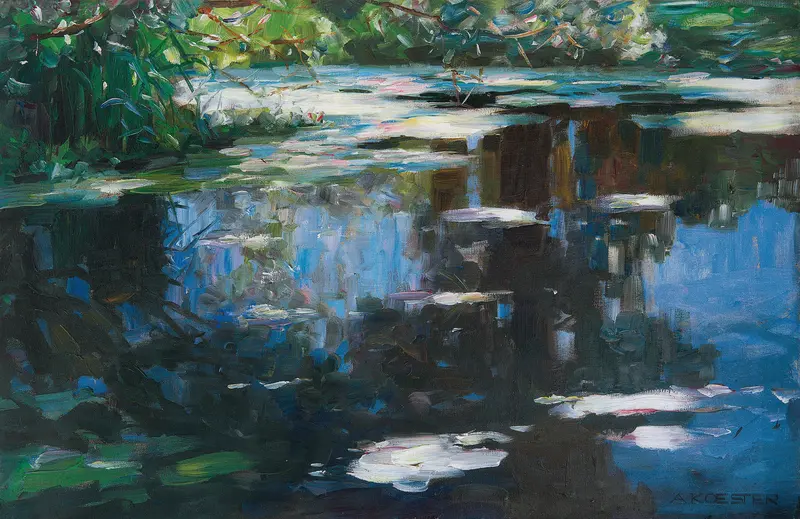
Teichblüten – Altwasser bei Brixen
Alexander Koester
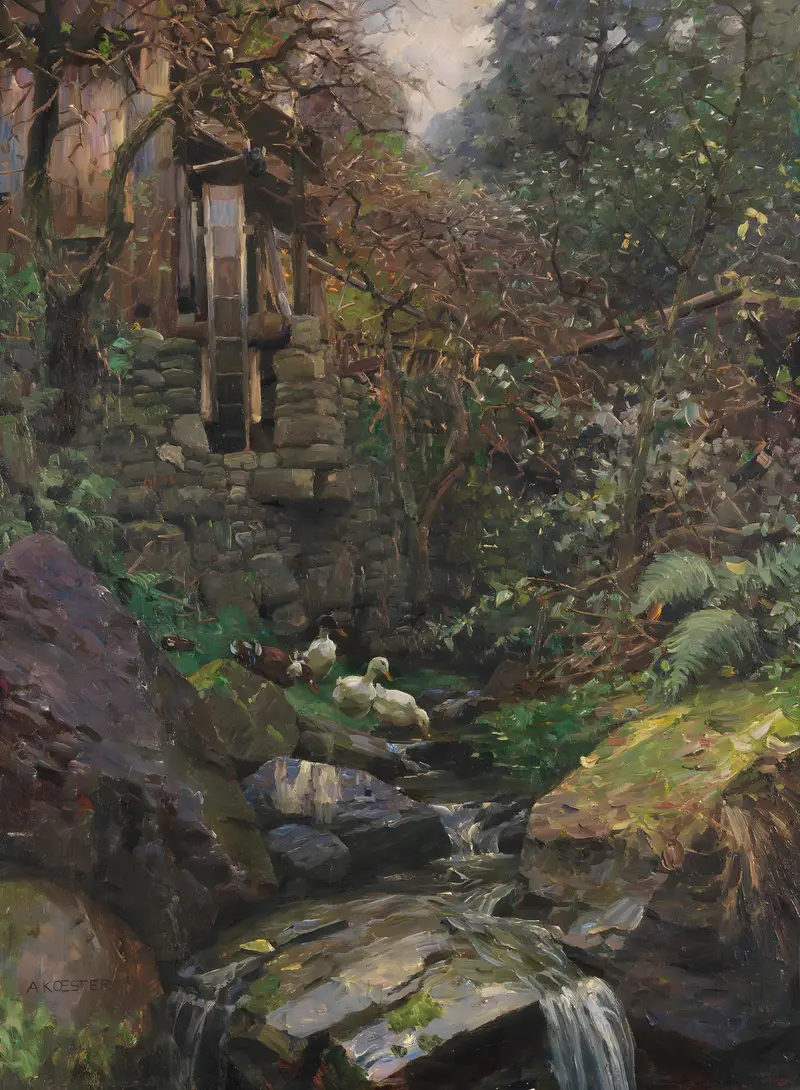
Im Mühlengrund
Alexander Koester
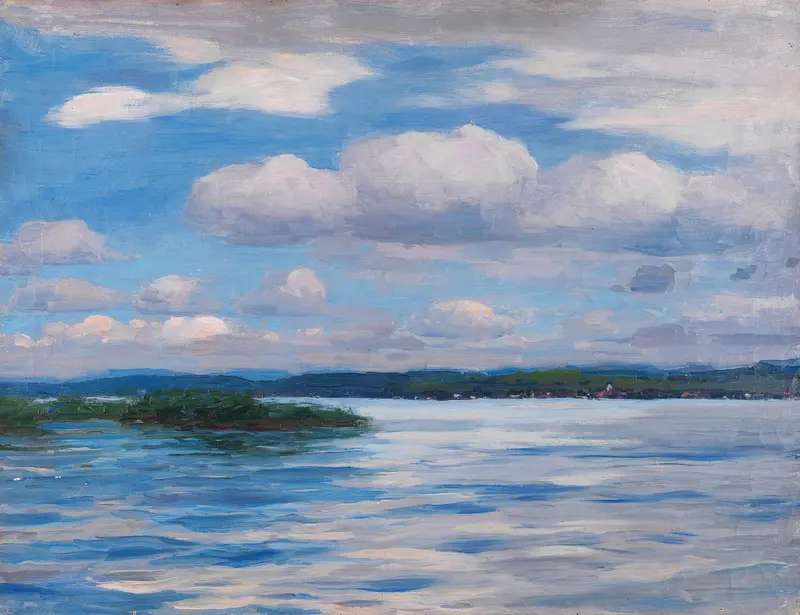
See mit Wetterwolken
Alexander Koester
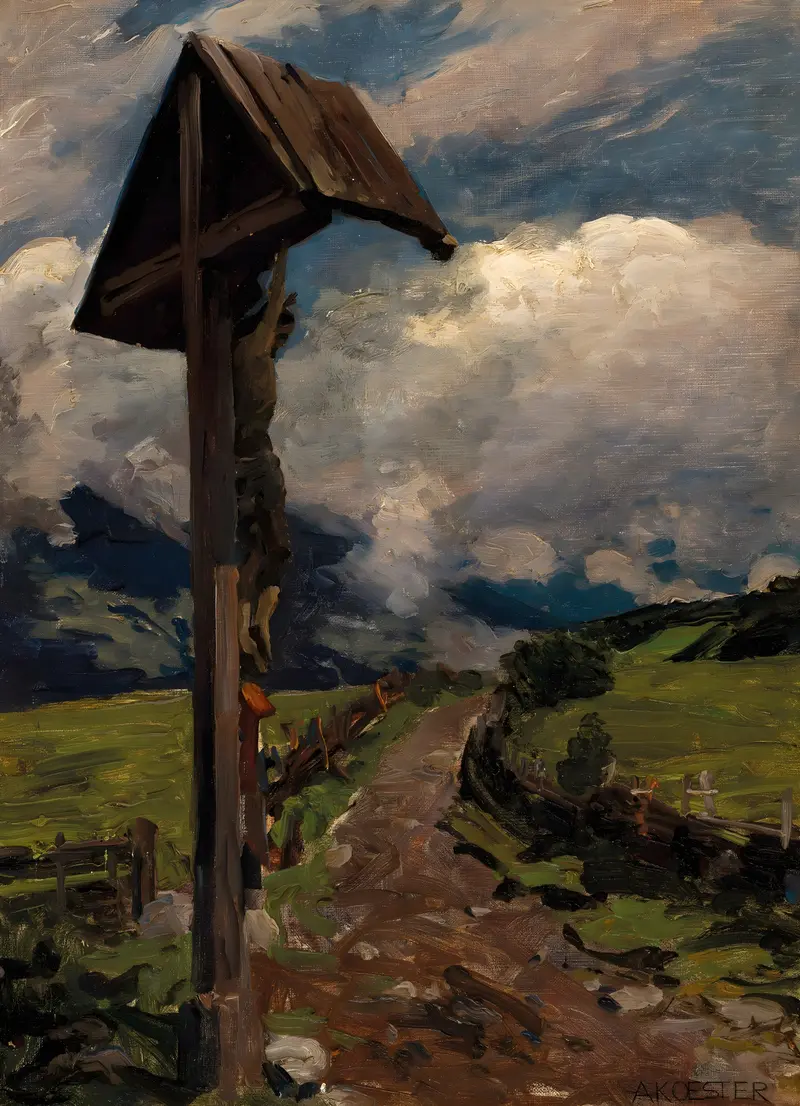
A Wayside Shrine
Alexander Koester
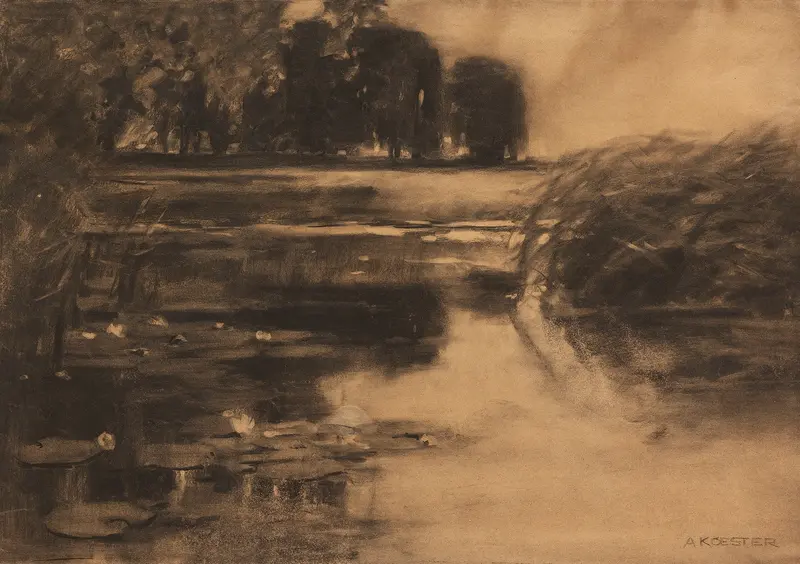
Wasserlandschaft
Alexander Koester
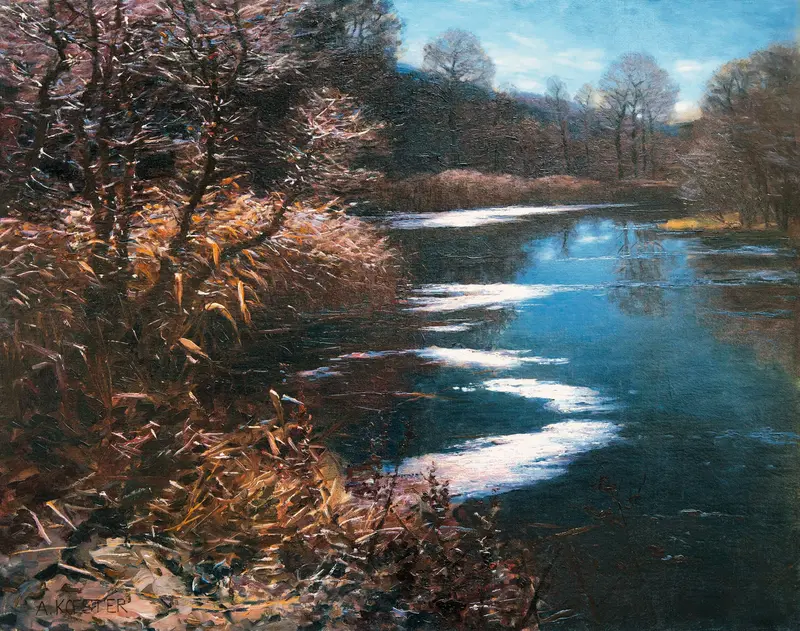
Altwasser bei Brixen
Alexander Koester
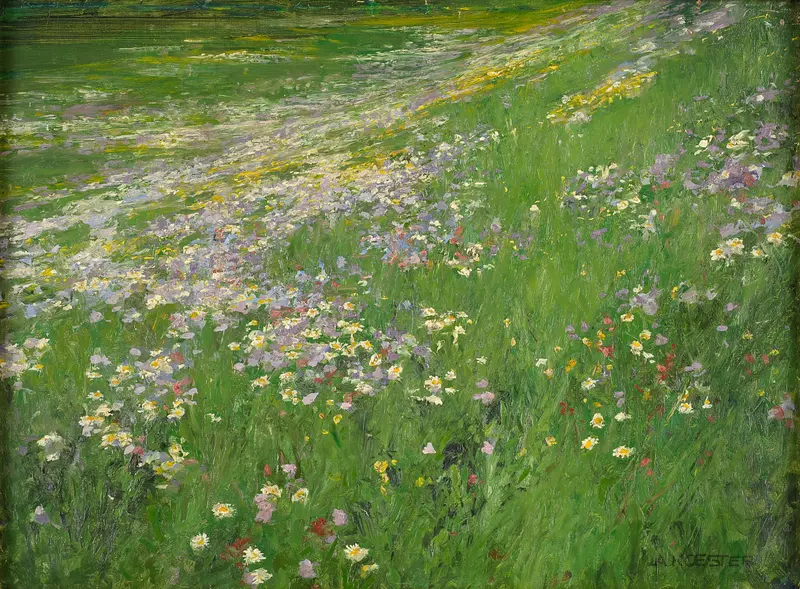
Blumenwiese bei Weßling
Alexander Koester
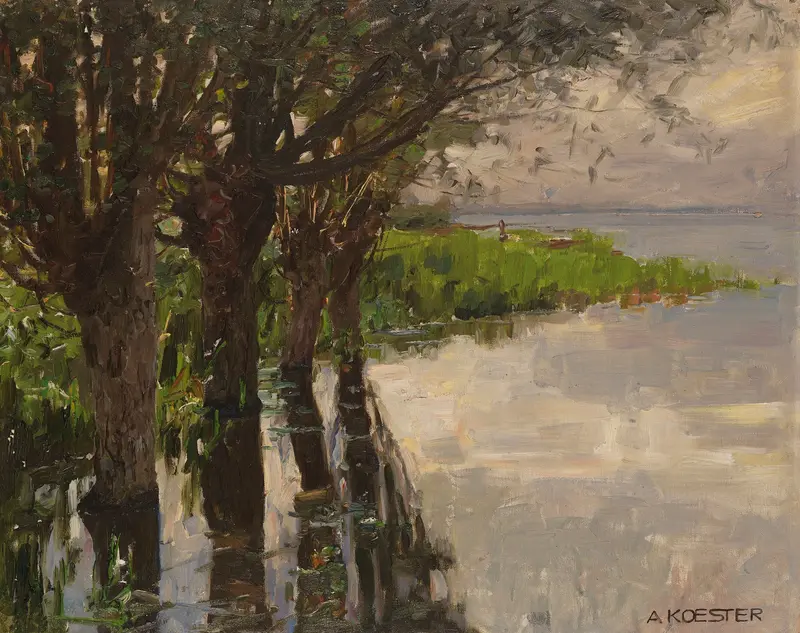
Reichenau, Weiden am See, Sonne
Alexander Koester
Segelboot, Holland
Alexander Koester





