Entladen der Lastkähne — History & Facts
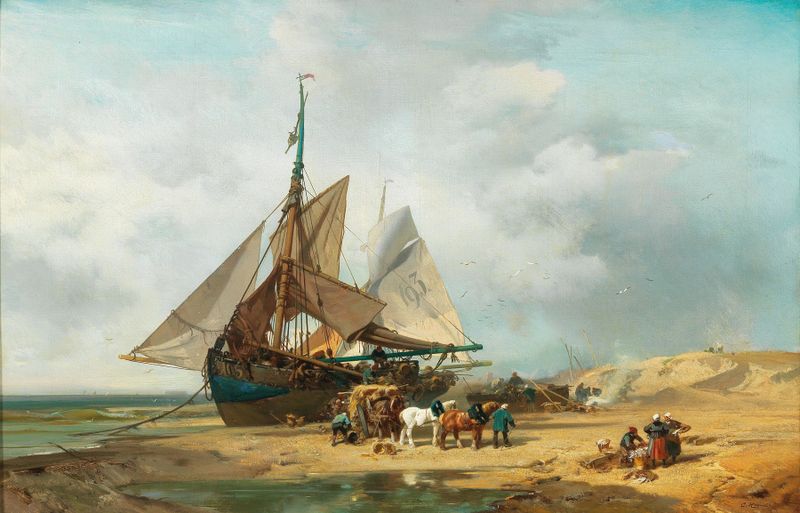
What if silence could speak through light? In Entladen der Lastkähne, a moment unfolds where stillness carries the weight of rebirth, capturing the essence of transition. Look to the left at the figures unloading the boats, a tapestry of labor woven into the serene landscape. Notice how the soft, golden light bathes the scene, accentuating the glistening water and the muted tones of the boats’ hulls. The brushwork conveys a sense of movement yet retains a calm, almost meditative quality, leading your gaze across the canvas.
The gentle ripples in the water mirror the emotion of the laborers, creating a harmony between human effort and nature's placidity. Delve deeper into the quiet tension of this artwork, where the shared labor hints at a communal rebirth. The boats, laden with cargo, symbolize the burdens carried by the workers, while the serene backdrop signifies hope and the promise of renewal. Each flick of the brush captures the subtleties of light, revealing the contrasts between shadow and illumination, despair and hope.
This interplay suggests that every ending, every unloading, carries the seeds of a new beginning. Charles Hoguet painted Entladen der Lastkähne in 1856 while living in France, a period marked by profound changes in society and the arts. As industrialization progressed, artists began to explore themes of labor and the human condition, reflecting the shifting dynamics around them. Hoguet’s work embodies this spirit, bridging the gap between the burdens of the past and the possibilities of the future through the lens of everyday life.