Landschaft mit Windmühlen und figürlicher Staffage — History & Facts
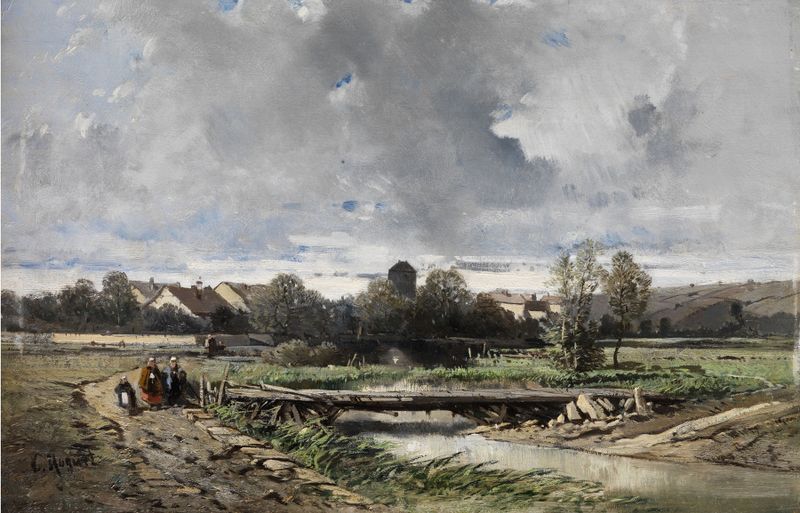
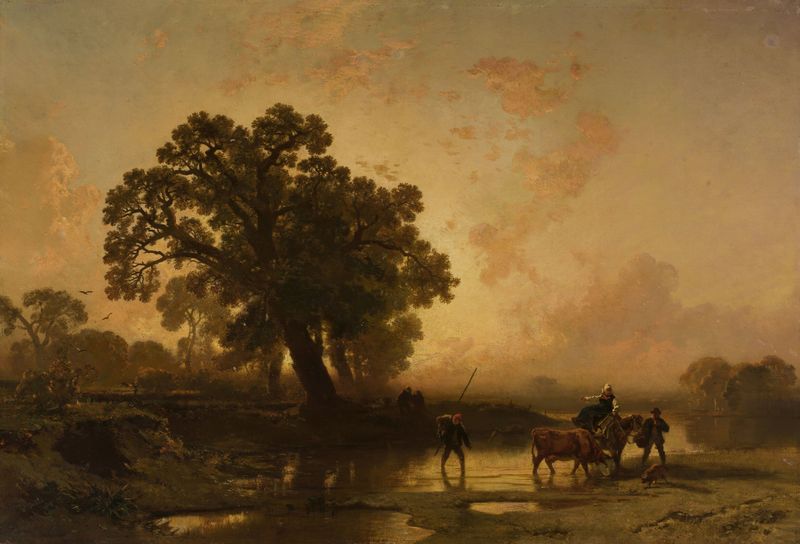
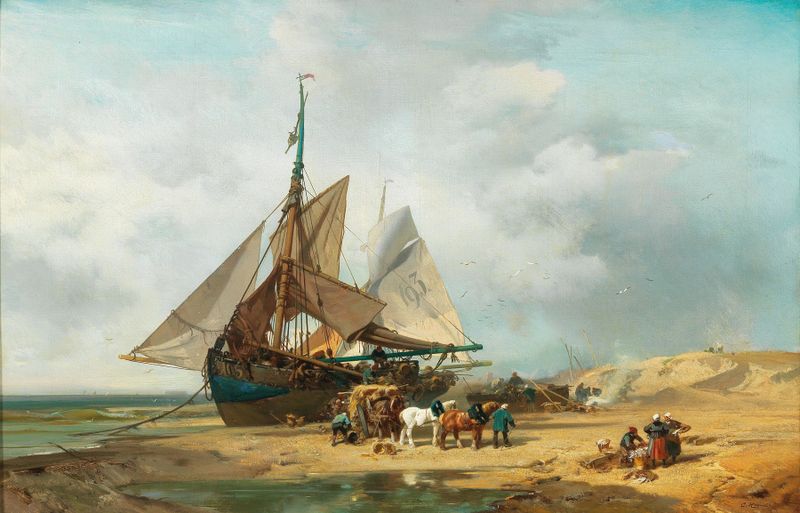
When did color learn to lie? Perhaps it was in that fleeting moment when the azure sky met the verdant fields, and shadows danced beneath the gentle strokes of windmills, whispering secrets of the past and promises of transcendence. Look to the left at the grand windmills, their sails gracefully stretching towards the heavens, painted in a range of soft, muted hues. Notice how the light bathes the scene, illuminating the blades while casting a serene glow on the fields below. The careful composition draws your gaze across the panorama, inviting you to explore the figures scattered throughout — little more than silhouettes, they evoke a sense of scale and depth, their presence grounding the ethereal beauty of the landscape. Delve deeper, and you will uncover a dialogue between nature and industry, a juxtaposition of human endeavor against the vastness of the sky.
The windmills symbolize progress, yet their delicate placement suggests a harmony with the environment, as if they were meant to touch the clouds rather than disrupt them. Each brushstroke whispers of nostalgia, exploring the balance between the ephemeral and the eternal, challenging the viewer to contemplate humanity’s relationship with the natural world. In 1854, Charles Hoguet painted this work in France, amidst a period of burgeoning Impressionism that sought to capture the interplay of light and color. As artists began to explore new techniques and palettes, Hoguet’s work harkens back to a romantic ideal, reflecting both the charm of rural life and the complexities of a rapidly industrializing world.
The delicate tension in Landschaft mit Windmühlen und figürlicher Staffage encapsulates a moment in time, both historic and timeless.