Riverside landscape at sunset — History & Facts
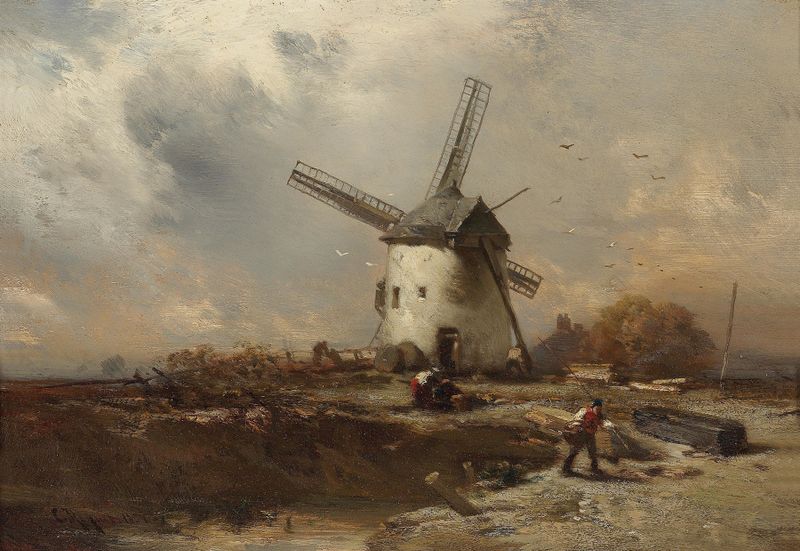
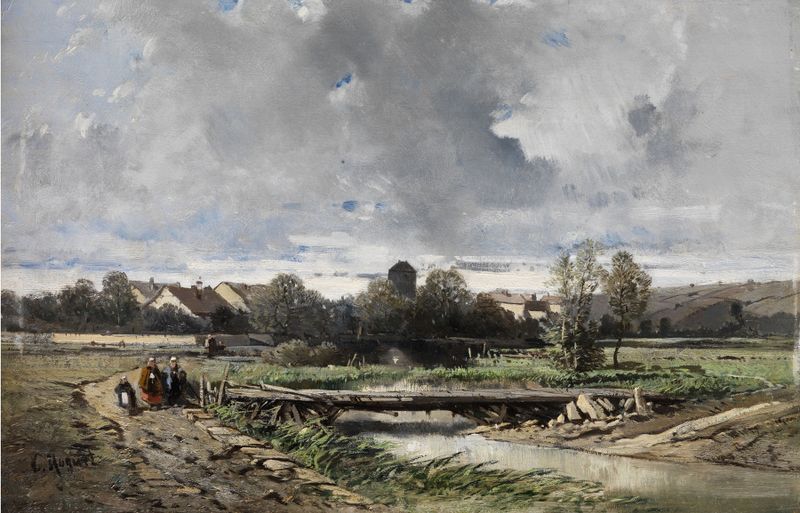
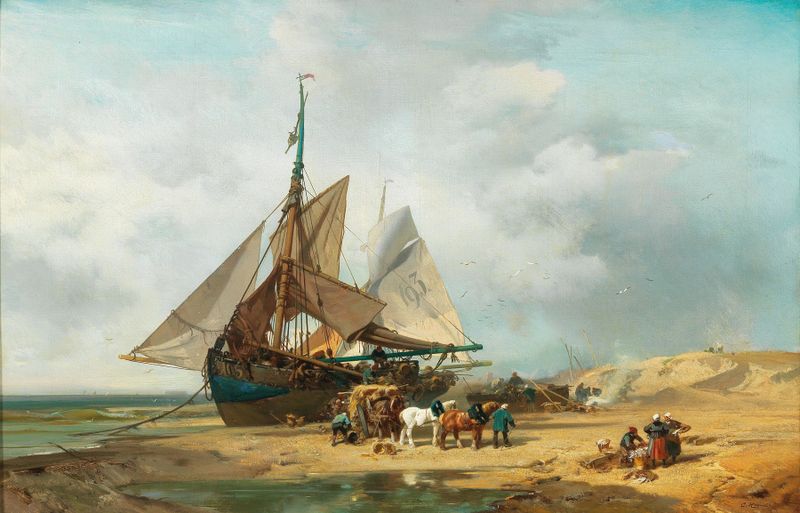
Could a single brushstroke hold eternity? In Riverside Landscape at Sunset, Charles Hoguet captures an ephemeral beauty, where the fleeting glow of twilight dances on the brink of night, leaving an ache that lingers in the heart. Look to the center of the canvas where the sun sinks low, its warm orange and pink hues spilling across the water's surface. Notice how the reflection shimmers, almost as if attempting to grasp the last remnants of day. The gentle curves of the river guide the eye outward, while the darkening trees frame the scene, creating a contrast that deepens the emotional resonance.
Hoguet’s meticulous brushwork and the soft blending of colors evoke a sense of tranquility that belies the underlying tension of the impending night. Beyond the serene surface, there is a poignant duality at play. The vibrant colors symbolize life and hope, yet they are juxtaposed against the encroaching darkness, suggesting the inevitability of loss and the passage of time. The light may be beautiful, but it is also transient, reflecting a bittersweet farewell that resonates with the viewer’s own experiences of grief and longing.
Tiny details, like the ripples in the water and the contours of the distant hills, serve as reminders of both solace and sorrow. In 1857, Hoguet painted this piece during a time when Romanticism was giving way to Realism in the art world. Residing in France, he was influenced by the changing landscapes of his surroundings and the emotional depth of his contemporaries. The blending of light and dark in his work mirrors not only the natural world but also the complexities of human experience during an era marked by significant societal shifts.