Strand bei Dieppe — History & Facts
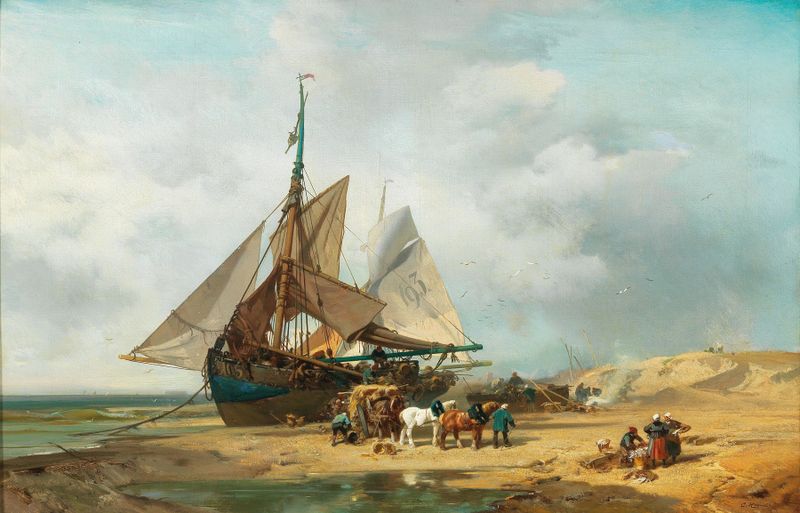
Is this a mirror — or a memory? In Strand bei Dieppe, the shimmering surface of the water calls to mind the relentless pull of obsession, each wave a reminder of what once was, and what might never return. Focus on the gentle blue of the sea, where the horizon blends seamlessly with the sky, creating a sense of infinite possibility. Look to the left at the solitary figure standing on the sandy shore, their contemplative posture suggesting a moment suspended in time. Notice how the light dances on the water’s surface, illuminating the details in the sand and the delicate textures of the clouds above, infusing the scene with both tranquility and an undercurrent of longing. Two boats rest just beyond the shore, their modest presence hinting at untold stories carried across the sea.
The contrast between the calm water and the distant tumult of the clouds encapsulates a duality of peace and unrest. This juxtaposition mirrors the emotional landscape of the figure, who seems lost in thought, caught between the allure of the horizon and the weight of the past. The subtlety of Hoguet's choice of color invites viewers to feel the soft embrace of nostalgia while grappling with the ephemeral nature of memory itself. Charles Hoguet painted Strand bei Dieppe in 1854 during a time when French artists were increasingly drawn to the landscapes of their homeland.
Living in the wake of Romanticism, he was influenced by the changing perceptions of nature and the pursuit of capturing fleeting moments on canvas. The mid-19th century was marked by a growing fascination with light and color, as artists sought to convey not just scenes, but emotions — a quest Hoguet navigated with grace in this evocative work.