Entladung der Segelschiffe — History & Facts
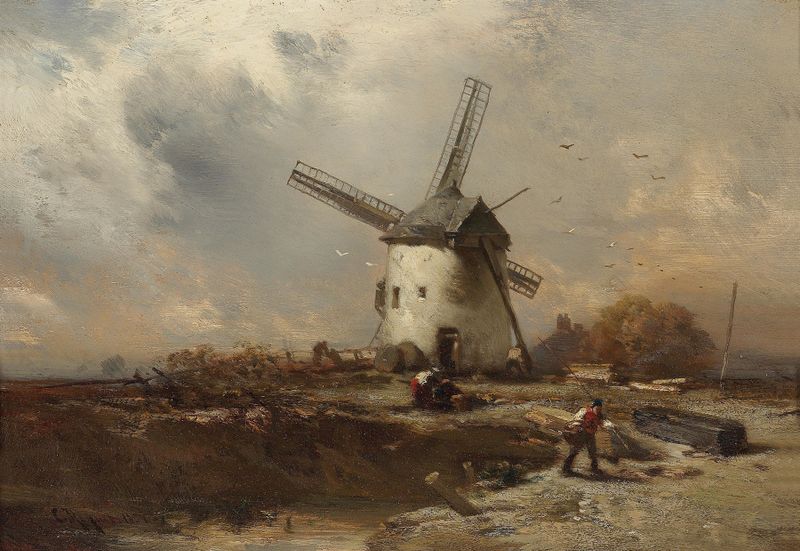
Did the painter know this moment would outlive them? In a world that constantly shifts, there exists an enduring beauty in capturing fleeting instances — a truth that resonates through the brushstrokes of this artwork. Focus on the vibrant hues that vibrate through the canvas, particularly the radiant blue of the sky, which dominates the upper half. The elegant forms of the sailing ships, their sails billowing as if caught in a whispering wind, draw the eye to the center, creating a harmonious narrative. Notice how the artist employs contrasting colors, with warm earth tones grounding the scene below, as if to signify the connection between the sea and the ships that traverse it, a delicate balance between nature and human endeavor. Digging deeper, one can sense a tension between the tranquility of the water and the bustling activity of the vessels.
The boats, laden with cargo, hint at journeys filled with anticipation and uncertainty. Each ship becomes not just a vessel of commerce but a symbol of dreams and aspirations, transcending mere function to embody the spirit of exploration and adventure that characterizes humanity’s relationship with the sea. Charles Hoguet painted this work during a time marked by great innovation in maritime trade in the late 19th century. Living in a rapidly evolving world, where steamships were beginning to replace traditional sailing vessels, he captured the essence of an era that was on the brink of transformation.
This painting reflects not only a moment in time but also Hoguet’s keen observations of the maritime life that surrounded him, enveloping the viewer in the nostalgia of a bygone age.