
Epidauros — History & Facts
The colors of Epidauros speak volumes, whispering secrets of a world lost to time. Each hue resonates with emotions that words could scarcely convey, inviting the viewer into a tranquil yet profound reflection. Look to the vivid greens and blues that dominate the landscape; they draw your gaze to the serene backdrop of ancient ruins nestled in the lush hills. Notice how the golden light bathes the crumbling stone, casting soft shadows that dance across the surface, revealing textures and layers of history.
The soft, almost ethereal quality of the sky hints at a fleeting moment, a pause in time that holds both reverence and nostalgia, reflecting the beauty and impermanence of human achievement. Yet within this tranquil scene lies a deeper narrative. The juxtaposition of vibrant nature against the remnants of civilization speaks to the cycle of life and decay, suggesting that beauty is both ephemeral and enduring. Each element—the craggy rocks, the delicate foliage, and the ancient structures—echoes the passage of time.
The quietness of the scene holds an unspoken tension, as if the landscape is both a sanctuary and a reminder of ephemerality, inviting contemplation on what remains when all is said and done. In the early 1840s, while painting Epidauros, Carl Rottmann was immersed in the Romantic movement, capturing the spirit of nature and antiquity. The artist worked in Germany, influenced by a growing interest in representing the sublime beauty of the classical world. This period saw a flourishing of landscape painting, as artists sought to express the harmony between humanity and the natural environment, a theme that resonates deeply in this work.
More Artworks by Carl Rottmann
Browse all →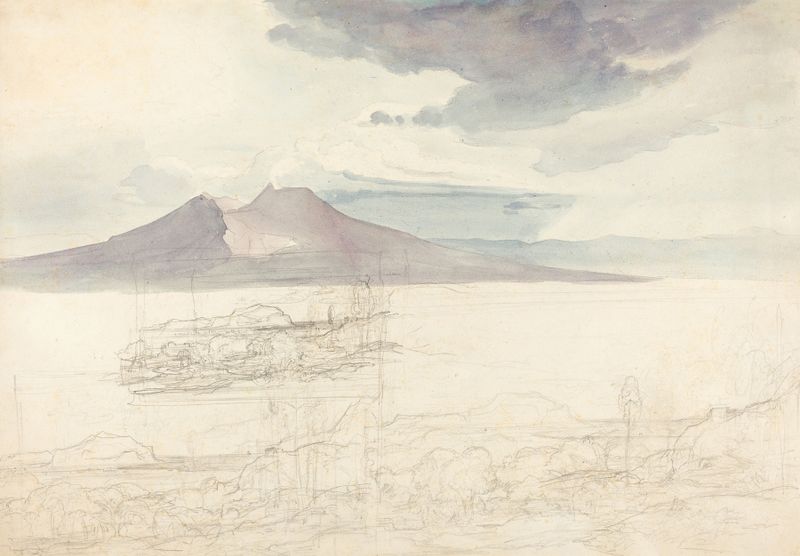
Panoramic Views of Vesuvius and Monte Pellegrino
Carl Rottmann
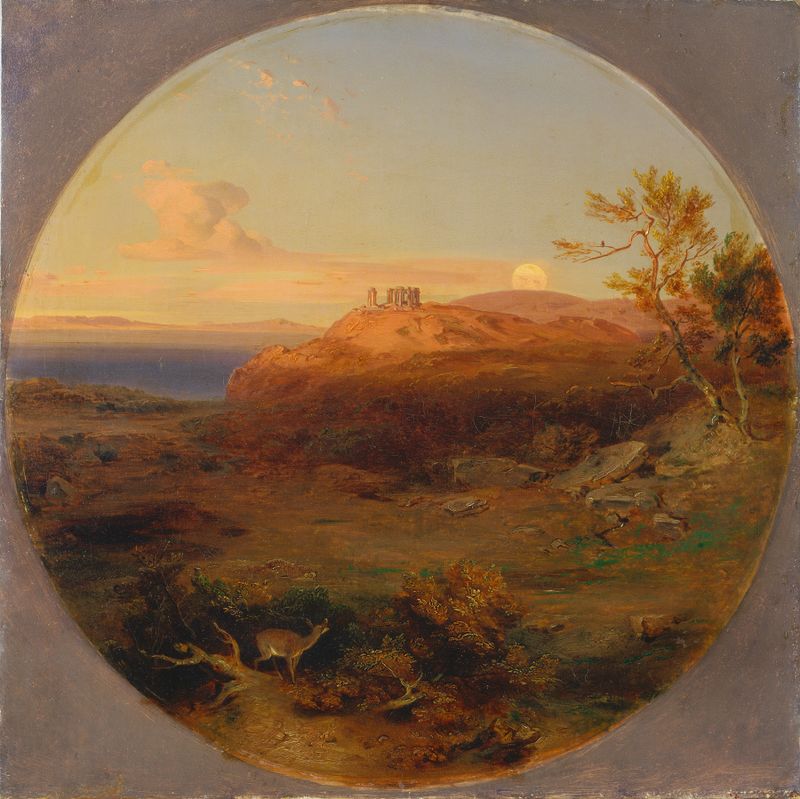
Greek Landscape on the Island of Aegina
Carl Rottmann
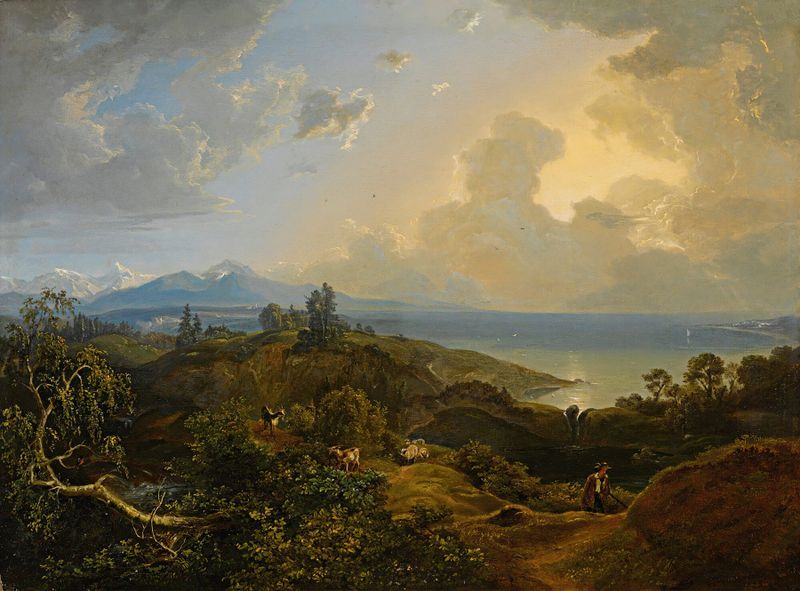
An extensive landscape in Bavaria or the Salzkammergut
Carl Rottmann
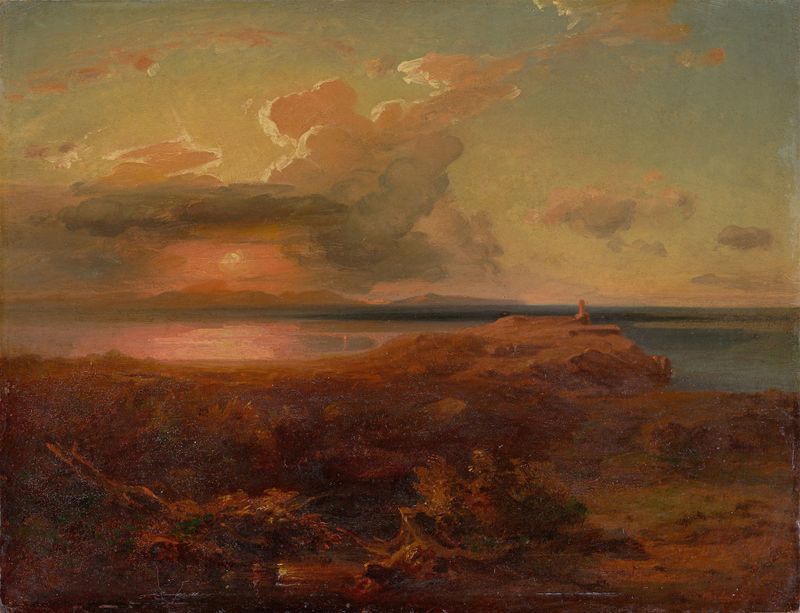
Ägina mit dem Apollotempel
Carl Rottmann

Landscape
Carl Rottmann

Die Insel Ägina mit den Ruinen des Hekatetempels
Carl Rottmann
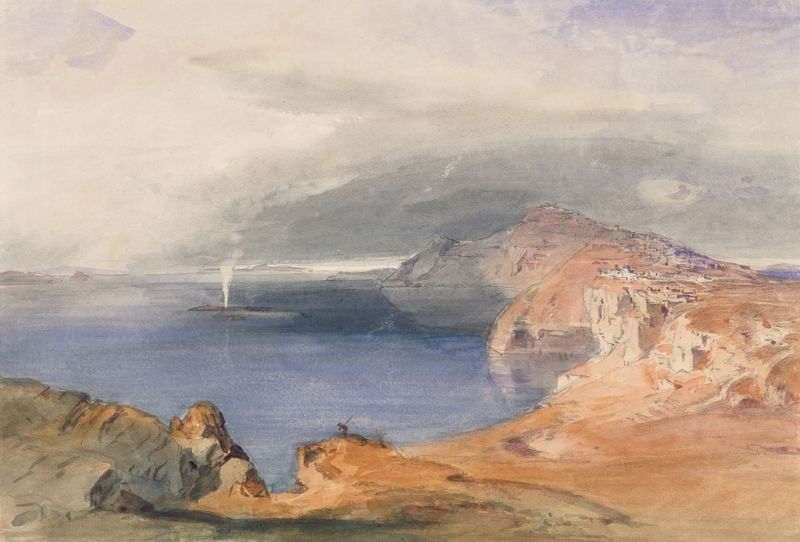
Santorini (Thira)
Carl Rottmann

Athens, seen from the well
Carl Rottmann
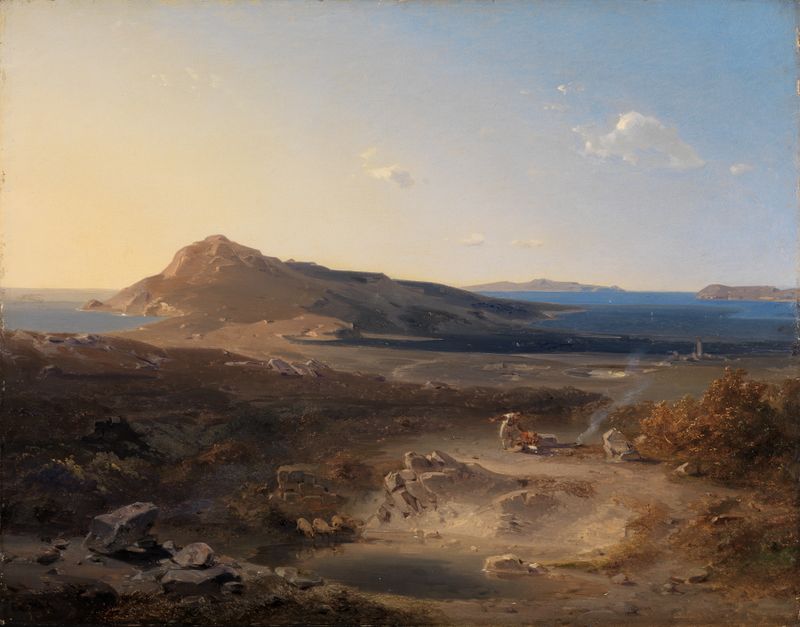
Die Insel Delos
Carl Rottmann

Olympia
Carl Rottmann





