
Etude à Bobigny Rosny — History & Facts
In Etude à Bobigny, Gustave Cariot captures a fleeting moment of ecstasy that juxtaposes joy and sorrow, inviting viewers into a world where colors vibrate with emotion. Look to the left, where the riotous greens of the landscape leap forth, intertwining with splashes of gold and crimson. The brushstrokes are both bold and delicate, creating a sense of movement that draws the eye across the canvas. Notice how the light filters through the foliage, casting soft shadows that dance upon the ground.
This interplay of light and color evokes an almost haunting beauty, as if Cariot is memorializing a transient moment in time. Delve deeper into the canvas, and you’ll find the quiet tension between the idyllic scene and the traces of human presence — perhaps a forgotten tool or an empty space where a figure might have stood. These subtle details whisper stories of labor and longing, reminding us of the transient nature of happiness. The vibrant hues echo the pulse of life itself, yet they carry an undertone of melancholy, suggesting that within beauty lies an ever-present ache. Painted in 1898, this work emerged during a time of great transformation in Cariot's life, as he sought to establish his voice within the avant-garde movement.
Living in France, he was influenced by the changing landscape of art, as Impressionism paved the way for new explorations of color and light. This piece is both a reflection of his artistic journey and a testament to the complexities of emotion that define the human experience.
More Artworks by Gustave Cariot
Browse all →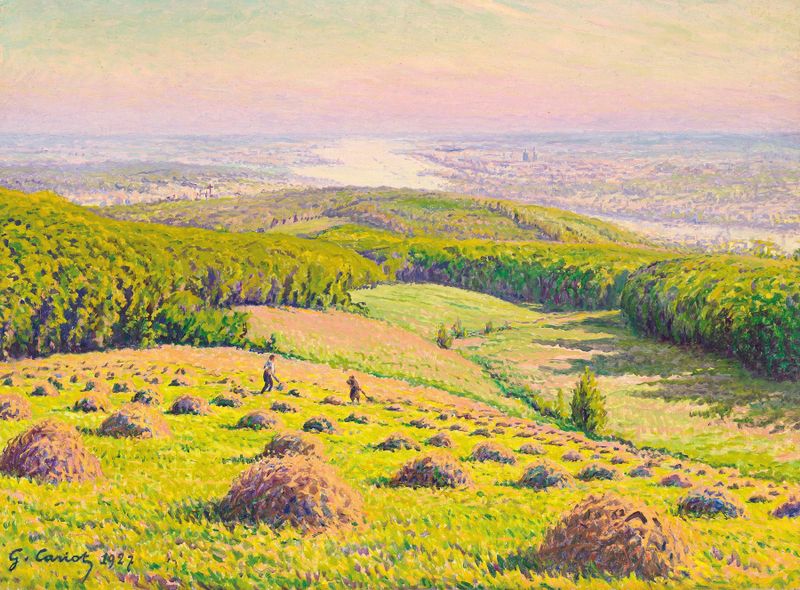
La vallée
Gustave Cariot

Le Jardin
Gustave Cariot

Les meules
Gustave Cariot
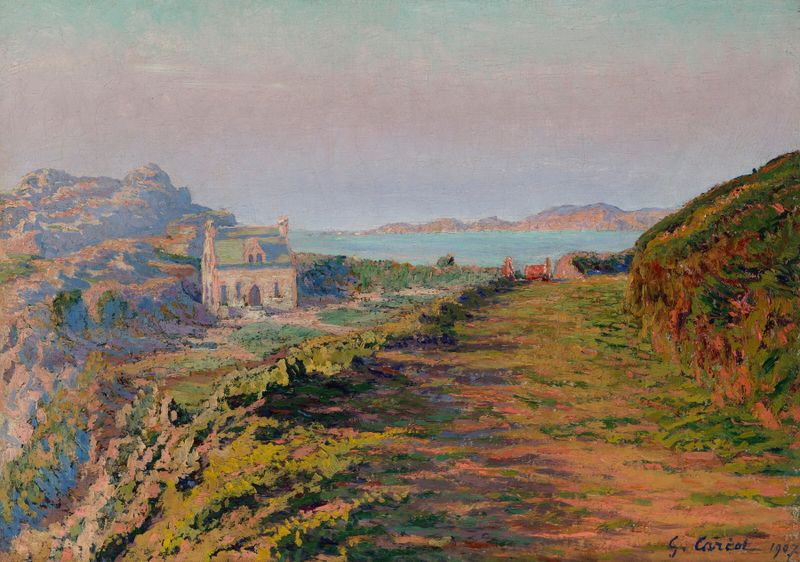
Maison Pen ar C’hastel à la pointe du Château, Perros-Guirrec
Gustave Cariot
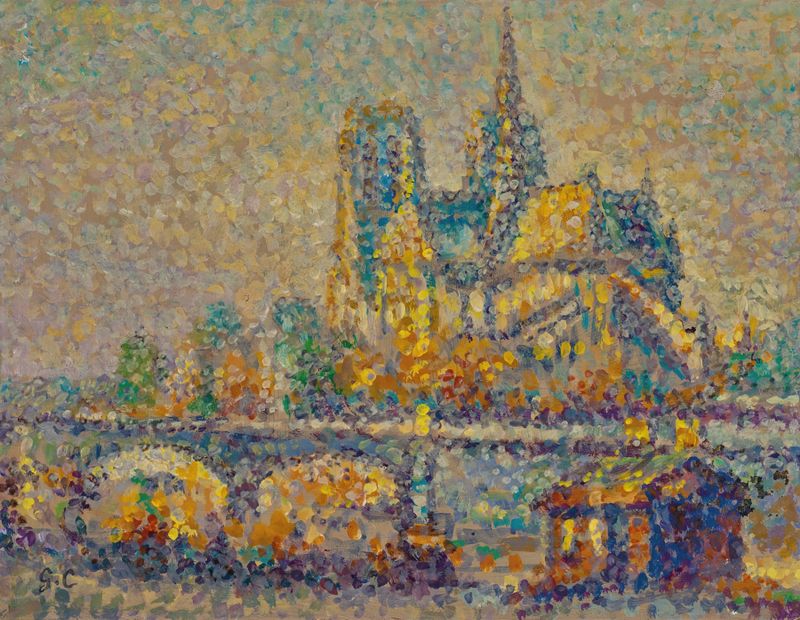
Notre-Dame de Paris
Gustave Cariot
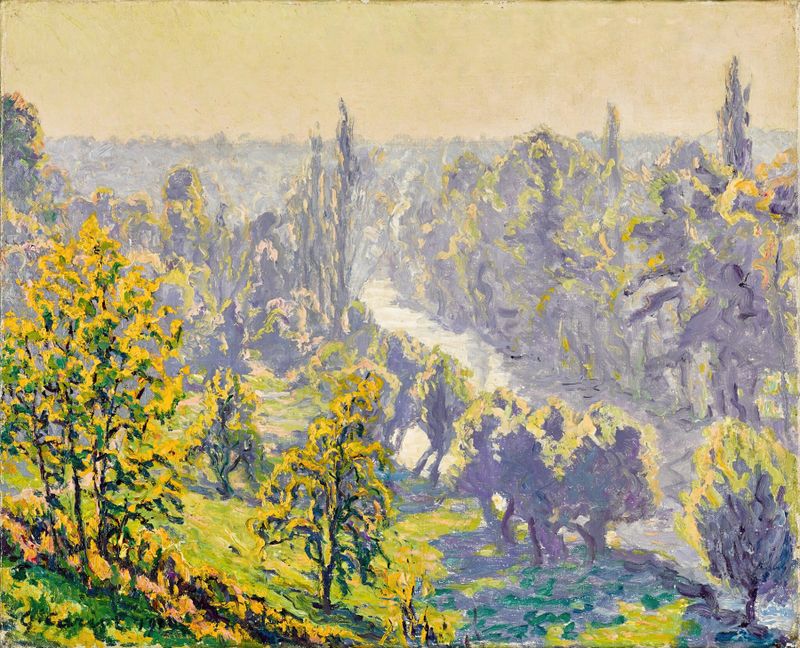
Périgny, automne, matinée sur l’Yerres
Gustave Cariot
Périgny, pont sur l’Yerres
Gustave Cariot
Le Pont-Neuf, eté, 20 heures
Gustave Cariot

Moulin de Périgny
Gustave Cariot

Le chemin à Mandres
Gustave Cariot





