
Périgny, pont sur l’Yerres — History & Facts
It echoes through the verdant landscape depicted in the canvas, whispering stories of creation, reflection, and the passage of time. In this work, the relationship between nature and human presence transcends mere representation; it invites the viewer to linger in contemplation. Look to the left where the gentle curve of the Yerres River leads the eye toward the quaint bridge, a delicate structure cradled by the surrounding foliage. The artist employs soft brushstrokes to render the water’s surface, mirroring the muted palette of greens and blues that breathe life into the scene.
Notice how the dappled sunlight filters through the trees, casting intricate patterns on the ground—a dance of light that stirs a sense of tranquility, signifying a moment untouched by the tumult of the outside world. Delve deeper into the painting’s heart, where contrasts of light and shadow reveal emotional depths. The serene water acts as a reflective surface, inviting introspection, while the vibrant greenery pulses with vitality, representing the relentless force of nature. Together, they conjure a delicate balance between creation and stillness, hinting at the turmoil of the era—a subtle acknowledgment of the world beyond the canvas. During 1917, amidst the backdrop of World War I, Périgny, pont sur l’Yerres emerged from the hand of Gustave Cariot, who remained in France while grappling with the challenges of his own artistic journey.
This period saw a push towards impressionism, yet Cariot’s work distinctly embodied a more personal, tranquil vision, serving as an escape from the chaos surrounding him. In this serene moment, he captured not just a bridge or a river, but a longing for peace.
More Artworks by Gustave Cariot
Browse all →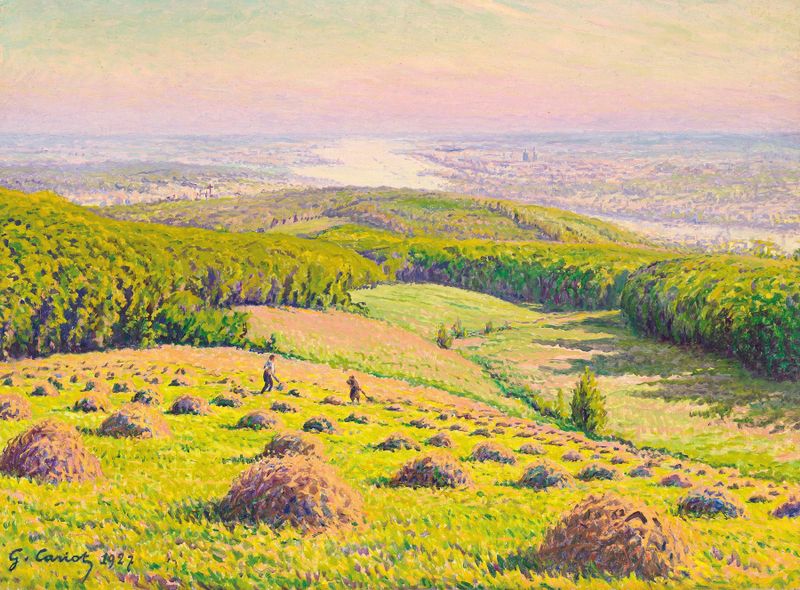
La vallée
Gustave Cariot

Le Jardin
Gustave Cariot

Les meules
Gustave Cariot
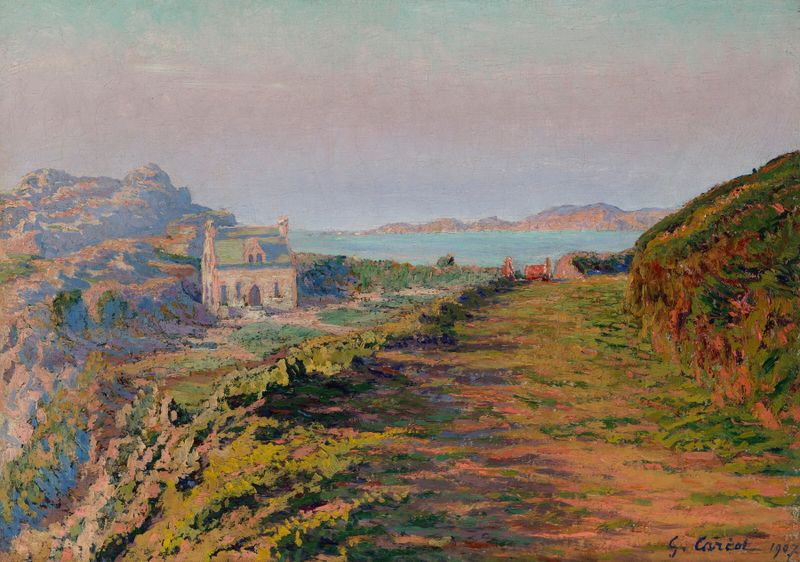
Maison Pen ar C’hastel à la pointe du Château, Perros-Guirrec
Gustave Cariot
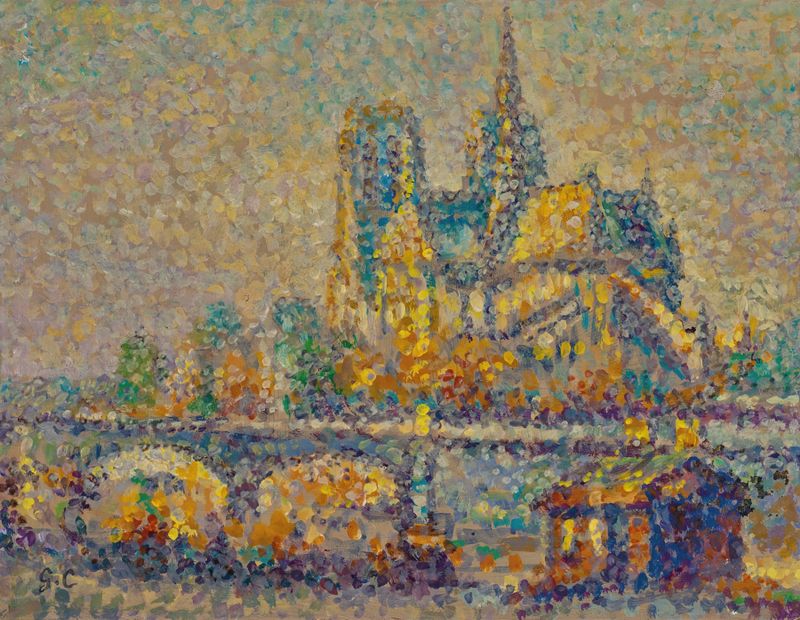
Notre-Dame de Paris
Gustave Cariot
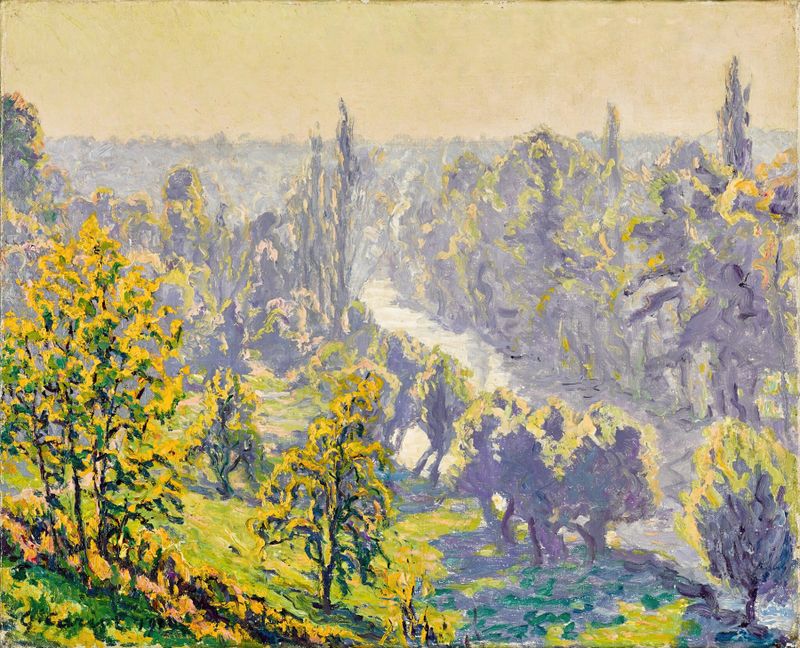
Périgny, automne, matinée sur l’Yerres
Gustave Cariot
Le Pont-Neuf, eté, 20 heures
Gustave Cariot

Moulin de Périgny
Gustave Cariot

Le chemin à Mandres
Gustave Cariot
La cueillette des fleurs
Gustave Cariot





