
Les meules — History & Facts
In Les meules, the viewer is invited to step into a world where nature dances with the artist’s hand, celebrating the ecstatic interplay of color and form. Focus on the vibrant strokes that weave together the golden hues of wheat, each brushstroke pulsating with life. Look closely at the textured surface, where the thick application of paint creates a vivid sense of movement, as if the landscape is breathing. The composition draws the eye toward the stacked hay bales, their rounded shapes softening the harshness of the earth beneath them.
The brightness of the palette captures the essence of a sunlit day, embracing the viewer with warmth and tranquility. Yet beneath this pastoral beauty lies an emotional tension. The chaotic interplay of light and shadow hints at the transient nature of rural life, where the cycles of harvest echo deeper themes of labor and time. The rhythm of the brushwork speaks to an ecstatic celebration of existence, inviting reflections on the fleeting joys found in the everyday, the delicate balance between nature’s abundance and its inevitable decay. Gustave Cariot created this piece during a period of significant experimentation in the late 19th century, influenced by the post-impressionist movement.
As he navigated his artistic journey, Cariot sought to distill the essence of rural life through vivid colors and dynamic forms, embodying both the beauty and transience of the landscape around him. In a world increasingly urbanizing, his works became a poignant reminder of the pastoral ecstasy that once defined the countryside.
More Artworks by Gustave Cariot
Browse all →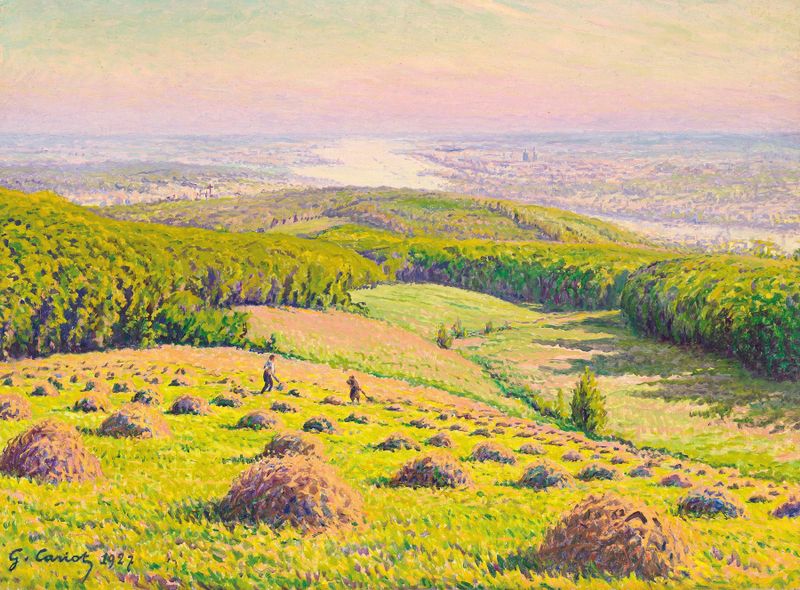
La vallée
Gustave Cariot

Le Jardin
Gustave Cariot
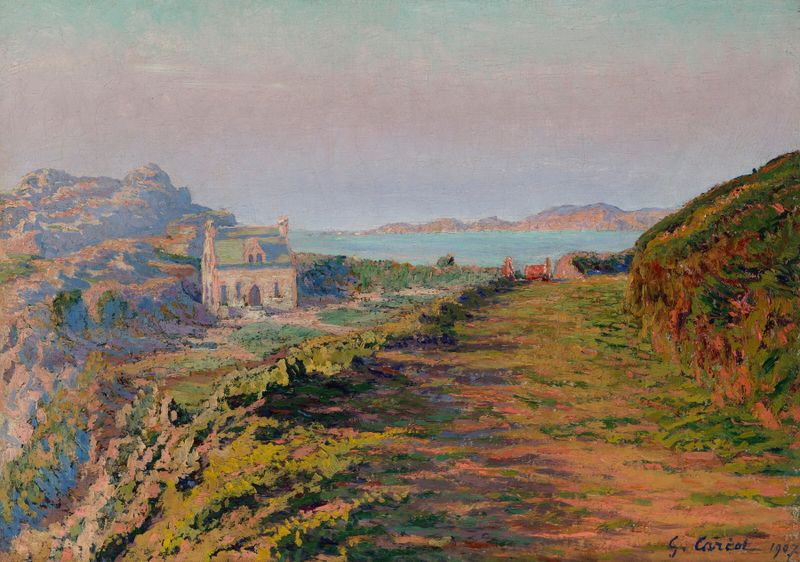
Maison Pen ar C’hastel à la pointe du Château, Perros-Guirrec
Gustave Cariot
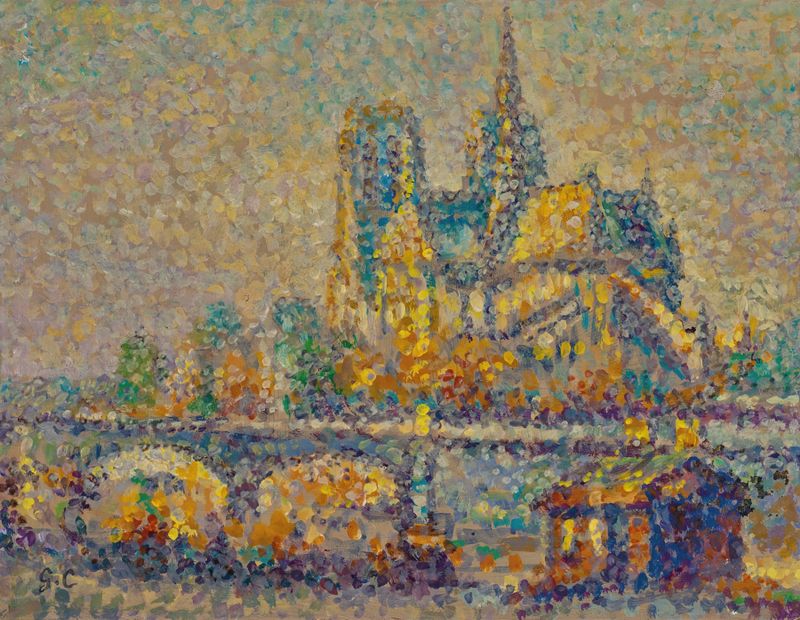
Notre-Dame de Paris
Gustave Cariot
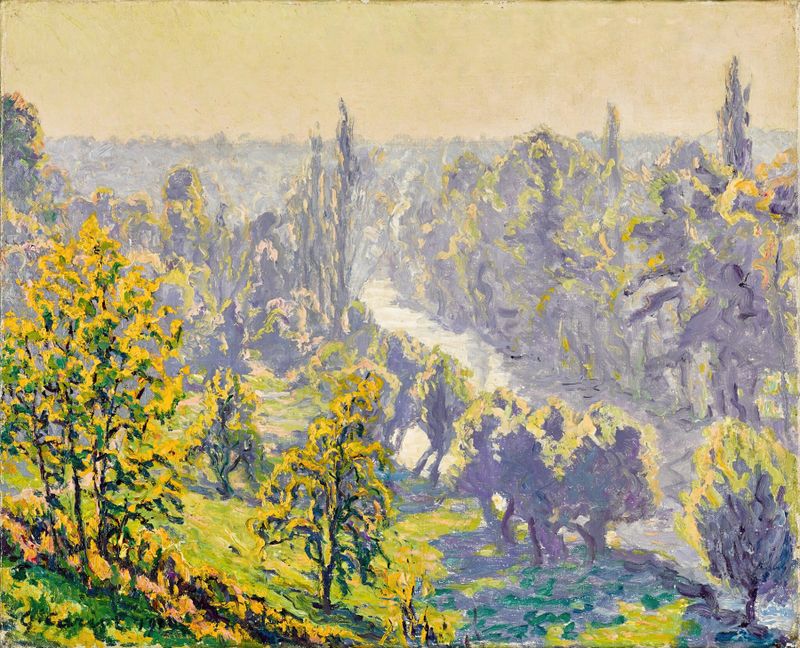
Périgny, automne, matinée sur l’Yerres
Gustave Cariot
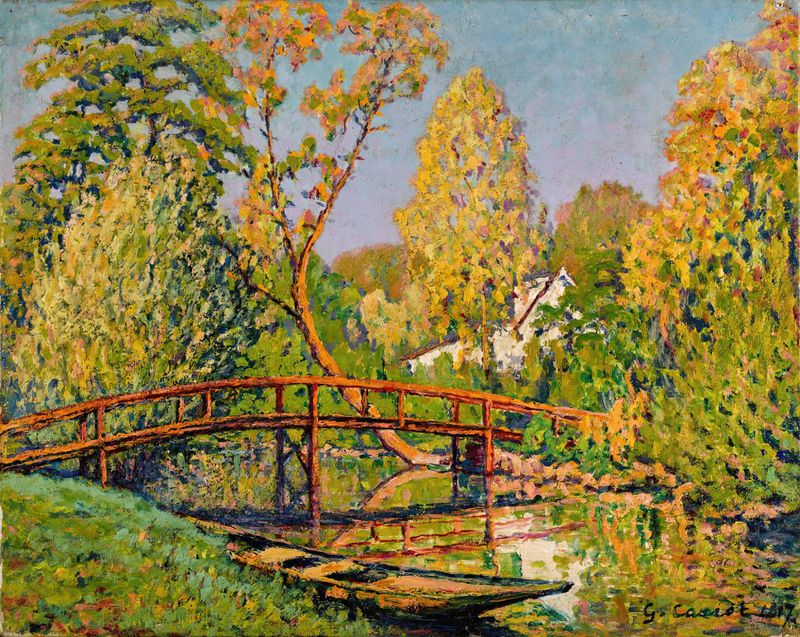
Périgny, pont sur l’Yerres
Gustave Cariot
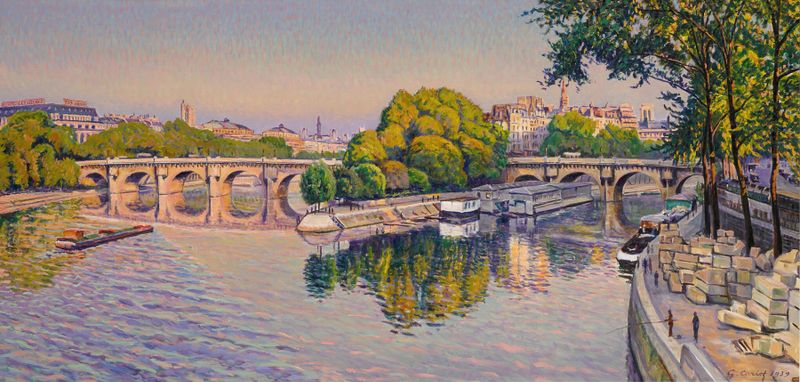
Le Pont-Neuf, eté, 20 heures
Gustave Cariot

Moulin de Périgny
Gustave Cariot

Le chemin à Mandres
Gustave Cariot
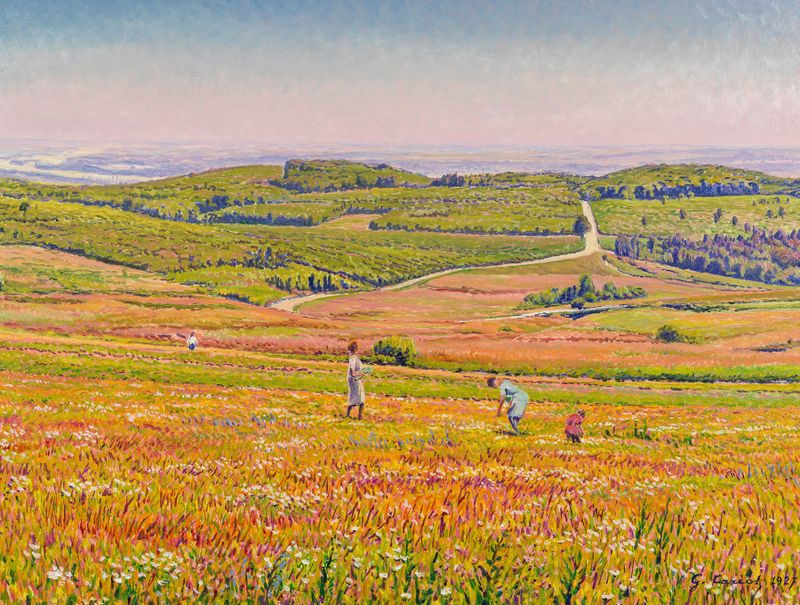
La cueillette des fleurs
Gustave Cariot





