
Etude à Nemours — History & Facts
Who listens when art speaks of silence? In Etude à Nemours, the essence of quietude is captured, inviting us to ponder the weight of shadows. Look to the left at the deep, enveloping shadows that crisscross the canvas. Gustave Cariot employs a rich palette of earthy greens and browns that harmonize with the soft blues of the sky. Notice how the light subtly dances through the trees, creating a delicate interplay between illumination and obscurity.
The composition draws your eye toward a distant landscape, evoking both the serenity of nature and a sense of solitude that permeates the scene. Delve deeper into the painting’s emotional fabric, where contrasts are rife. The vibrant strokes hint at life and vitality, yet the looming shadows create a sense of seclusion and reflection. The lone figure, almost lost among the trees, embodies the tension between existence and isolation, bridging the gap between the seen and the unseen.
Here, the shadows are not merely absence but a presence that evokes contemplation and connection to the inner self. Cariot painted Etude à Nemours in 1896 while living in France, a time characterized by the rise of Impressionism and a focus on capturing fleeting moments of light and atmosphere. Experimenting with color and texture, he was influenced by contemporaries who sought to express emotional depth through natural scenes. This work reflects a transitional phase in his career, as he explored the balance between representation and abstraction, marking his journey through the evolving landscape of late 19th-century art.
More Artworks by Gustave Cariot
Browse all →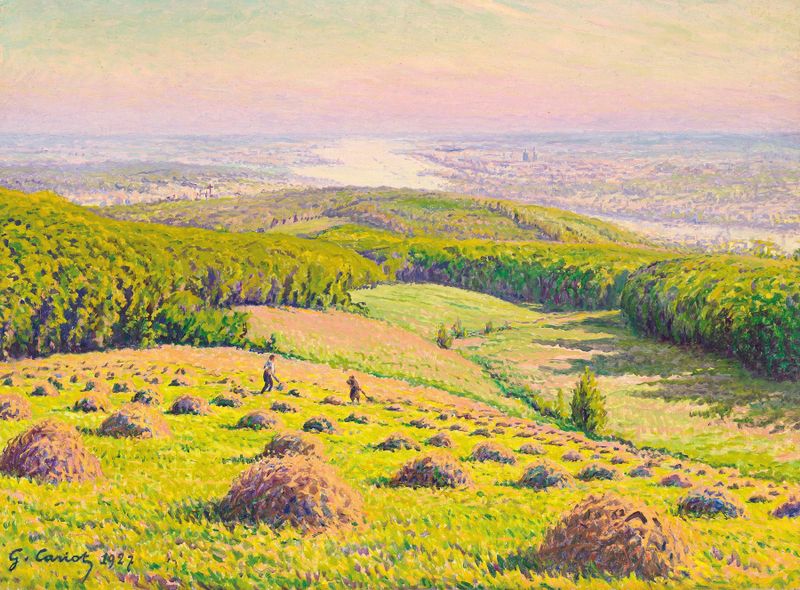
La vallée
Gustave Cariot

Le Jardin
Gustave Cariot

Les meules
Gustave Cariot
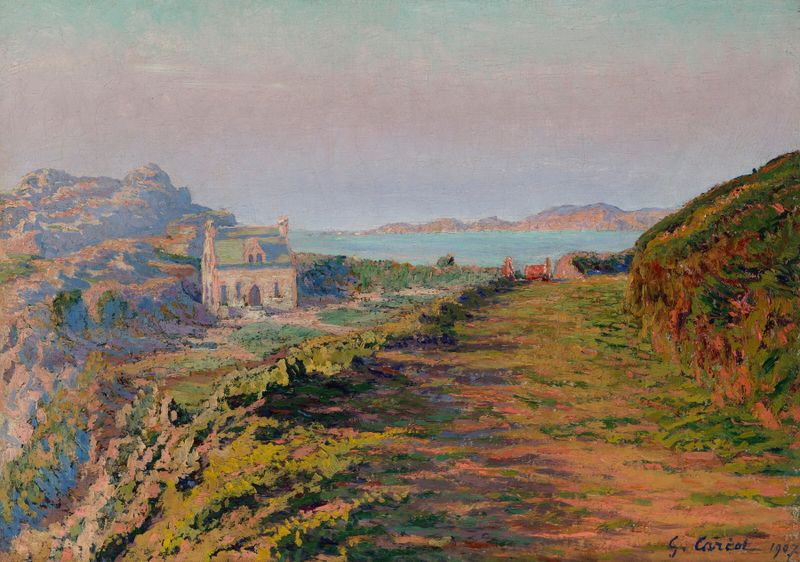
Maison Pen ar C’hastel à la pointe du Château, Perros-Guirrec
Gustave Cariot
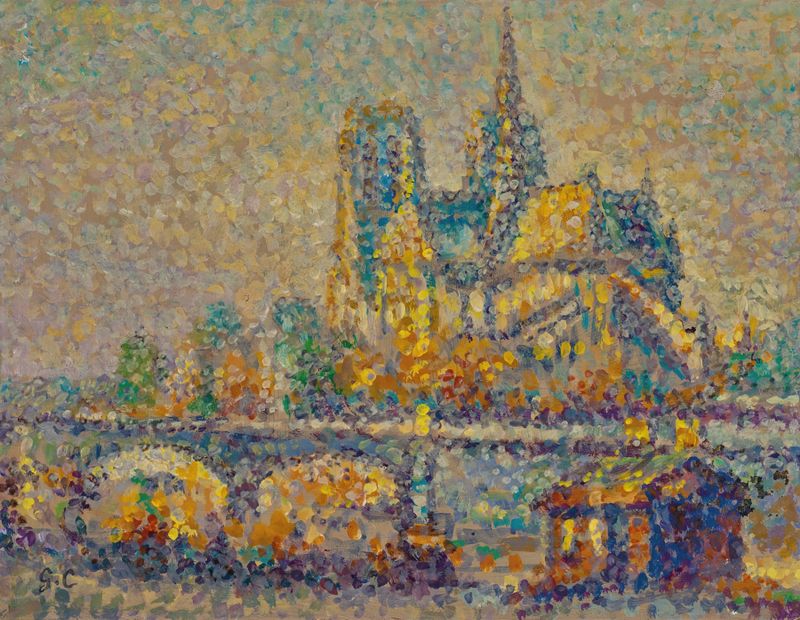
Notre-Dame de Paris
Gustave Cariot
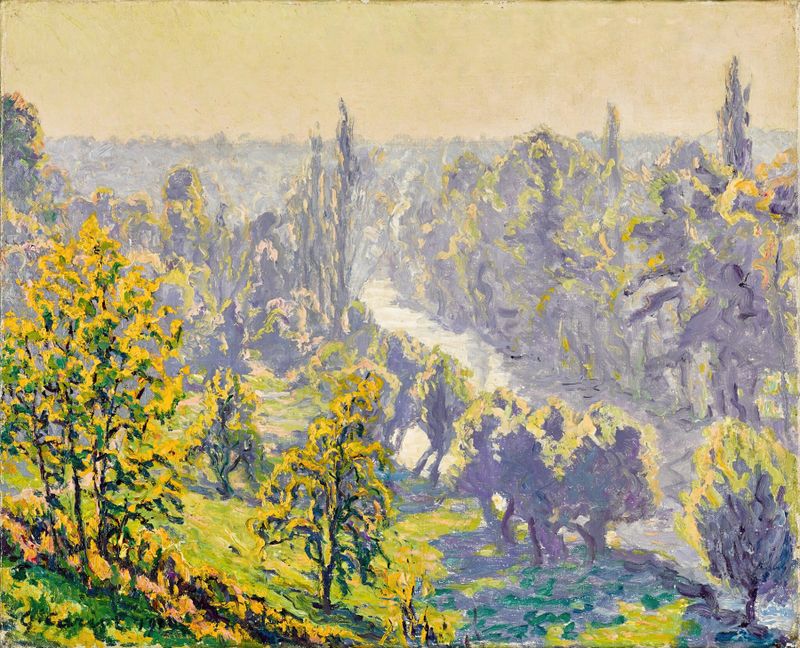
Périgny, automne, matinée sur l’Yerres
Gustave Cariot
Périgny, pont sur l’Yerres
Gustave Cariot
Le Pont-Neuf, eté, 20 heures
Gustave Cariot

Moulin de Périgny
Gustave Cariot

Le chemin à Mandres
Gustave Cariot





