Evening Landscape — History & Facts
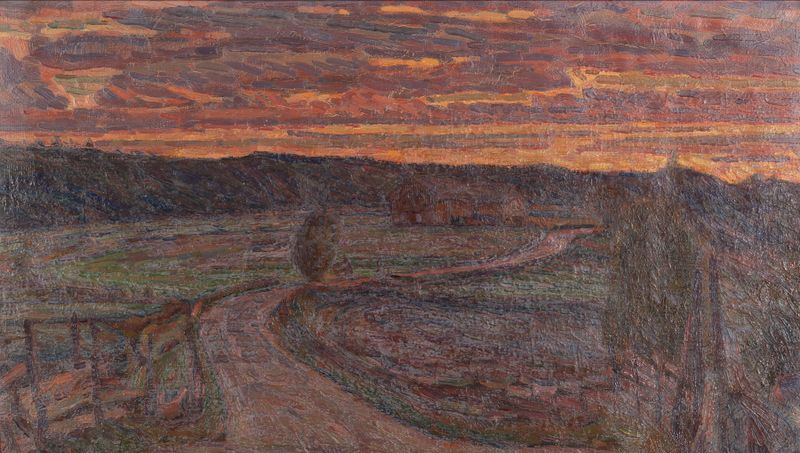
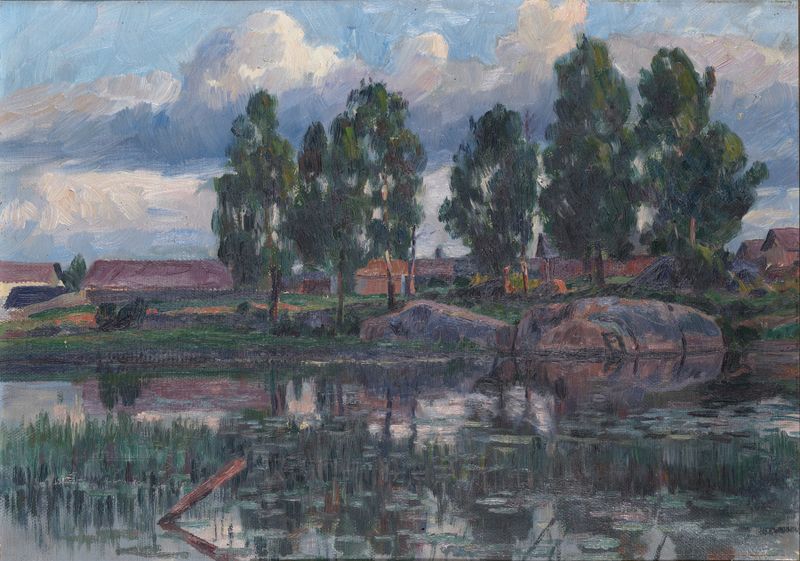
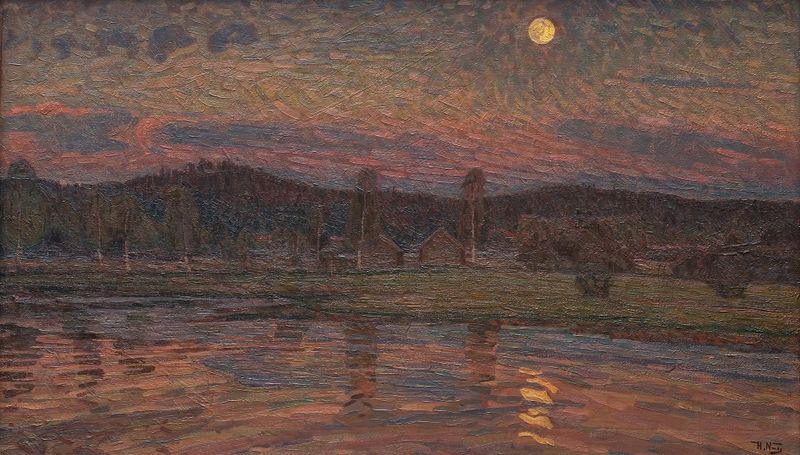
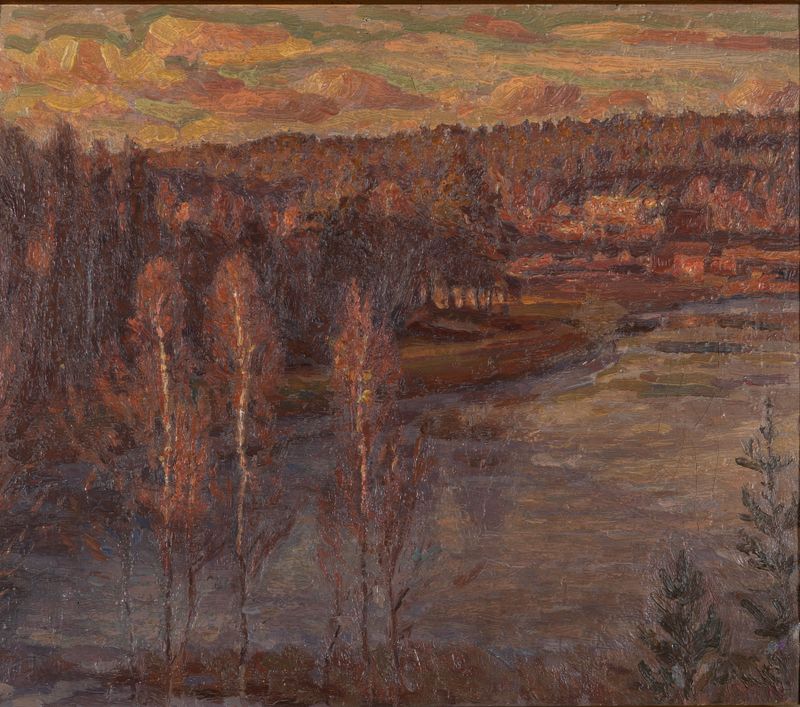
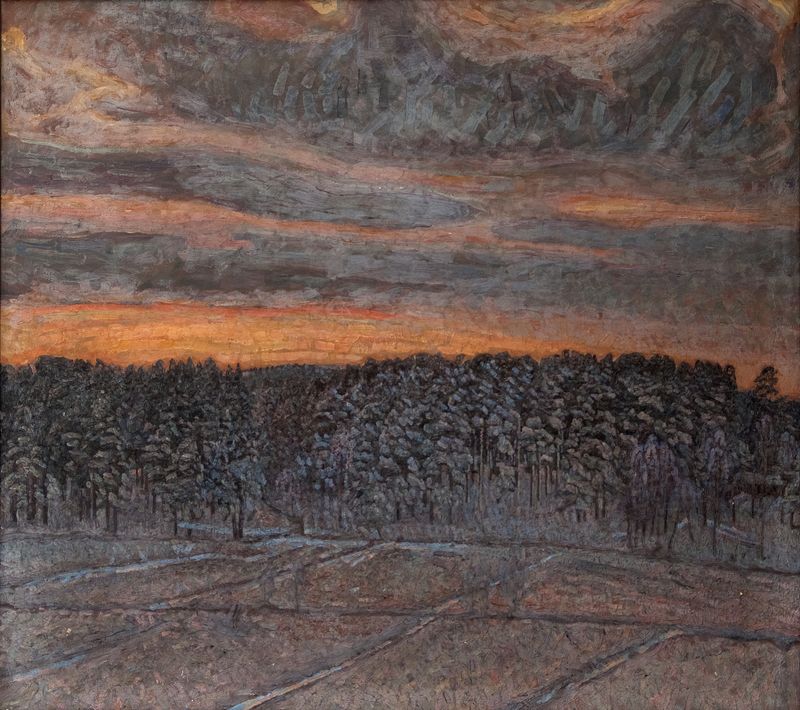
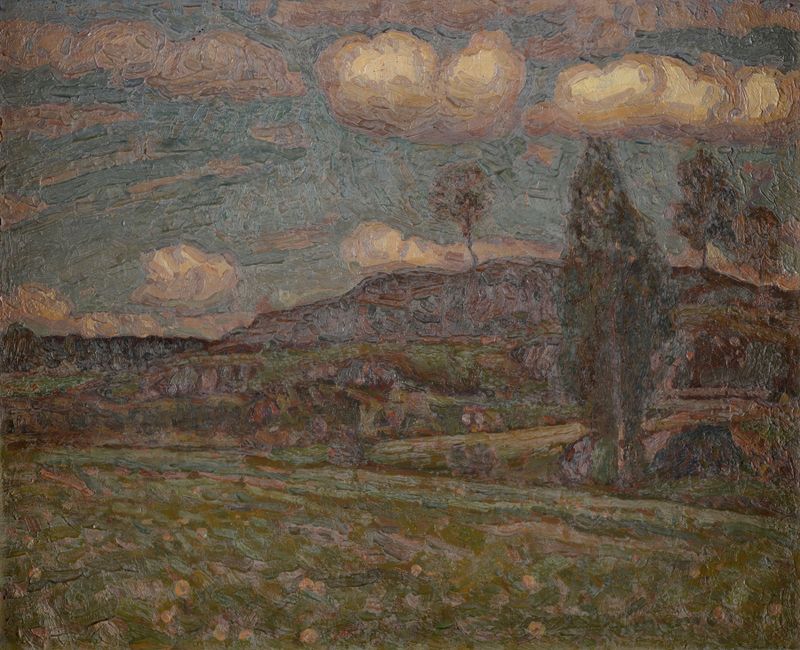
Did the painter know this moment would outlive them? In the quiet expanse of Evening Landscape, a sense of emptiness envelops the scene, inviting profound reflection on time and existence. Focus on the horizon where light meets earth; the subtle gradient of oranges and purples softly melds into twilight. To the left, a solitary tree stands, silhouetted against the vibrant sky, its branches outstretched yet devoid of leaves. Notice the faint brushstrokes that suggest movement in the clouds, embodying the fleeting nature of daylight.
The composition is intentionally sparse, emphasizing the vastness around the tree, which symbolizes solitude and introspection. Delve deeper into the painting’s emotional layers: the tension between the vibrancy of the sunset and the stillness of the landscape evokes a poignant contrast between life and isolation. The empty space surrounding the tree speaks to a yearning for connection, while the colors evoke nostalgia, suggesting that beauty can emerge from absence. This dichotomy resonates with anyone who has felt the weight of quiet moments, bringing a universal sense of longing to the forefront. In 1897, Herman Norrman painted Evening Landscape amidst a burgeoning movement toward naturalism in art, where capturing the essence of light and atmosphere became paramount.
Living in Sweden, he was influenced by the Nordic landscape and the reflections of his contemporaries who were exploring the interplay of nature and human emotion. The work captures not only the physical world but also the introspective journey that each viewer embarks upon, revealing the timeless nature of solitude.