On the River Bank — History & Facts
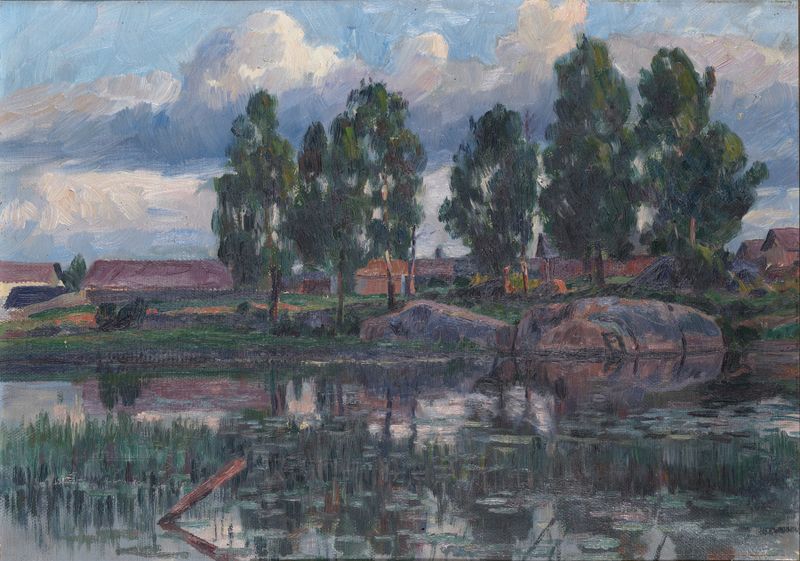
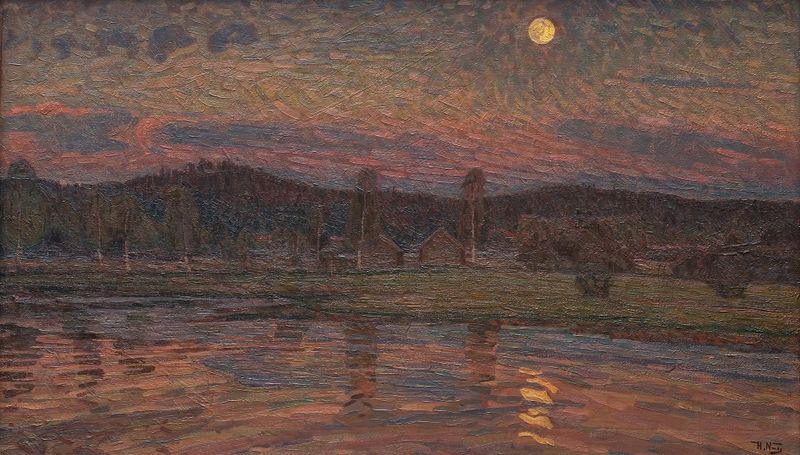
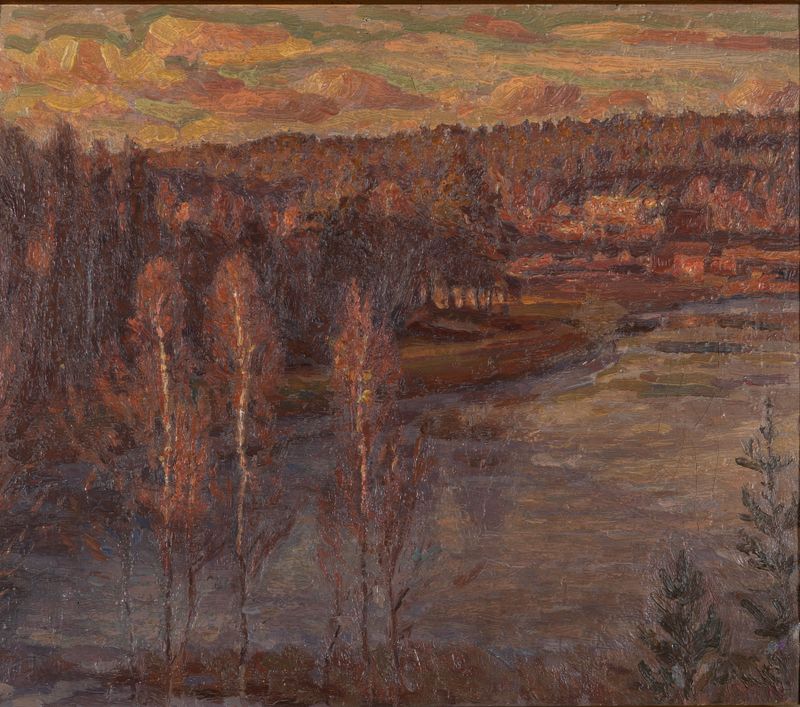
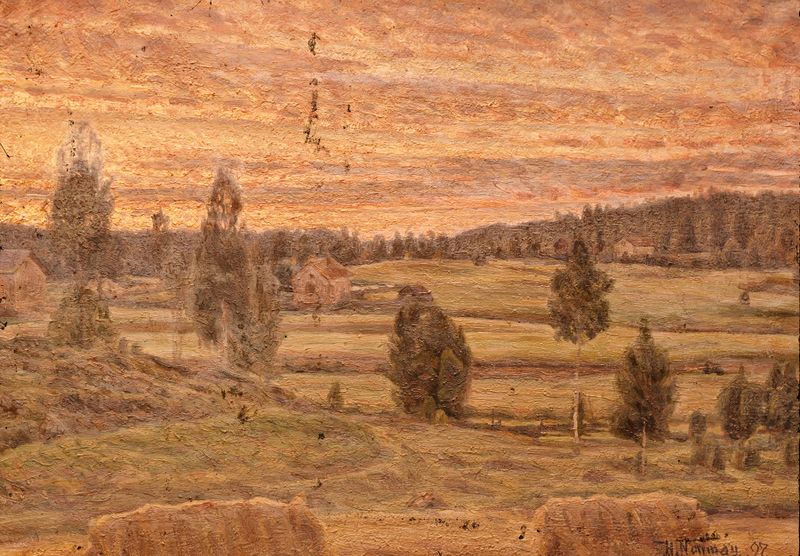
What secret hides in the quiet of the canvas? Beneath the serene surface, a yearning pulses through the stillness, inviting the viewer to explore deeper emotions and hidden narratives. Look to the left at the gentle curve of the riverbank, where soft grasses sway in a whispering breeze. The artist masterfully employs a palette of muted greens and blues, drawing your gaze across the tranquil water, shimmering with hints of sunlight. Notice how the delicate brushwork captures the play of light, creating a reflective surface that seems to pulse with life.
The sparse composition invites contemplation, emphasizing the isolation of this natural setting. As you linger on the painting, consider the tension between solitude and connection. The figure standing by the water, though alone, seems in dialogue with the landscape, embodying a deep sense of longing. The choice of time—early evening, as the sun dips low—heightens this emotion, encapsulating the fleeting moment of day’s end, suggesting both closure and the anticipation of what lies beyond.
The contrasts of light and shadow further underscore the complexity of human emotions intertwined with nature. In 1898, while residing in Sweden, the artist was influenced by the burgeoning Symbolist movement, which emphasized personal expression and emotional depth. This period marked a significant transition in his work, as he sought to capture the inner lives of his subjects against the backdrop of the tranquil landscapes he adored. The world was shifting, grappling with modernity, yet Norrman’s focus on nature illuminated a timeless yearning that resonates through On the River Bank.