
Evening of Mount Fuji from Lake Ashino-ko — History & Facts
The interplay of dusk and the distant mountain evokes thoughts of mortality and the passage of time, reminding us that beauty is fleeting. Look to the center of the canvas, where the majestic silhouette of Mount Fuji rises against a gradient sky of soft purples and deep blues. The gentle ripples of Lake Ashino-ko reflect this tranquil scene, creating a harmonious balance between water and earth. Notice how subtle brushstrokes lend texture to the clouds, while silvery highlights dance across the lake, guiding the eye toward the serene peak. The contrast between the vibrant sky and the deepening shadows at the water's edge evokes a sense of transition—day giving way to night, life inching toward its inevitable conclusion.
In the foreground, a lone boat drifts, its absence of passengers symbolizing solitude and contemplation. The stillness of the scene invites introspection, a moment of pause that echoes the quiet despair of human existence. Kawase Hasui painted this piece in 1935 during a time when Japan was grappling with rapid modernization and the remnants of tradition. Working within the shin-hanga movement, he sought to capture the beauty of natural landscapes while responding to the changing world around him.
This work reflects not only the artist’s mastery but also a deep connection to the spirit of his country amid its evolving identity.
More Artworks by Kawase Hasui
Browse all →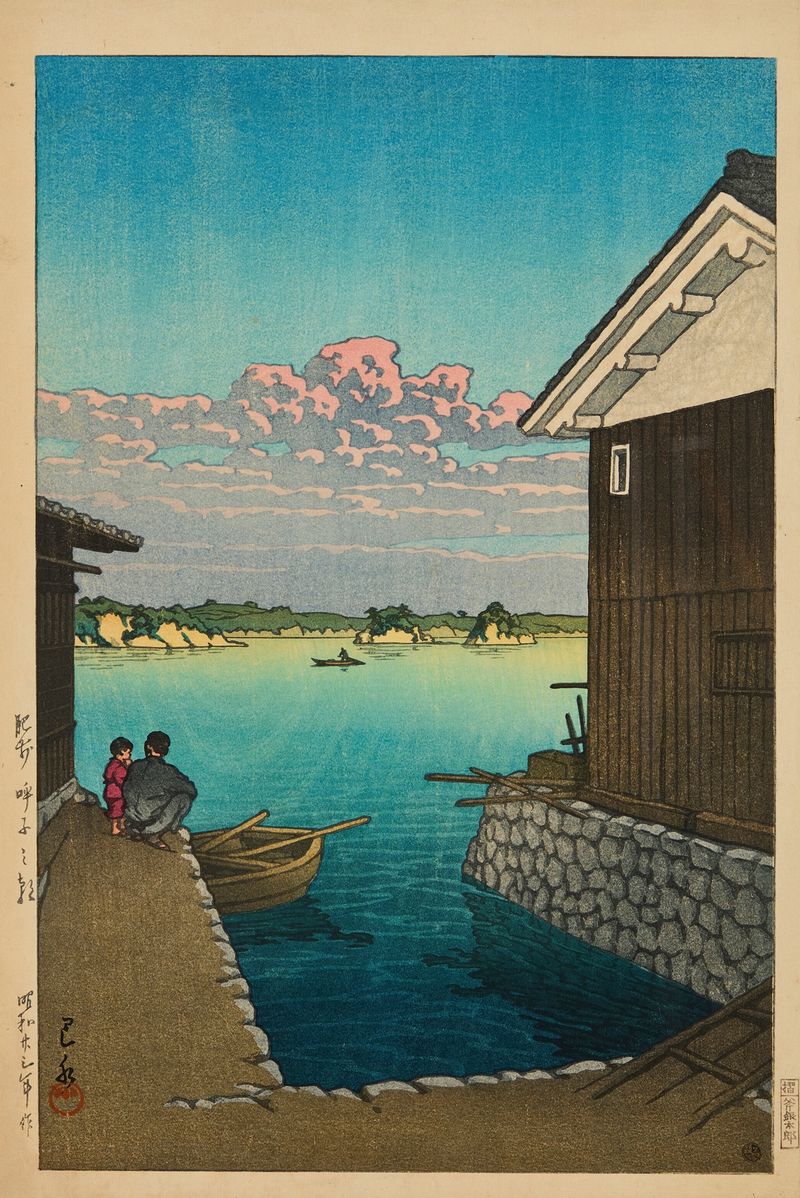
Hizen Yobuko no asa (Morning in Yobuko, Hizen)
Kawase Hasui
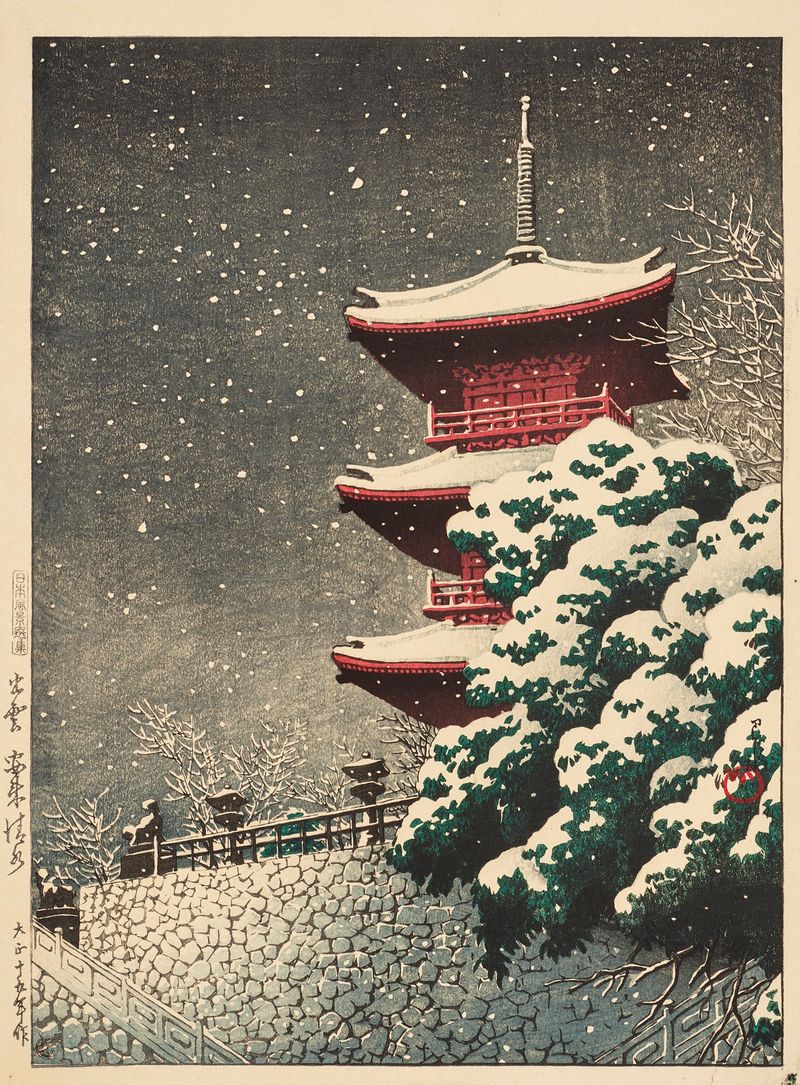
Izumo, Yasugi Kiyomizu (Yasugi Kiyomizu Temple at Izumo)
Kawase Hasui
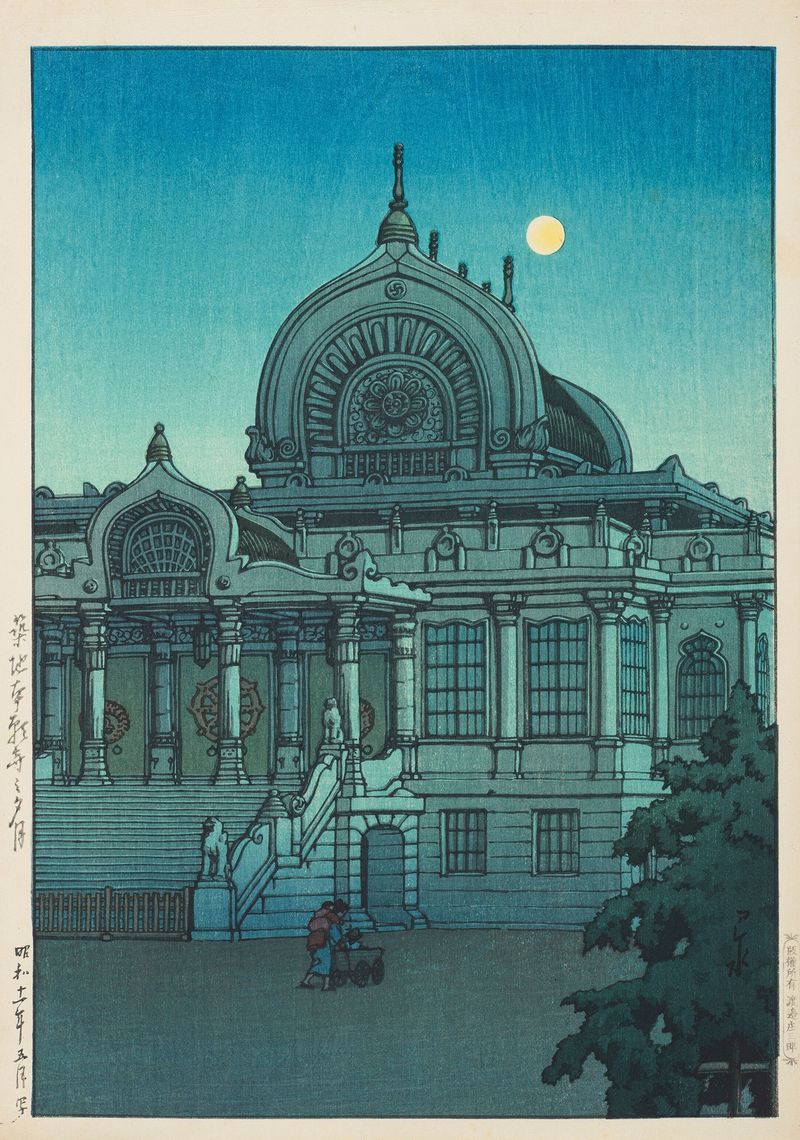
Tsukiji Honganji no yuzuki (Evening moon at Honganji Temple in Tsukiji)
Kawase Hasui
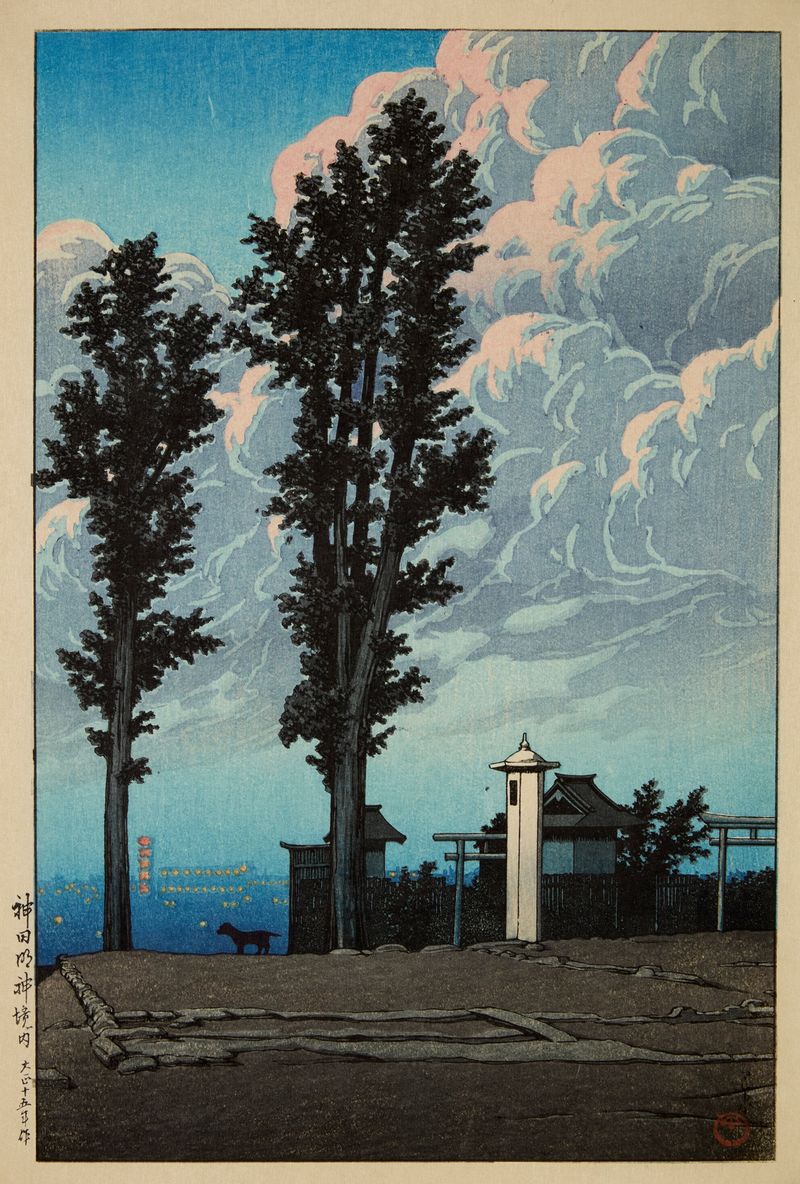
Kanda Myojin keidai (Kanda Myojin Shrine precent)
Kawase Hasui
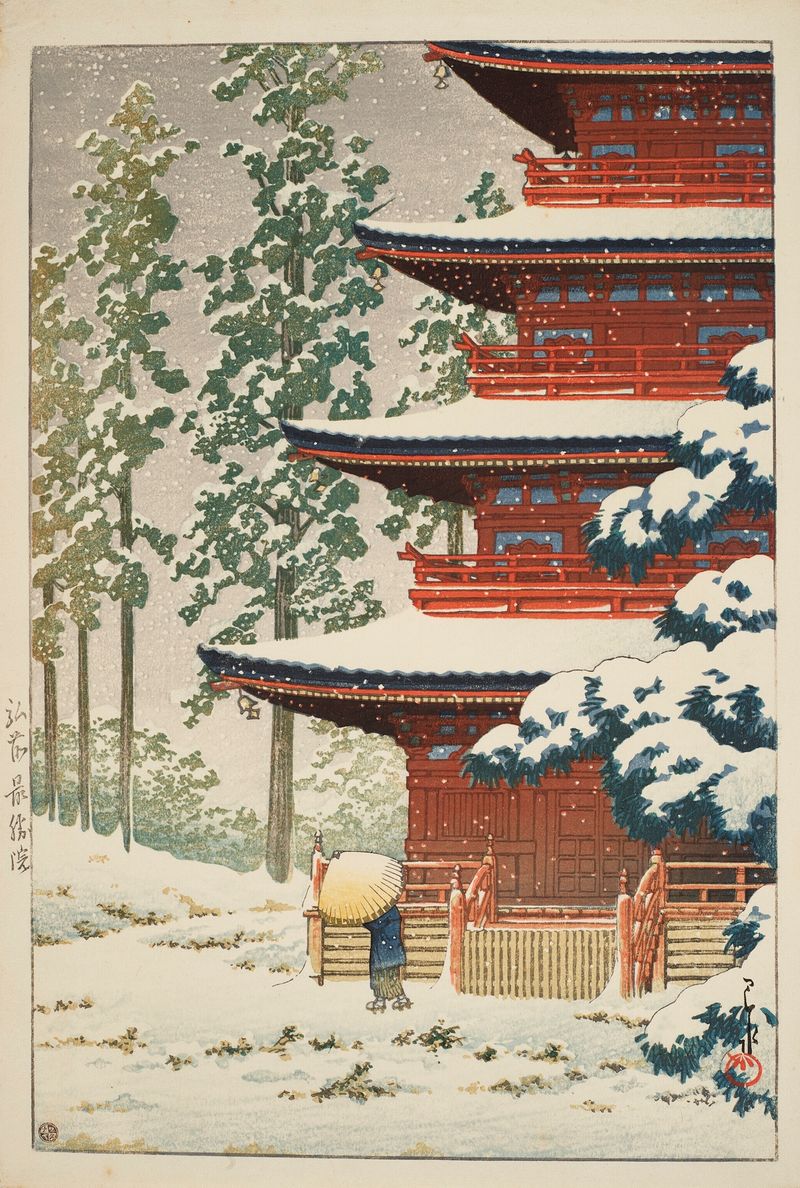
Saisho-in Temple, Hirosaki
Kawase Hasui
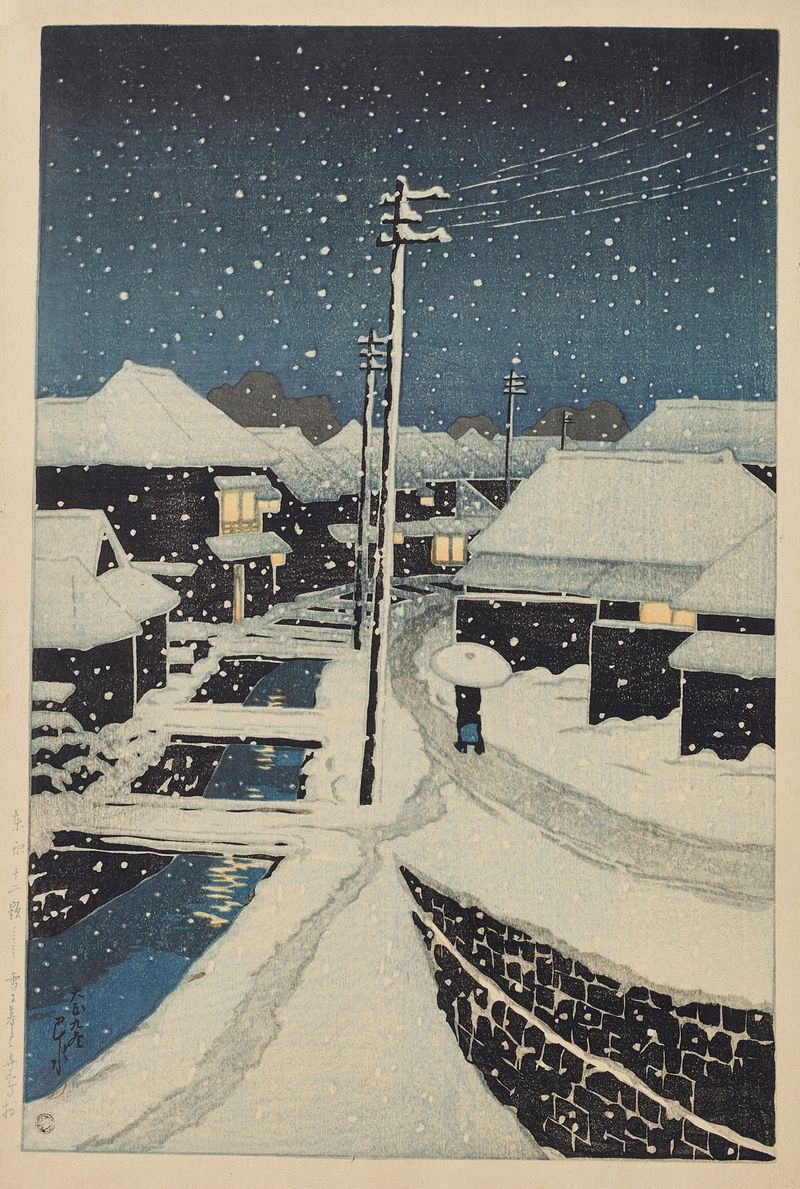
Yuki ni fururu Terajima mura (Evening snow at Terajima Village)
Kawase Hasui
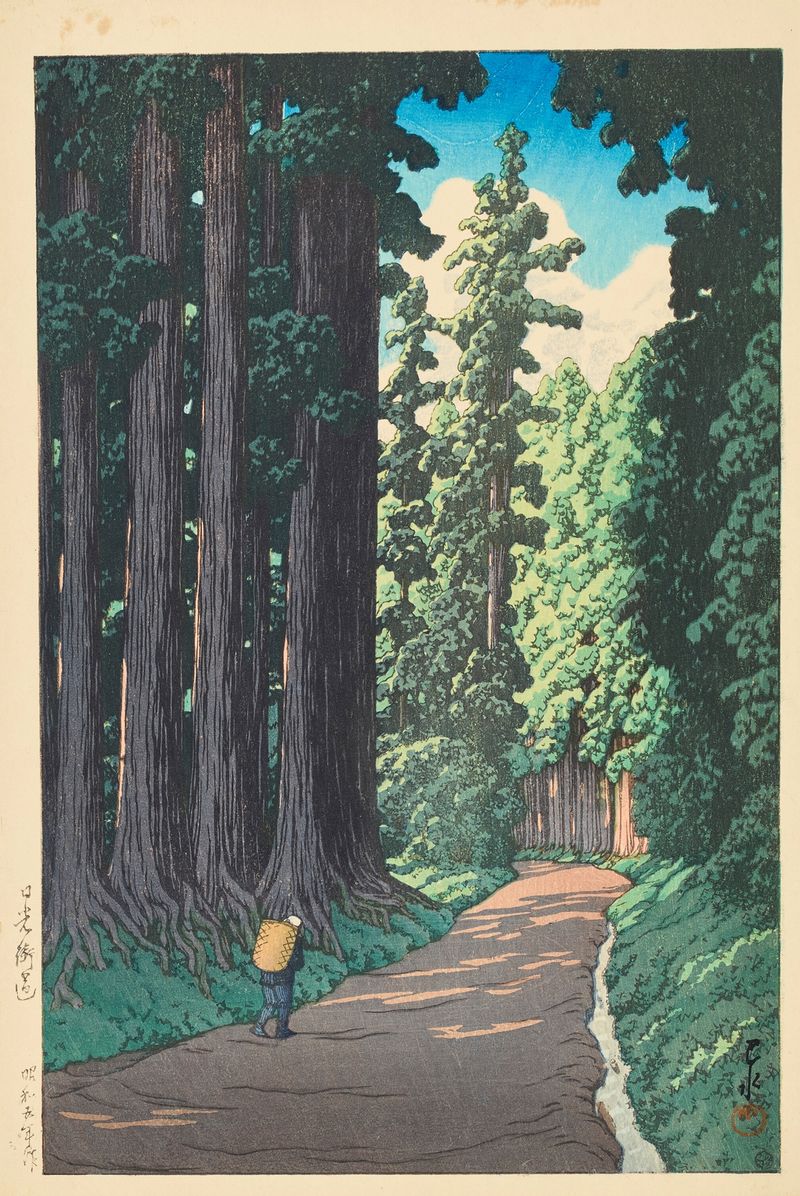
Nikko gaido (The Road to Nikko)
Kawase Hasui
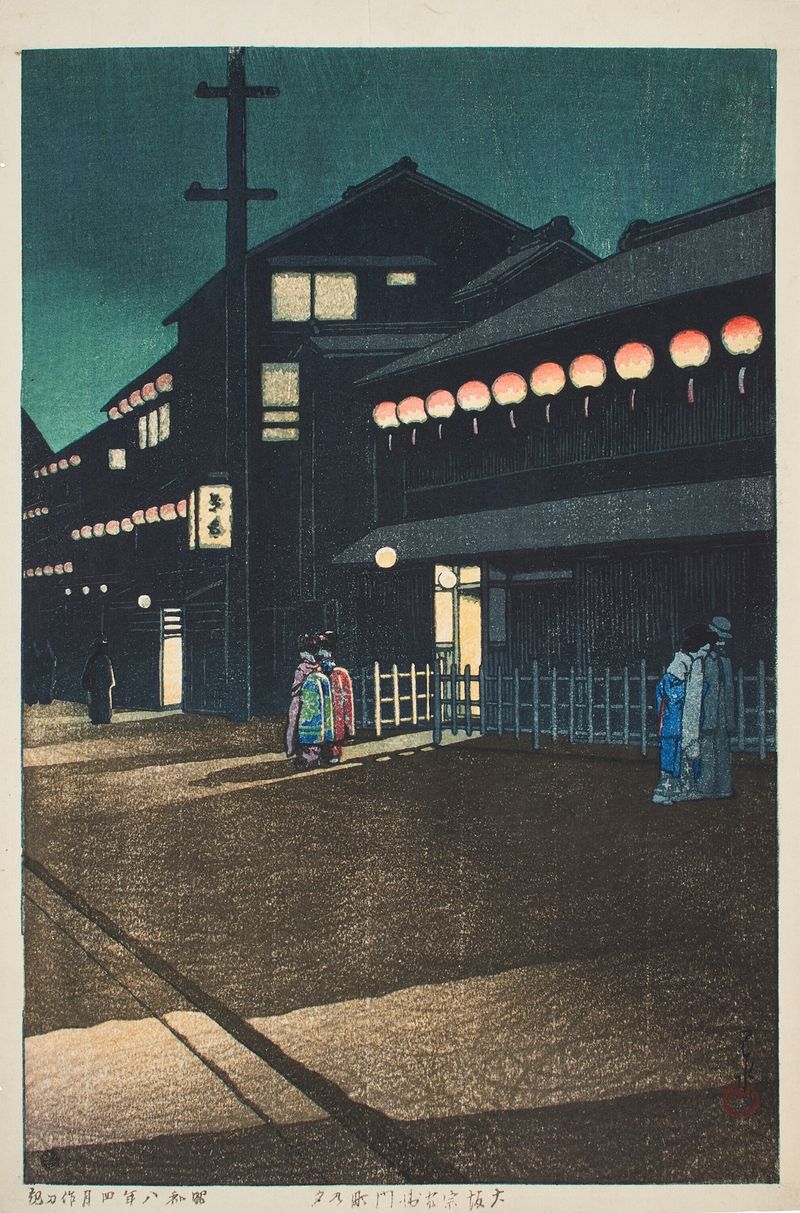
Osaka Soemon-cho no yu (Evening in Soemon-cho, Osaka)
Kawase Hasui
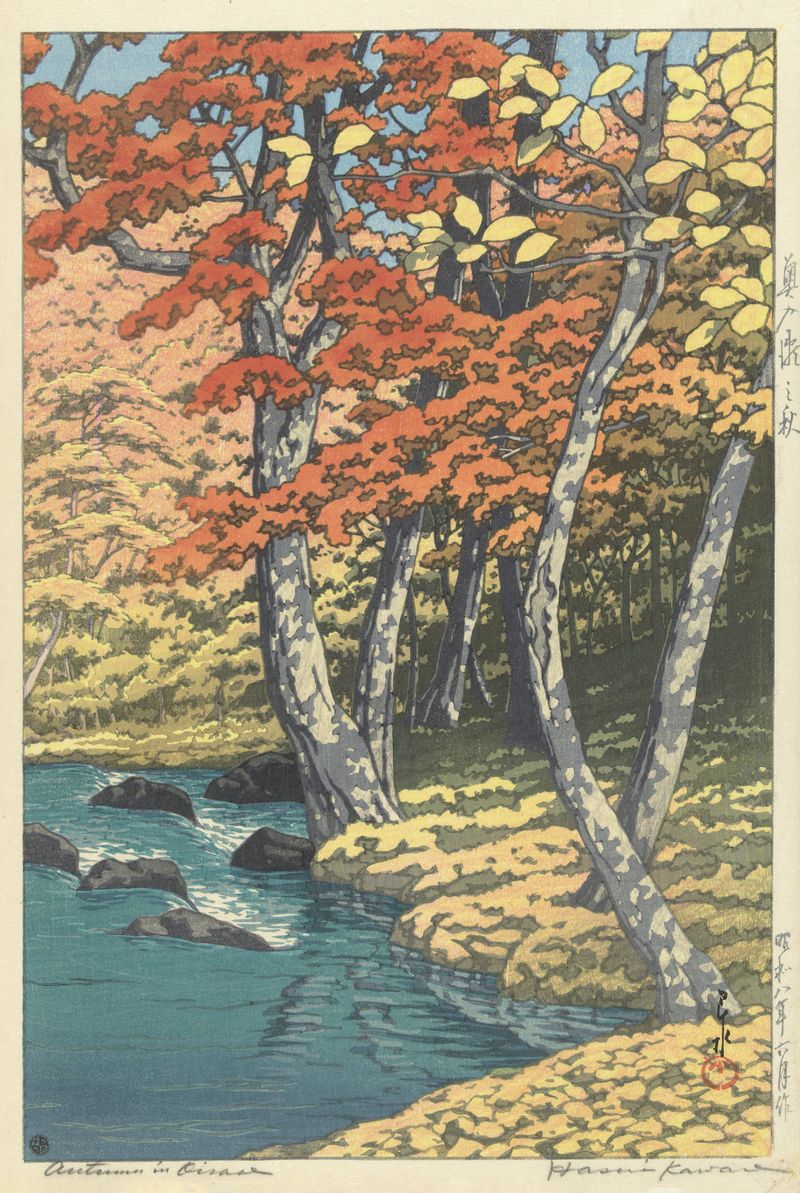
Autumn In Oirase
Kawase Hasui
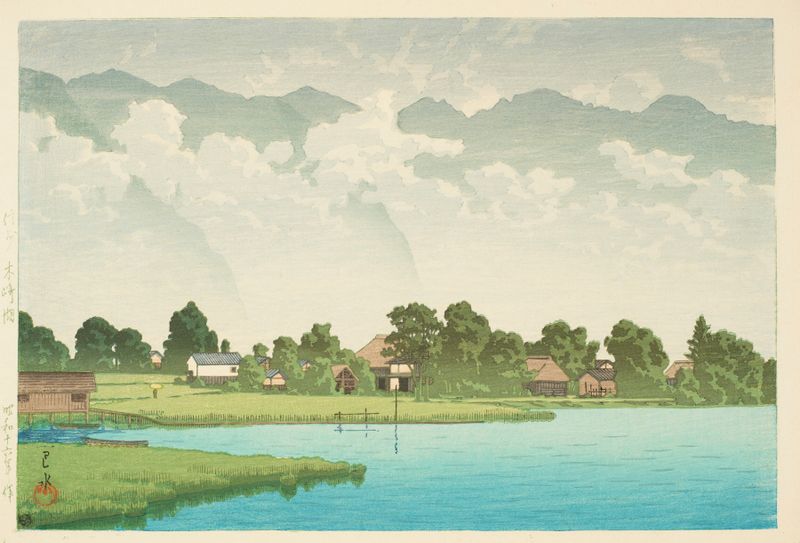
Shinshu Kizakiko (Kizaki Lake in Shinshu)
Kawase Hasui





