Ewiges geht Vorüber (Reisebild) — History & Facts
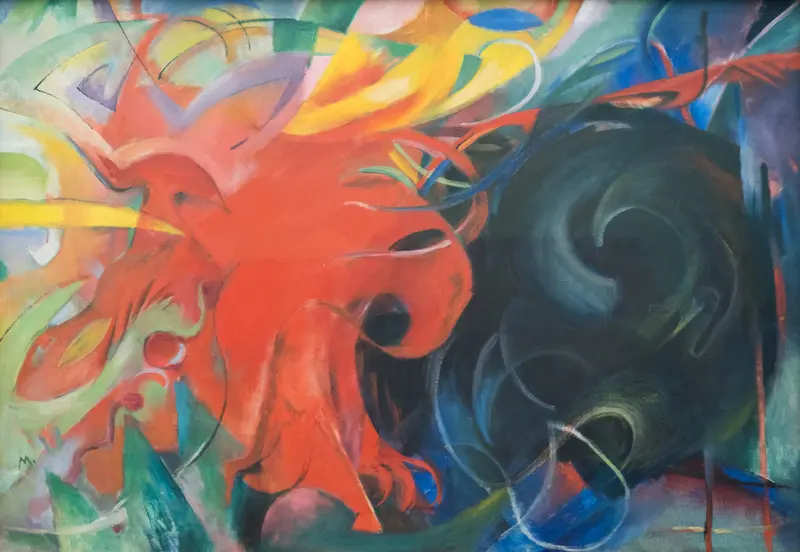
In Ewiges geht Vorüber (Reisebild), Paul Klee uses a vibrant palette filled with blues, yellows, and reds. The composition features abstract forms that seem to dance across the canvas. Shapes are layered and intertwined, creating a sense of movement and rhythm.
The overall effect is both playful and thought-provoking. This painting is characterized by Klee's unique approach to color and form. The brushwork is loose and expressive, typical of his style during the 1920s. The use of geometric shapes and lines adds a structured yet whimsical quality to the work.
Viewers can appreciate how Klee blends abstraction with a sense of narrative. Paul Klee was a key figure in the development of modern art, and this work reflects his interest in the interplay of color and form. Created in the 1920s, Ewiges geht Vorüber (Reisebild) showcases Klee's fascination with the emotional power of colors. An interesting fact about this painting is that it was part of a series exploring themes of travel and the passage of time.
Klee's innovative techniques continue to influence artists today.