
Expulsion from the Garden of Eden — History & Facts
A heavy silence envelops the scene as two figures stand at the threshold of paradise, their expressions a mix of sorrow and shock. Eve, her face turned toward Adam, seems lost in despair, while he gazes back, his body tense as though torn between grief and regret. The light, a fading golden hue, casts long shadows that stretch ominously behind them, emphasizing the stark divide between their former bliss and the harsh reality that now awaits. Look to the left at the lush greenery, vibrant yet haunting, as if the very flora mourns the loss of innocence.
Notice how the artist’s brushstrokes capture the delicate interplay of light and shadow throughout the garden, contrasting the vibrancy of life with the encroaching darkness. The figures' nudity, juxtaposed against the thick foliage and the looming angels clad in radiant robes, signals both their vulnerability and their irrevocable fall from grace. Hidden details reveal the emotional weight of the moment; a serpent coils through the branches, a reminder of the temptation that led to this tragic expulsion. The chaotic sky above, with turbulent clouds rolling in, mirrors the internal turmoil of the figures below.
This tension between the beauty of the garden and the impending loss evokes a profound sense of grief, encapsulating the moment when joy transforms into sorrow. In 1828, Thomas Cole painted this work during a time when American art was grappling with its own identity. He was deeply influenced by Romanticism, seeking to convey the sublime through nature. At this point in his life, Cole was emerging as a significant figure in the Hudson River School, dedicated to exploring themes of humanity's relationship with nature, often through a lens of moral and spiritual exploration.
More Artworks by Thomas Cole
Browse all →
View from Mount Holyoke, Northampton, Massachusetts, after a Thunderstorm—The Oxbow
Thomas Cole
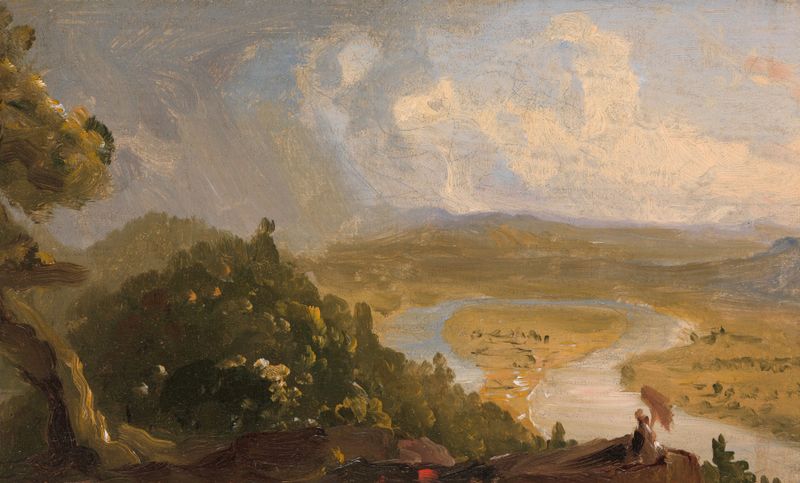
Sketch for View from Mount Holyoke, Northampton, Massachusetts, after a Thunderstorm (The Oxbow)
Thomas Cole
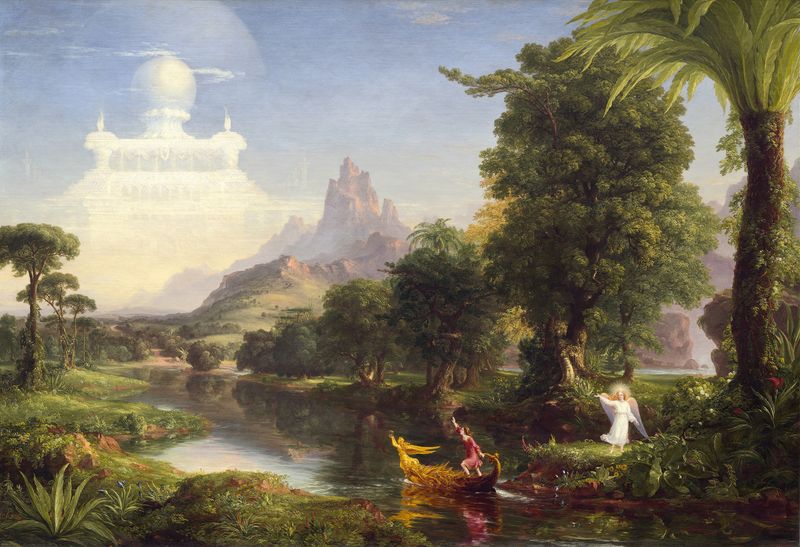
The Voyage of Life – Youth
Thomas Cole
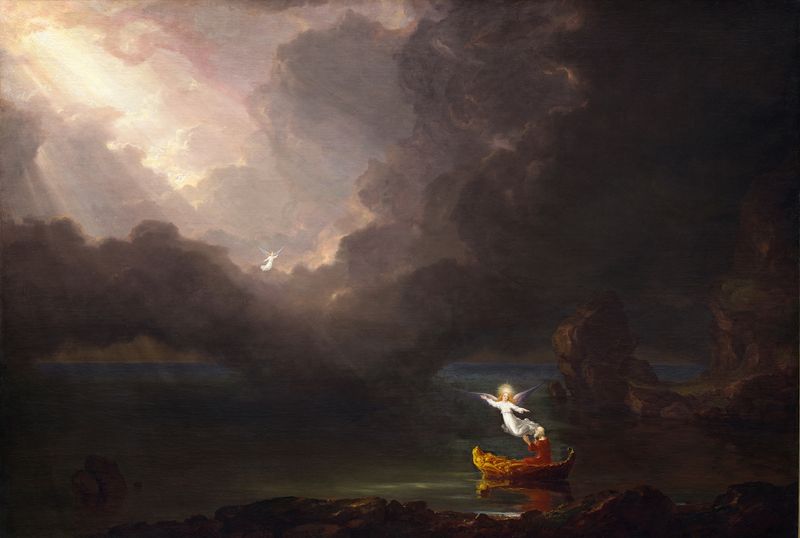
The Voyage of Life – Old Age
Thomas Cole
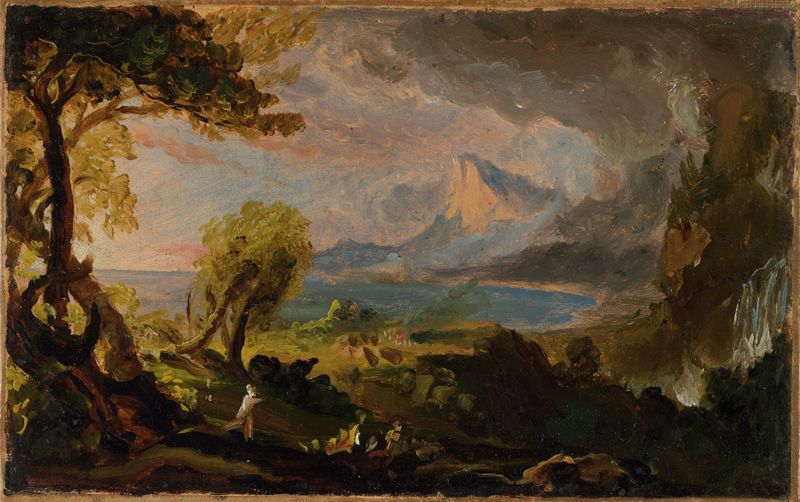
The Course of Empire–The Savage State
Thomas Cole

Landscape
Thomas Cole

New England Scenery
Thomas Cole

Sunrise in the Catskills
Thomas Cole
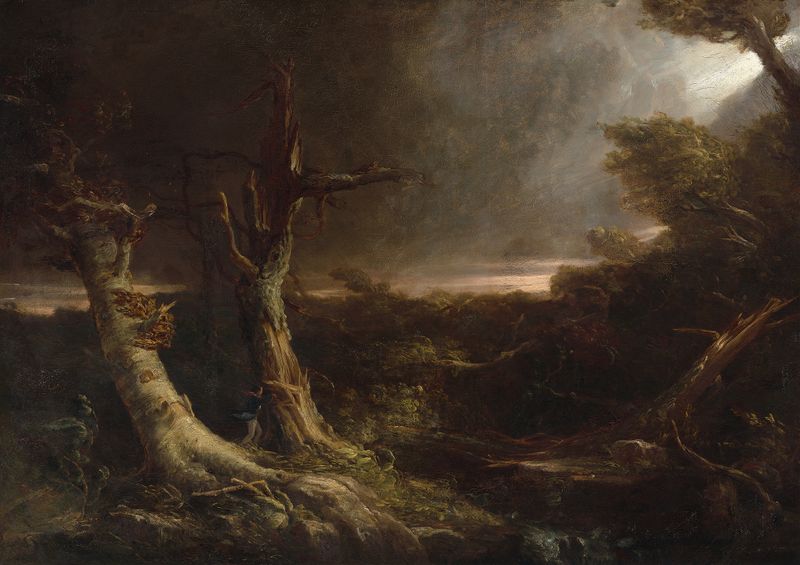
Tornado in an American Forest
Thomas Cole
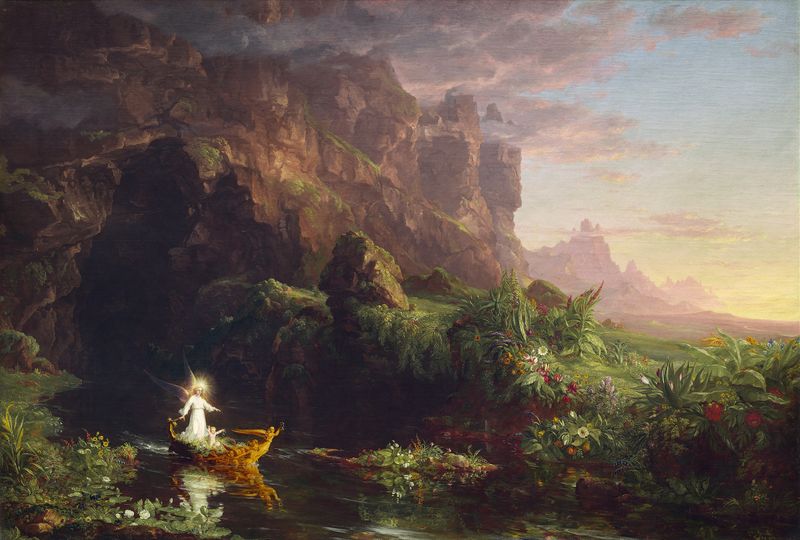
The Voyage of Life – Childhood
Thomas Cole
More Religious Art
Browse all →
The Return of the Prodigal Son
Rembrandt van Rijn

The Garden of Earthly Delights
El Bosco

Count Orgaz’ funeral
El Greco

The Hundred Guilder Print: the central piece with Christ preaching, the plate arched
Rembrandt van Rijn

The Descent from the Cross
Rogier van der Weyden

The return of the prodigal son
Rembrandt van Rijn