Falaises du Grand Ris. (Baie de Douarnenez) — History & Facts
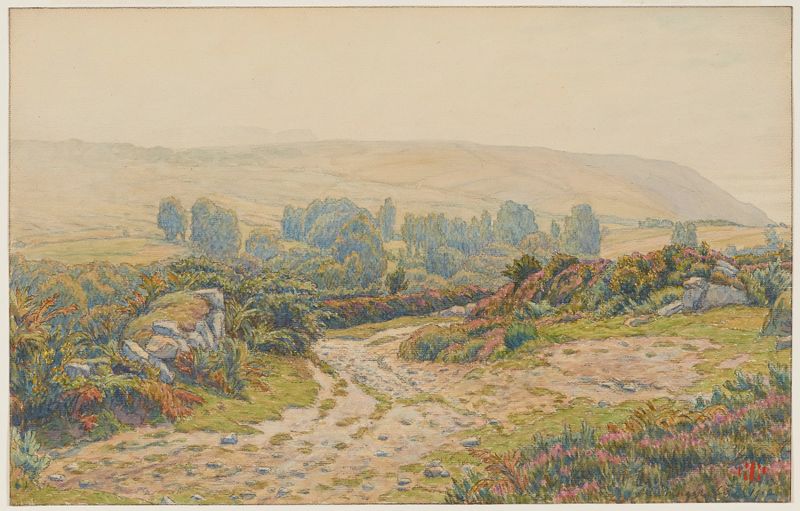
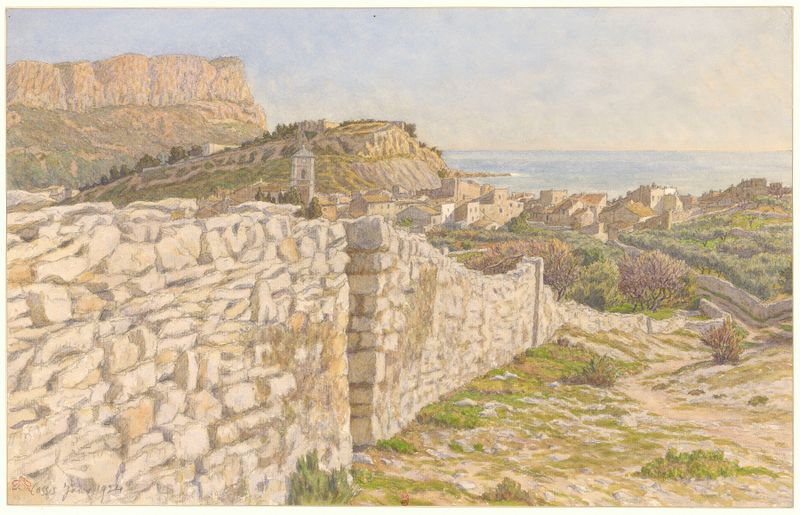
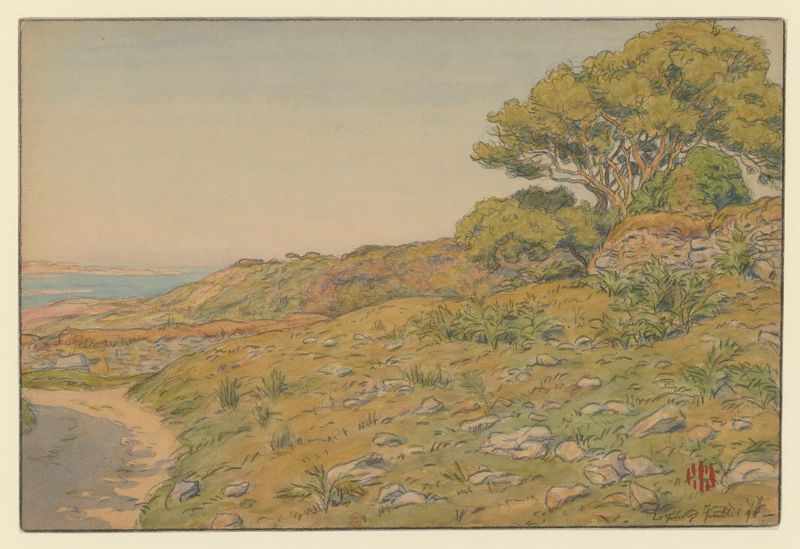
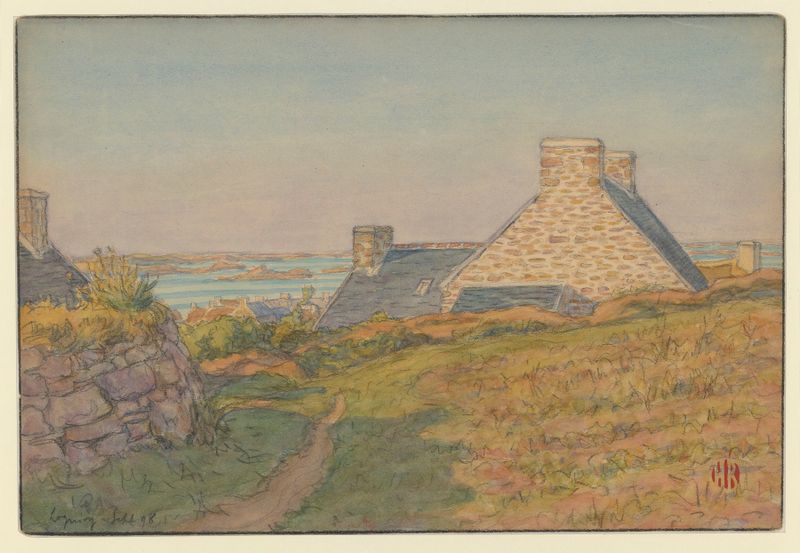
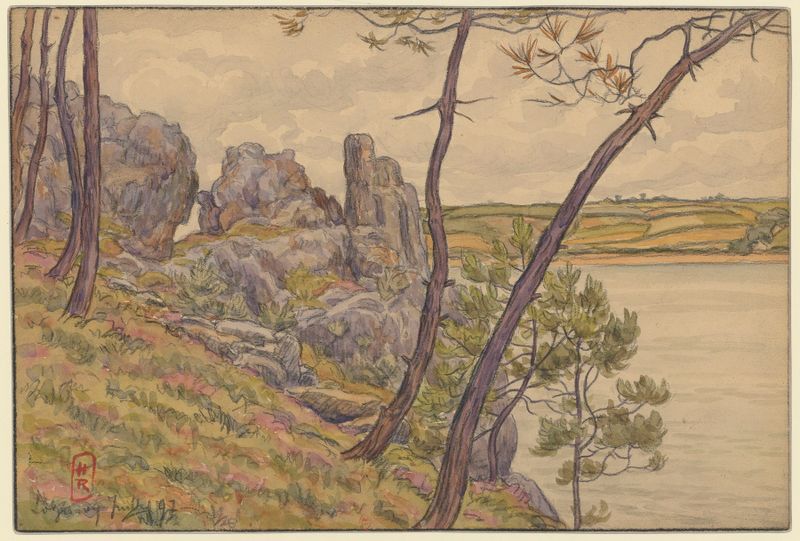
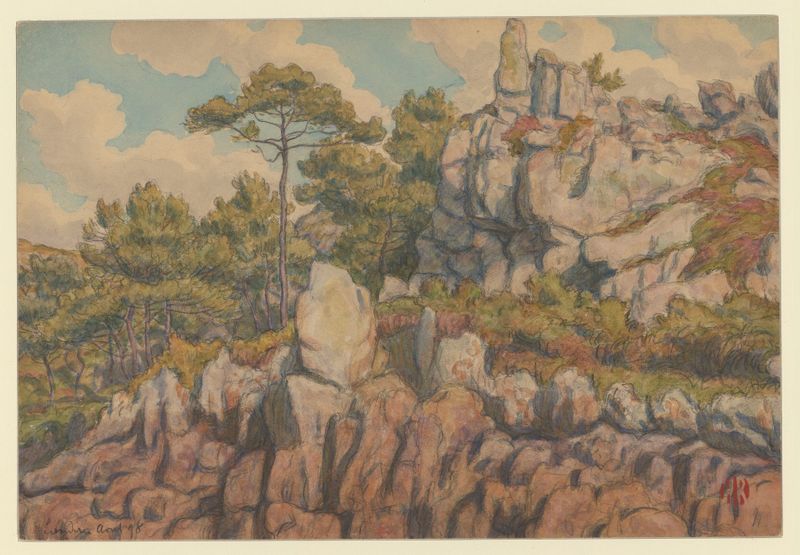
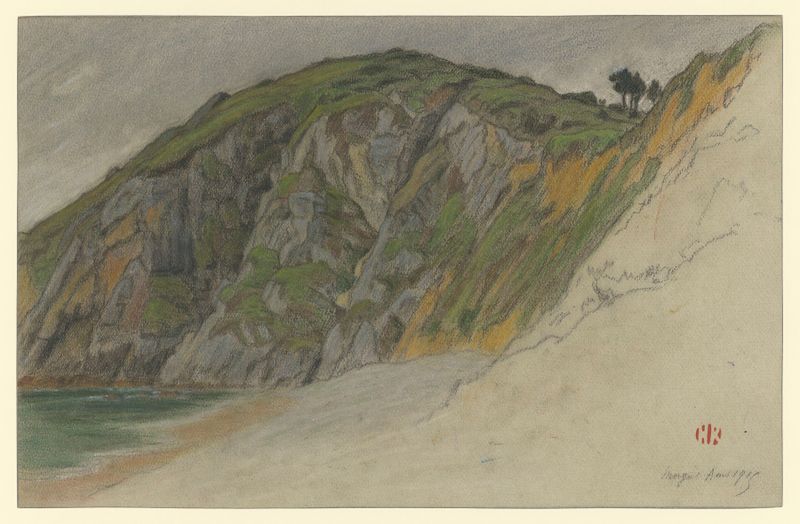
When did color learn to lie? The delicate interplay of hues dances across the canvas, inviting contemplation and stirring the soul. Look to the left at the softly undulating cliffs, their muted greens and ochres blending seamlessly with the vibrant blues of the sea. Note how the artist employs a palette that mimics nature's own brushstrokes, each color carefully chosen to evoke both serenity and tension. Rivière’s masterful layering creates an almost tactile sensation, allowing the viewer to feel the texture of the cliffs against the whispering waves below. Here, the balance between land and sea becomes a profound meditation on permanence and transience.
The cliffs stand resolute, yet the waves incessantly kiss their base, a reminder of time's relentless passage. This duality captures an emotional landscape, where stability is eternally challenged by the elements, and the viewer is left questioning their own place within this dynamic tension. In 1908, Rivière painted this work while deeply immersed in the Symbolist movement, seeking to convey emotional depth through natural scenes rather than mere representation. Living in the coastal region of Brittany, he was inspired by the rugged beauty of its landscape.
The era was marked by a shift towards exploration of color and form, as artists sought to engage viewers in new, intimate ways.