Farmhouse — History & Facts
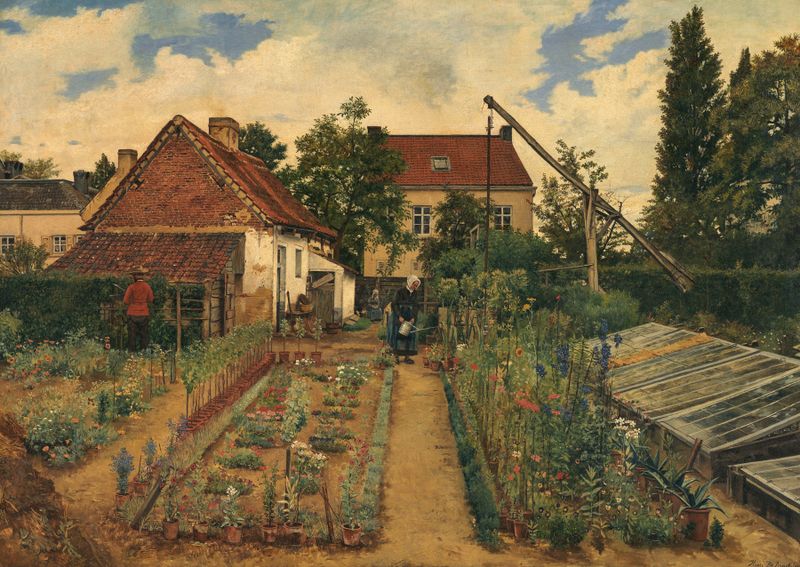
The canvas doesn’t lie — it simply waits. Within its painted confines, time holds its breath, a testament to the stillness of rural life captured between brush strokes. Look to the left at the rustic farmhouse, its weathered facade bathed in soft, golden light. The gentle hues of ochre and earthy browns create a comforting warmth, inviting you into a scene that feels both familiar and timeless.
Notice how the shadows stretch across the foreground, suggesting the passage of the day, while the sparse landscape hints at the simplicity of existence amidst nature's grandeur. Each corner of the painting draws you deeper, revealing layers of texture and detail that evoke the essence of domestic life. Yet, hidden within this tranquil tableau are tensions that speak to the fragility of time. The stillness of the farmhouse contrasts with the encroaching wildness of the surrounding fields, a reminder that nature is ever-present and ever-changing.
The weathered walls, textured and chipped, whisper stories of years gone by, evoking nostalgia and the inevitable passage of life. In this serene scene, there exists a profound sense of yearning — for permanence in an impermanent world, for the comfort of home in the relentless march of time. Henri de Braekeleer created Farmhouse between 1865 and 1875, a period of exploration in the realm of realism and a time when artists sought to depict the everyday with honesty. Living in Belgium, he was influenced by the natural light and the rural landscapes around him, striving to reflect both the beauty and the transience of life.
This work encapsulates a moment of stillness in the rapidly evolving world of the 19th century, reminding us of the quiet stories woven into the fabric of our lives.