The Country House of Gustave Coûteaux — History & Facts
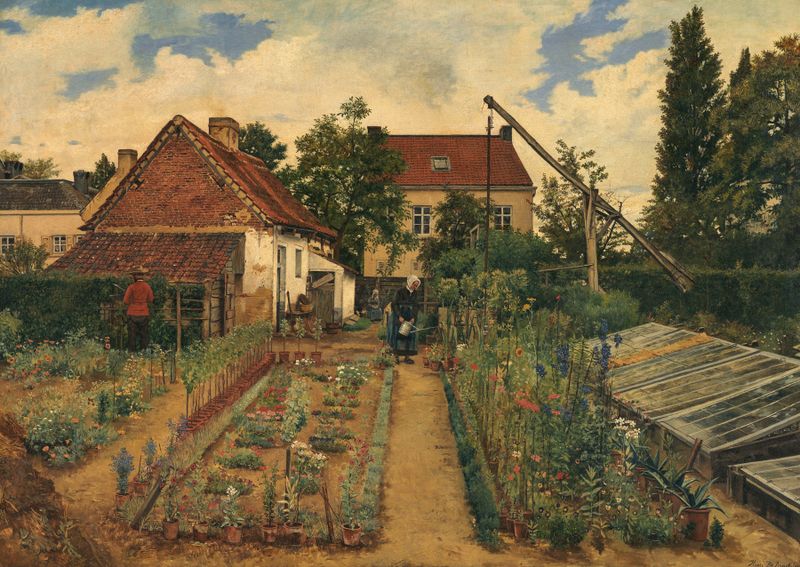
Can beauty exist without sorrow? In The Country House of Gustave Coûteaux, a delicate balance of elegance and melancholy unfolds, inviting introspection on the nature of happiness. Look to the center, where a quaint country house sits serenely amidst lush greenery, its warm hues contrasting with the coolness of the surrounding landscape. The meticulous brushwork reveals a harmonious arrangement of shapes and colors, drawing the eye to the inviting facade and the soft play of light that caresses the structure. Notice how the sky, infused with gentle blues and wisps of clouds, envelops the scene, fostering a sense of tranquility that belies the underlying currents of madness. Yet, beneath this picturesque exterior lies an unsettling tension.
The idyllic setting clashes with hints of solitude, as the house stands isolated, almost as if it guards secrets of joy and despair. The vibrant flora surrounding the dwelling flourishes, yet there’s an eerie stillness, suggesting that beauty may not be a refuge from the chaos of the mind. This contrast between exterior splendor and internal tumult evokes questions of fulfillment and the fragility of human happiness. Henri de Braekeleer painted this work in 1871, during a period of introspection in his life marked by personal struggles and the growing influence of Realism in art.
As he navigated the complexities of his own existence, he sought to capture the essence of everyday beauty, entwining it with the underlying madness that often accompanies the human experience. This piece stands as a testament to the delicate interplay between beauty and sorrow, resonating within the artistic discourse of its time.