Garden of a Florist — History & Facts
A soft breeze rustles the blooms as a florist tends lovingly to the vibrant colors of her garden. The sun casts gentle rays, illuminating her delicate hands, which move with a quiet reverence among the petals. Nearby, a child, perhaps her apprentice, watches intently, eyes wide with wonder at the cascading hues around them.
This moment, serene yet rich with unspoken promises, hints at an abiding faith in the beauty of nature and the nurturing of life. Look to the left where the florist’s hands interlace with a bouquet of blossoms, their vivid reds, purples, and yellows contrasting against the lush greens of the foliage. Notice how the light filters through the leaves, creating a dappled pattern that dances across the ground. The careful composition draws the viewer toward her focused expression, emphasizing the harmony between the artist’s meticulous brushwork and the natural world, inviting contemplation of the relationship between humanity and nature. The interplay of light and shadow captures the essence of faith—the belief in growth and renewal amid life's fragility.
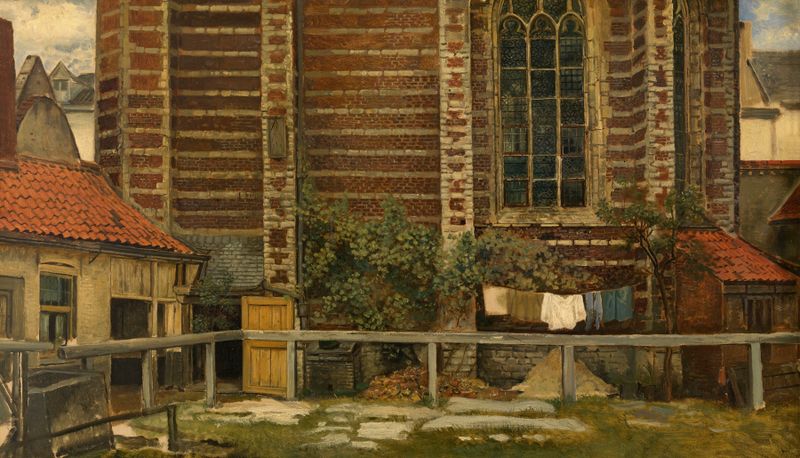
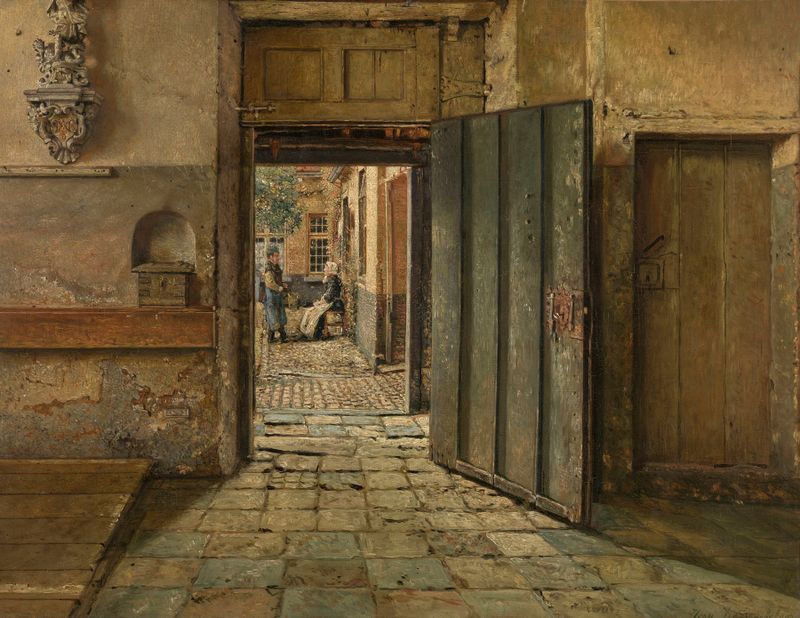
The child’s gaze symbolizes innocence and the transmission of knowledge, suggesting a legacy of care and passion for floristry that transcends generations. Furthermore, the abundance of flowers can be interpreted as a metaphor for hope and the cyclical nature of life, embodying the promise of beauty even in impermanence. Henri de Braekeleer painted Garden of a Florist in 1864 while living in Antwerp, during a time when the Realist movement was gaining momentum in Europe. In this period, artists sought to depict everyday life with sincerity and precision, often influenced by the natural beauty surrounding them.
Braekeleer’s work reflects his dedication to capturing the ordinary yet profound moments within the domestic sphere, showcasing both his talent and the cultural shift towards realism in art.