The Chapel of Grace in Antwerp — History & Facts
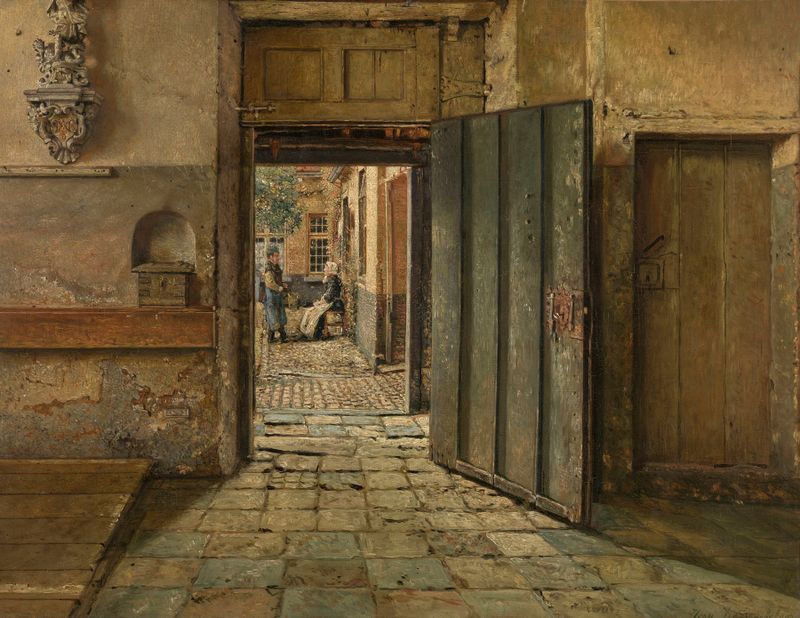
Is this a mirror — or a memory? In the delicate interplay of light and shadow, a transcendence unfolds, inviting the viewer into a sacred space of reflection and grace. Look to the left at the intricately carved altar, where soft rays filter through stained glass, casting a kaleidoscope of colors onto the polished stone floor. Notice how de Braekeleer’s masterful brushwork imbues the chapel’s architectural lines with a sense of reverence, leading the eye upward towards the vaulted ceiling that seems to stretch into infinity. The muted palette—earthy browns and soft golds—evokes both stability and warmth, creating an intimate atmosphere that feels timeless and serene. Within this hallowed space, contrasts emerge: the silence of the chapel juxtaposes the vibrancy of the light, while the stillness of the figures hints at the tumult of the outside world.
Each detail, from the textured surfaces of the stone to the glow of the candlelight, speaks to a deeper yearning for connection and spiritual solace. The viewer is beckoned to contemplate not only the physical presence of the chapel but also the emotional resonance it holds—the promise of grace amid life’s chaos. In 1866, Henri de Braekeleer painted this work during a period marked by a growing interest in realism and the intimate portrayal of spaces. Living in Antwerp, he was influenced by the rich artistic traditions of the region while simultaneously embracing a modern sensibility that sought to capture the essence of everyday life.
This work reflects both his personal journey and the evolving landscape of art, where the sacred and the mundane intertwine in profound ways.