The Mill at Kiel — History & Facts
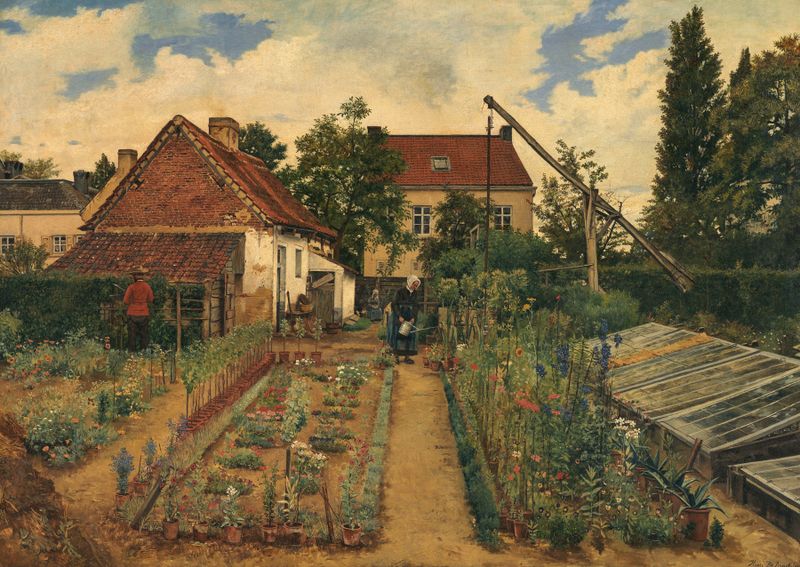
What if beauty was never meant to be finished? In The Mill at Kiel, memory intertwines with reality, urging us to ponder the ephemeral nature of our surroundings. Look to the left at the mill’s weathered facade, its earthy tones softened by time’s embrace. The delicate brushstrokes reveal intricate details, from the splintered wood of the structure to the rippling reflections in the water. Notice how the light cascades over the scene, illuminating patches of vibrant green and deep brown, creating a harmonious balance between nature and man.
The entire composition breathes with a sense of stillness, inviting the viewer to pause and appreciate a fleeting moment. Beneath the surface, a complexity unfolds. The water’s tranquil flow contrasts sharply with the mill’s steadfast presence, symbolizing the tension between permanence and transience. The lush surroundings suggest life and growth, hinting at the cycles that continue despite human endeavors.
Shadows play along the edge of the scene, evoking a sense of nostalgia—reminders of what has come before and what may fade away. Henri de Braekeleer created this work between 1885 and 1888 in Belgium, during a period when naturalism was gaining prominence in art. Emerging alongside the Impressionists, he sought to capture the essence of his environment with precision and depth. As he painted, the world around him was shifting, moving towards modernity yet still rooted in tradition, reflecting his own quest to reconcile beauty with the passage of time.