
Farmyard in Normandy — History & Facts
In Farmyard in Normandy, the passage of time whispers through the verdant fields and humble structures, inviting contemplation of life’s fleeting moments. Focus on the gentle curve of the path that draws your eye toward the rustic farmhouse, nestled against a backdrop of lush greenery. Notice how the light filters through the canopy of trees, casting soft shadows that dance across the dirt and grass. The earth-toned palette evokes warmth, yet the subtle variations in hue hint at the complexities of rural existence.
Each stroke of the brush not only captures the physical landscape but also reverberates with the pulse of nature itself. Delve deeper into the composition, where the juxtaposition of solid, sturdy buildings against the delicate foliage reveals a tension between permanence and transience. The almost ethereal quality of the light suggests a moment caught between dawn and dusk, a timeline suspended in beauty. Look closely at the figures tending to their daily chores — their quiet presence speaks to a rhythm of life that persists even amid the inevitability of change, evoking a sense of nostalgia for the pastoral past. In 1831, Rousseau painted this scene in Normandy, during a time when the Romantic movement was emerging, emphasizing emotion and individual experience in art.
The artist was grappling with the challenge of capturing nature’s essence, keenly aware of the shifts in society and the encroachment of industrialization. This painting encapsulates his dedication to the natural world, a response to the changing landscape around him.
More Artworks by Théodore Rousseau
Browse all →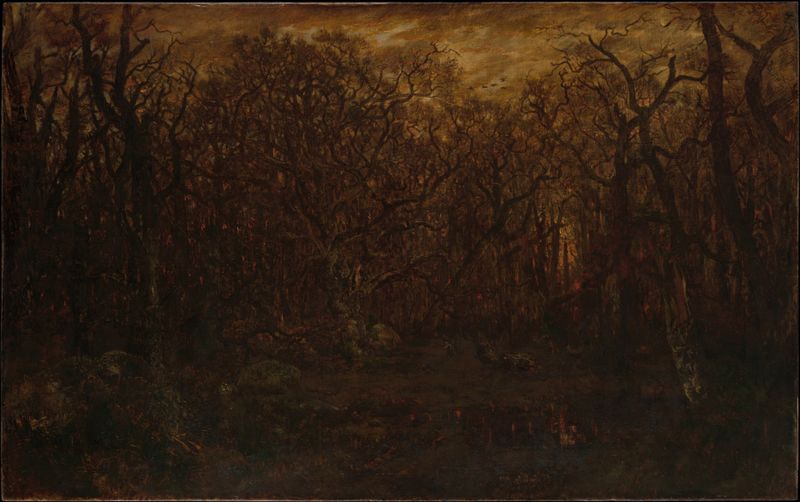
The Forest in Winter at Sunset
Théodore Rousseau
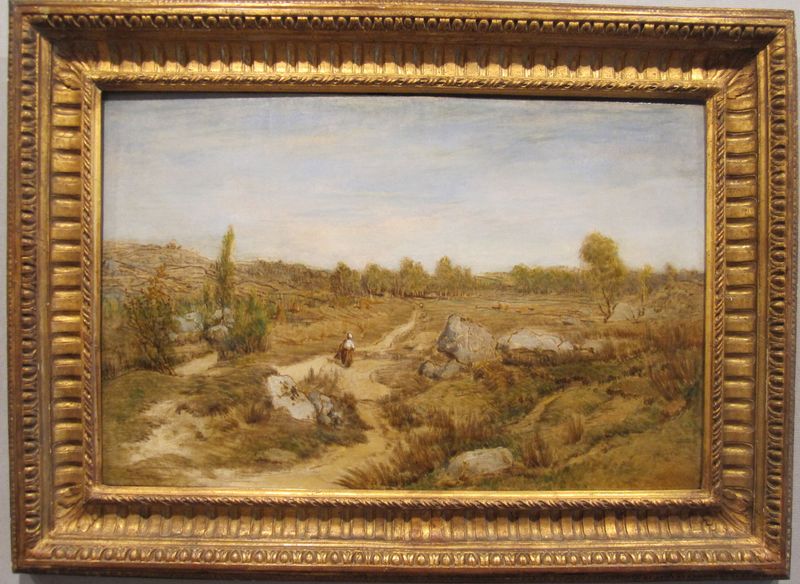
Valley of the Rouars in the Gorges d’Apremont
Théodore Rousseau
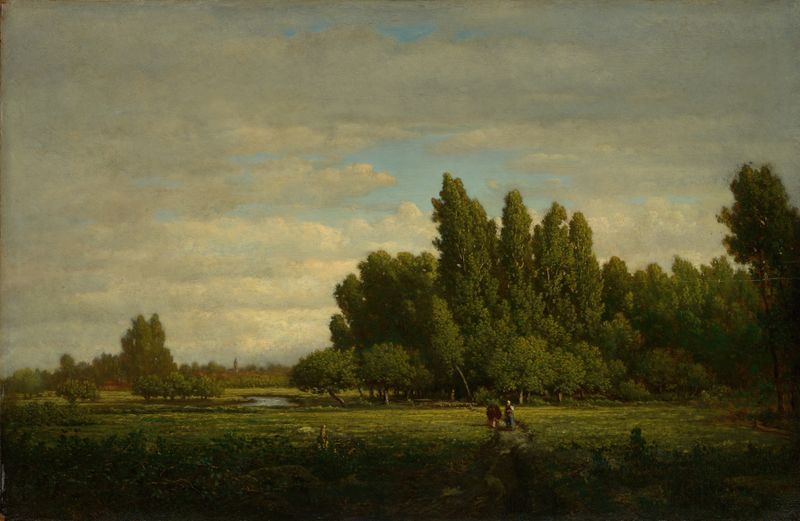
A Meadow Bordered by Trees
Théodore Rousseau
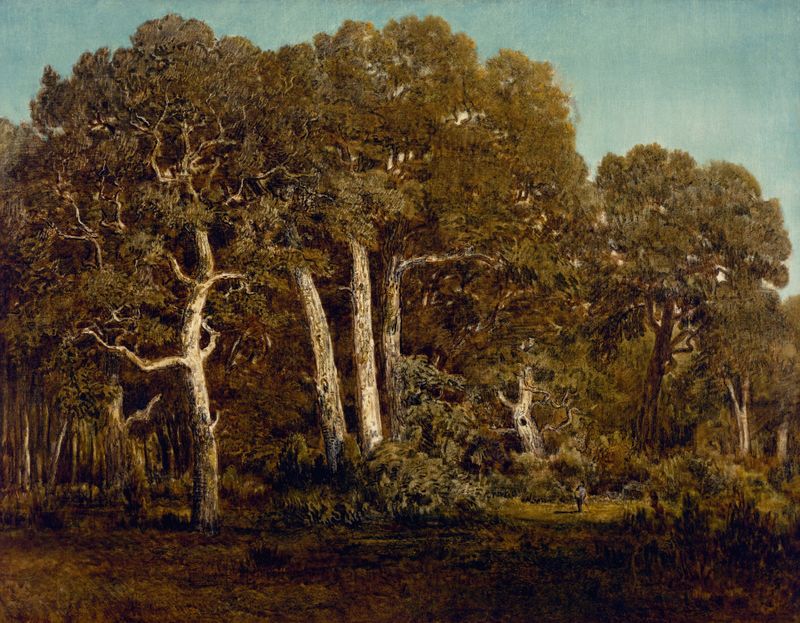
The Great Oaks of Old Bas-Bréau
Théodore Rousseau
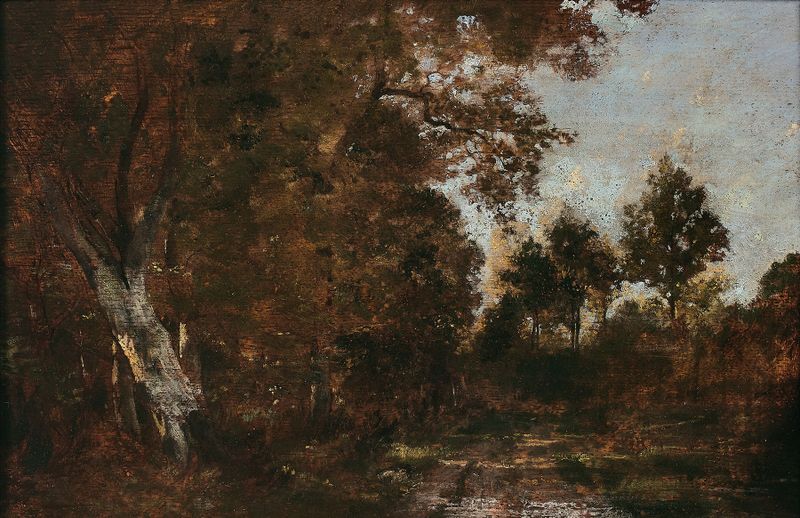
Paysage de sous-bois
Théodore Rousseau
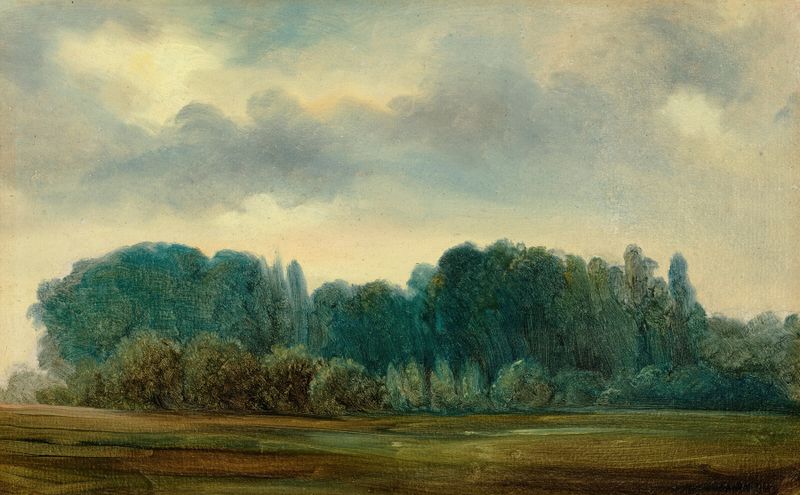
Paysage
Théodore Rousseau
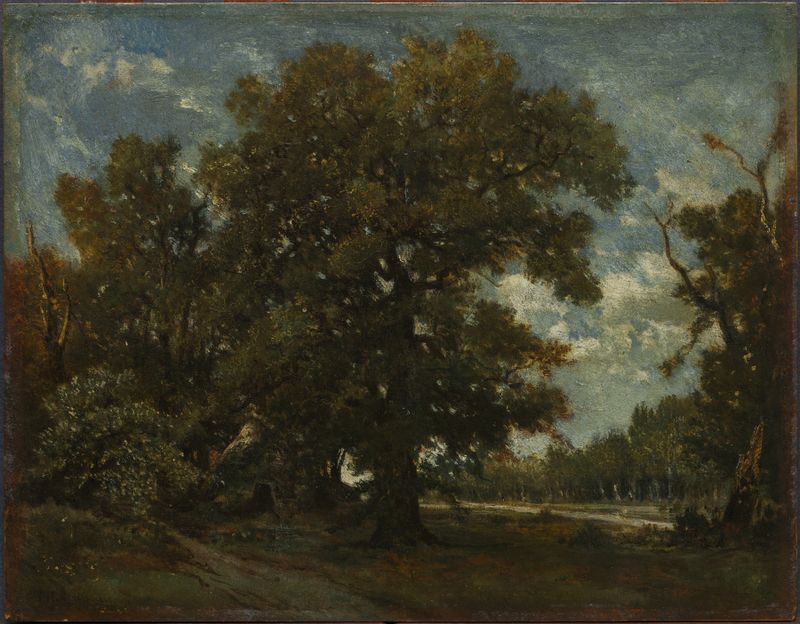
The Oak Tree
Théodore Rousseau
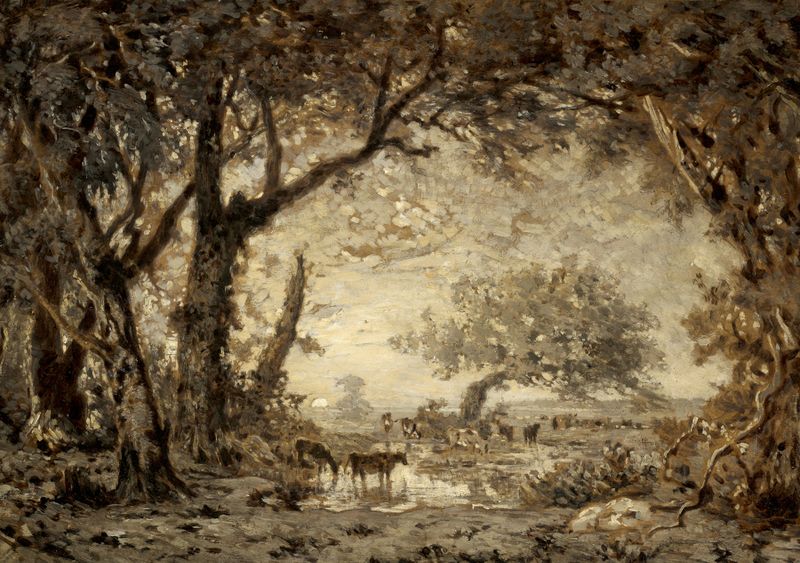
Sunset from the Forest of Fontainebleau
Théodore Rousseau
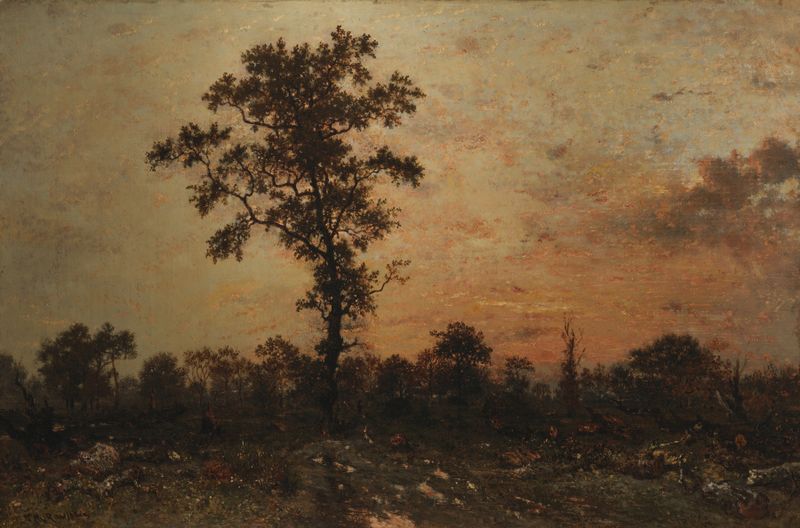
Edge of the Forest, Sun Setting
Théodore Rousseau
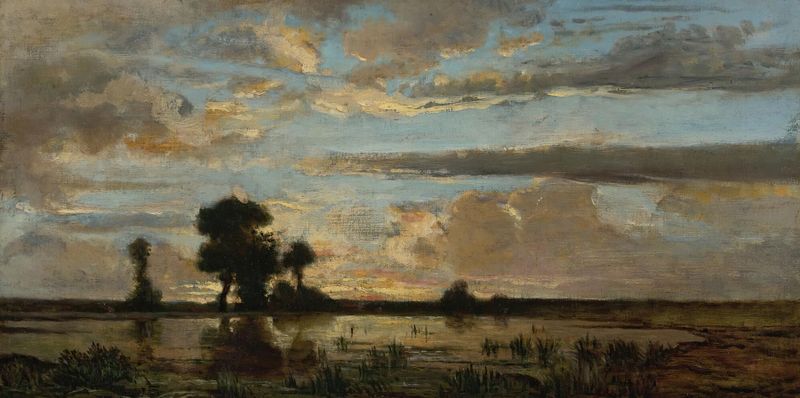
Soleil Couchant
Théodore Rousseau





