
Felsblöcke mit Tannenstämmen — History & Facts
Who listens when art speaks of silence? In Felsblöcke mit Tannenstämmen, a serene interplay of stone and timber invites contemplation, evoking a nostalgic return to nature's embrace. Each element whispers of the past, urging the viewer to reflect on the poignant beauty found in simplicity. Focus on the foreground, where rugged boulders anchor the composition, their textured surfaces contrasting with the sleek trunks of evergreen trees behind them. Notice how the muted greens and browns harmonize with the cool grays of the rocks, creating an atmosphere steeped in tranquility.
The subtle play of light casts gentle shadows, enhancing the three-dimensionality of the scene while drawing your eye toward the serene backdrop, inviting a deeper exploration of the landscape's hidden depths. The juxtaposition of the solid, unyielding rocks against the delicate, swaying trees speaks to a timeless tension between permanence and transience. This contrast evokes feelings of nostalgia, perhaps stirring memories of quiet woodland walks or childhood adventures in nature. The painting's calmness, punctuated by the steadfast presence of the stones, suggests a longing for a simpler time, where the sounds of the earth could soothe the soul. Hans Thoma painted Felsblöcke mit Tannenstämmen in 1861 during a period when he was deeply influenced by German Romanticism.
Living in Karlsruhe, he was surrounded by the beauty of the Black Forest, which inspired his landscapes. This work reflects the burgeoning interest in capturing the emotional depths of nature, a theme prevalent in the art world of his time as artists sought to convey the sublime through their representations of the natural world.
More Artworks by Hans Thoma
Browse all →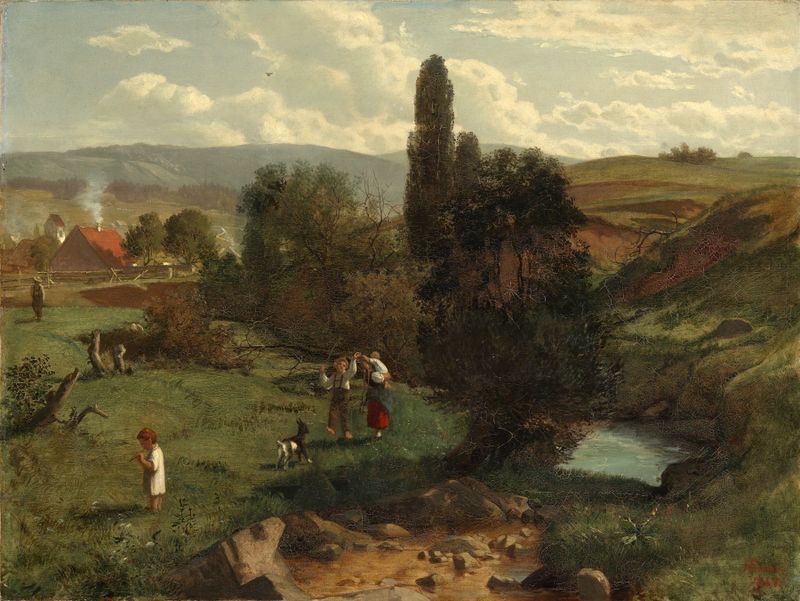
Schwarzwaldlandschaft
Hans Thoma
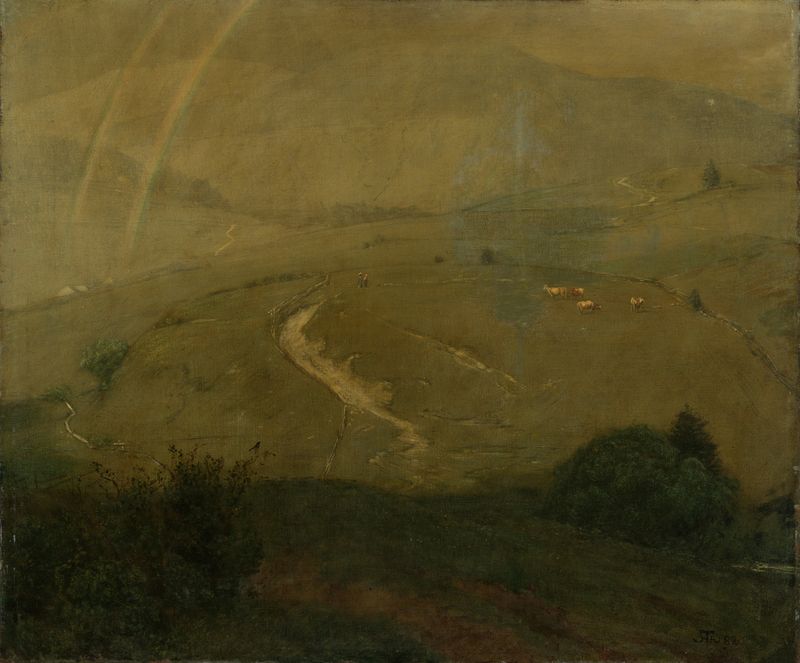
Regen im Schwarzwald
Hans Thoma
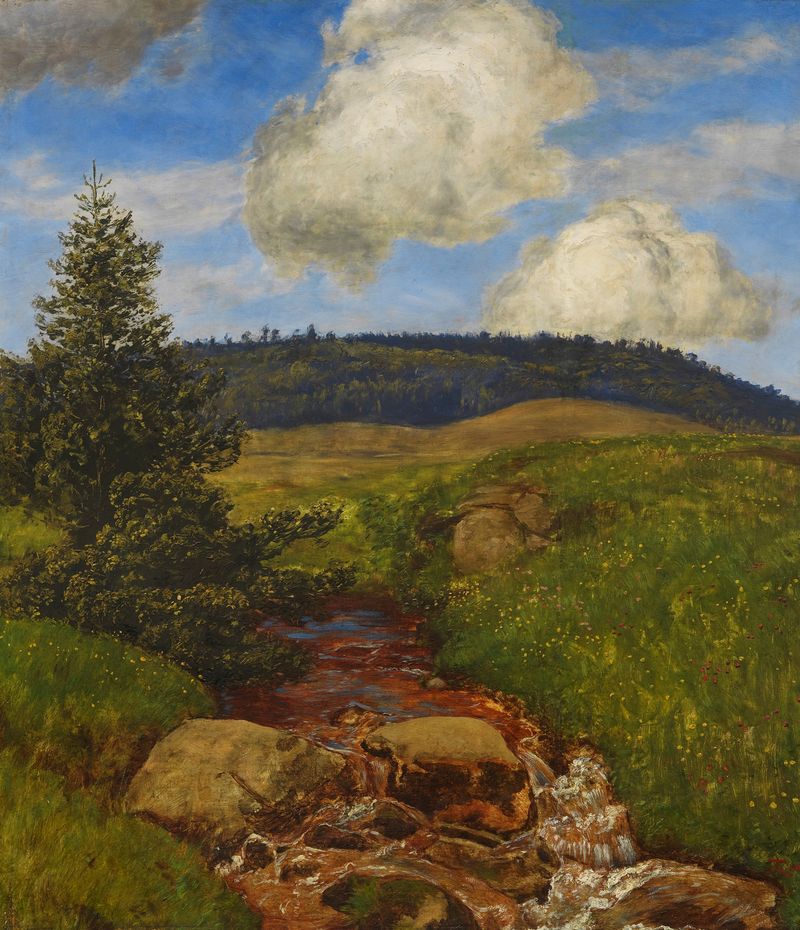
Schwarzwaldbach
Hans Thoma
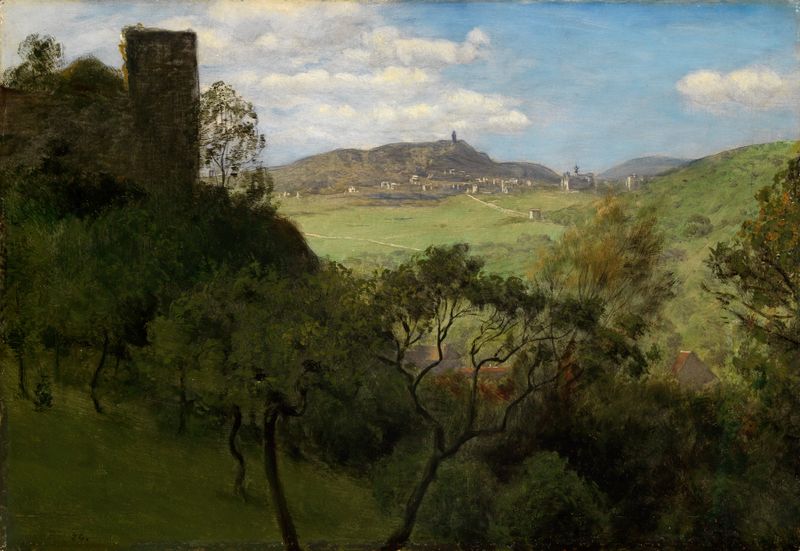
Blick auf Falkenstein im Taunus
Hans Thoma
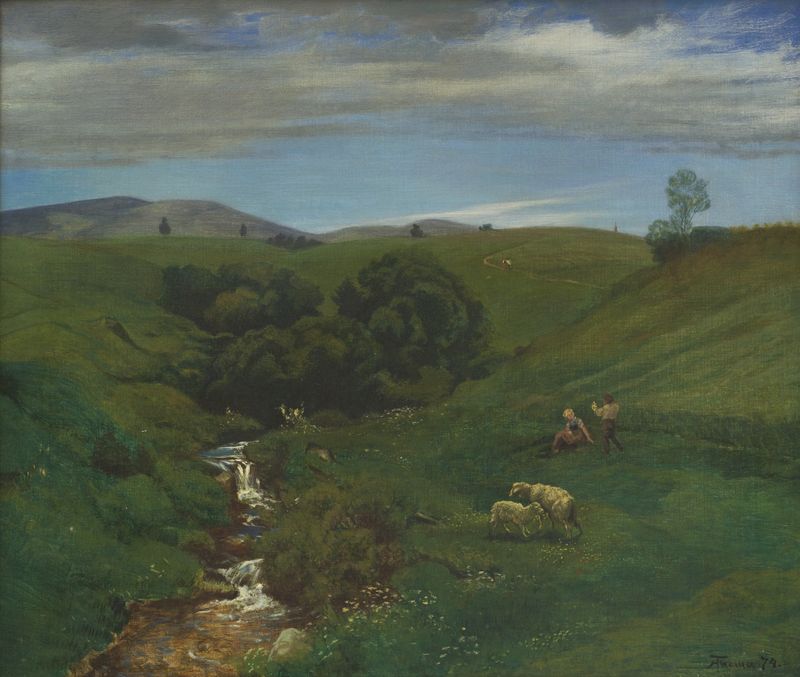
Black Forest Meadow near Bernau
Hans Thoma
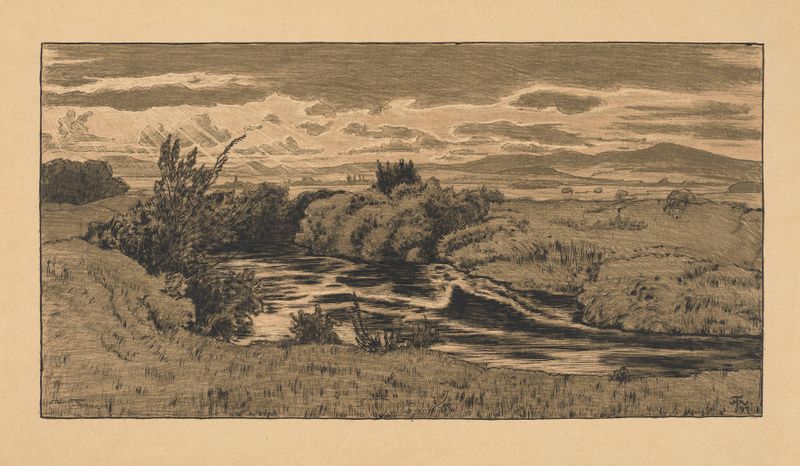
Evening by the Nidda River
Hans Thoma
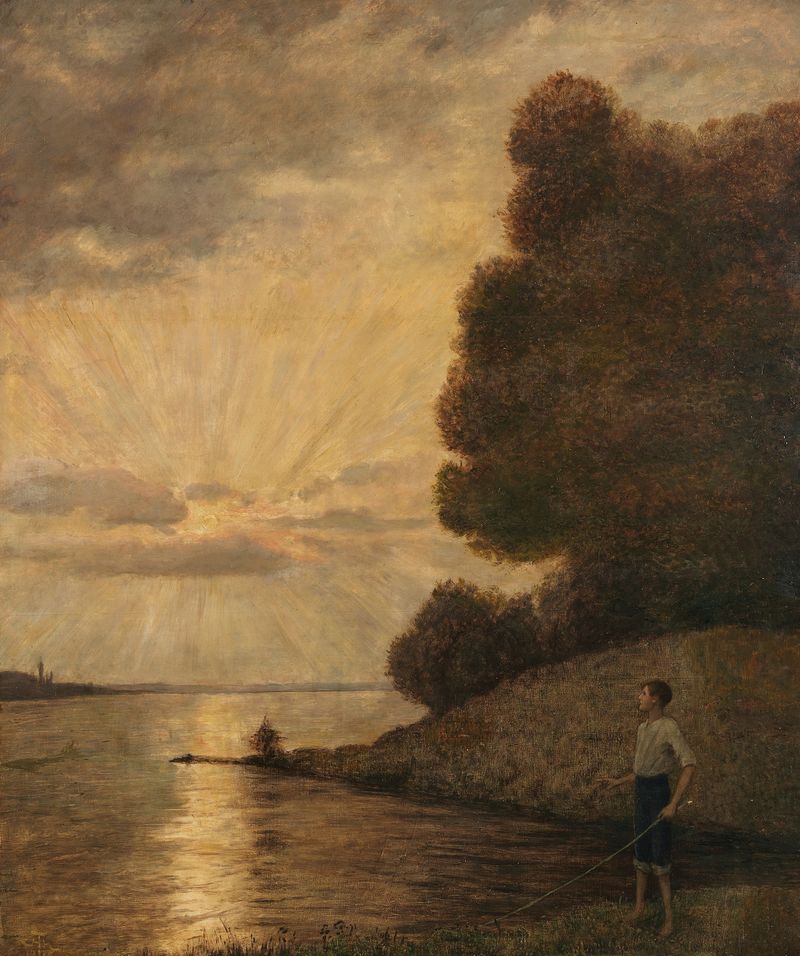
Sonnenuntergang am Oberrhein
Hans Thoma
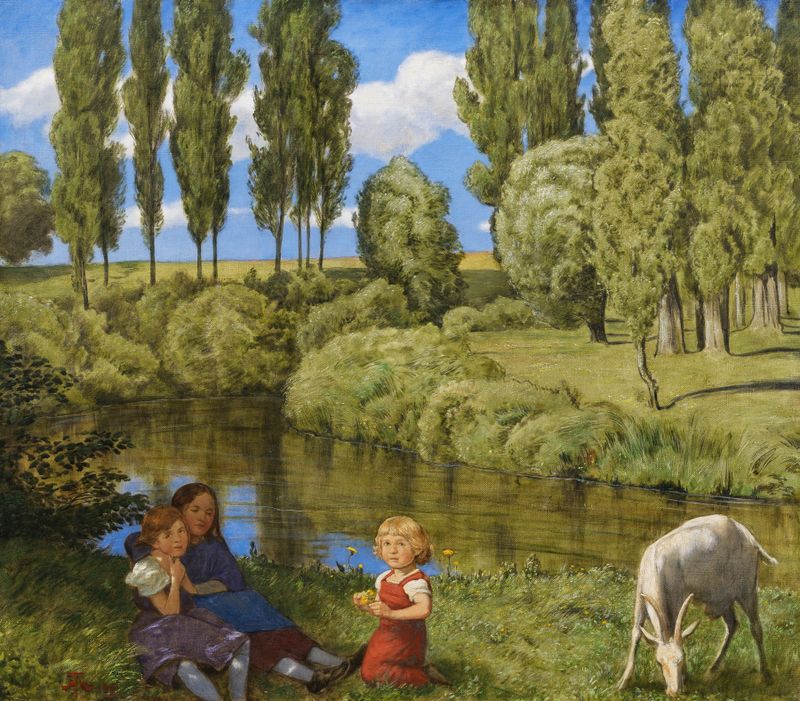
Am Stillen Bach
Hans Thoma
Der Abendstern
Hans Thoma
Das Rheintal bei Säckingen
Hans Thoma





