Felsenhöhle mit Maultiertreibern — History & Facts
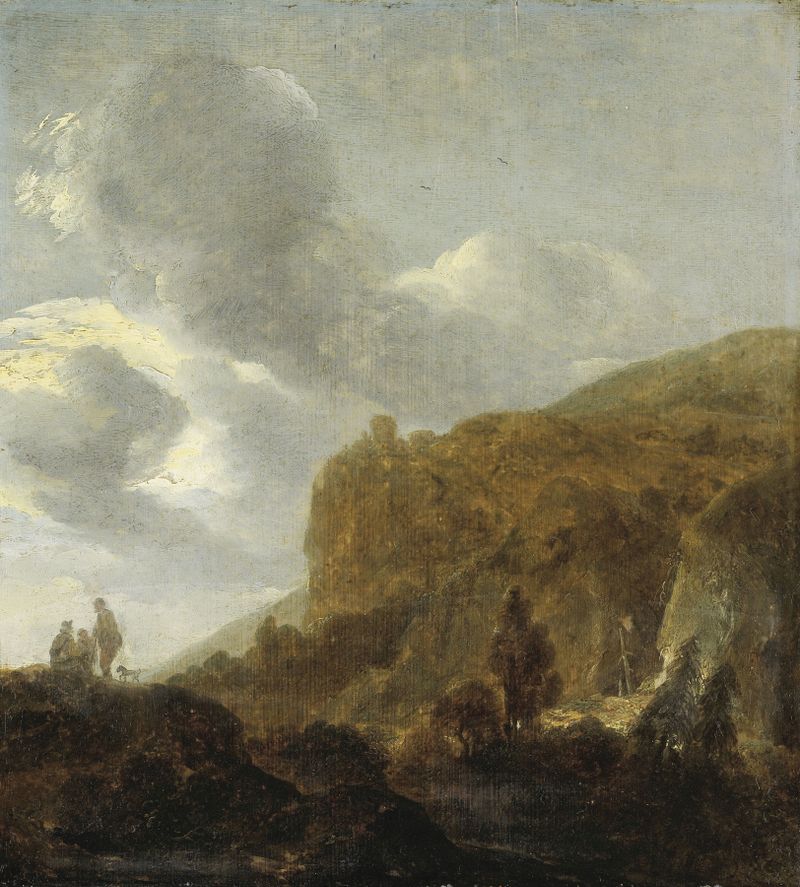
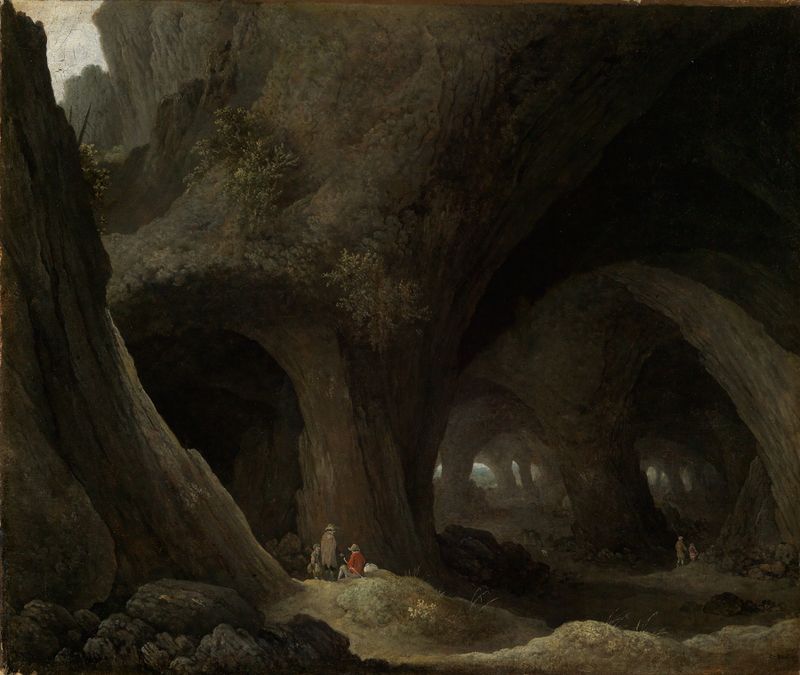
Could beauty survive in a century of chaos? In the midst of shifting allegiances and the weight of conflict, the answer lies in the quiet strength of enduring landscapes. Look to the center of the canvas, where two mule drivers navigate the rugged terrain of a cavernous landscape. The muted tones of ochre and gray envelop the scene, suggesting both the weight of stone and the passage of time. Notice how the play of light spills into the cavern, illuminating the figures' toil while casting deep shadows that hint at the unknown depths beyond.
The careful detailing of their weathered faces captures a resilience born from labor, while the rugged cliffs framing the background echo their struggle against nature’s immensity. A deeper examination reveals the emotional tension between man and environment. The drivers appear almost dwarfed by the monumental rocks, emphasizing humanity’s vulnerability against nature’s relentless force. The juxtaposition of motion—the mule drivers laboring earnestly—against the stillness of the stone creates a poignant sense of transience, as if they are but fleeting visitors in this timeless arena.
The void they navigate speaks to the broader existential uncertainties of life in the 17th century, hinting at both despair and beauty coexisting amidst turmoil. Guillam Dubois created this work in 1653, a period marked by the backdrop of the Thirty Years' War and its aftermath, which profoundly affected Europe. Living in the Netherlands, he found himself in a world of economic and social upheaval, influencing his artistic focus on landscapes and the human condition within them. This piece reflects not only his skill as an artist but also the resilience of beauty amid chaos.