Felsenhöhle mit rastenden Hirten — History & Facts
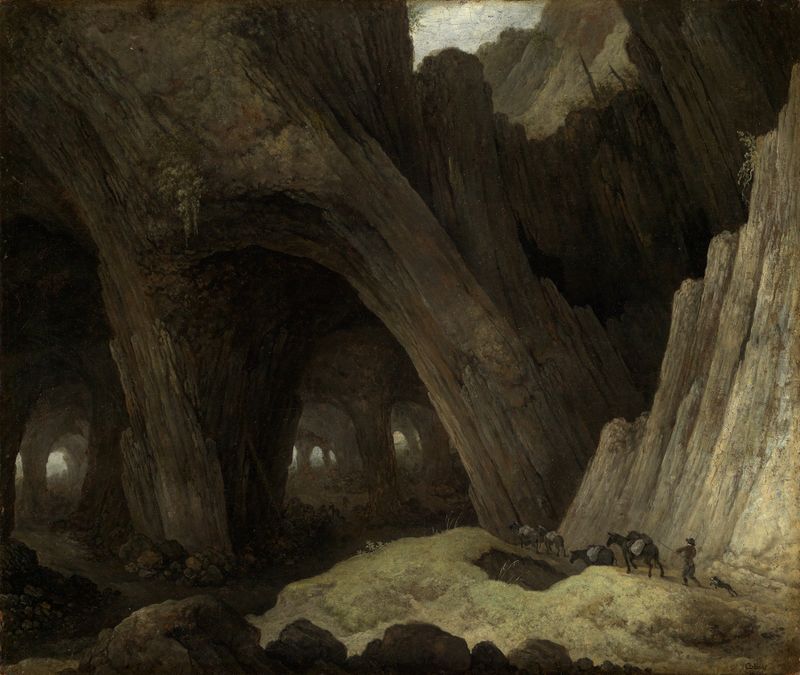
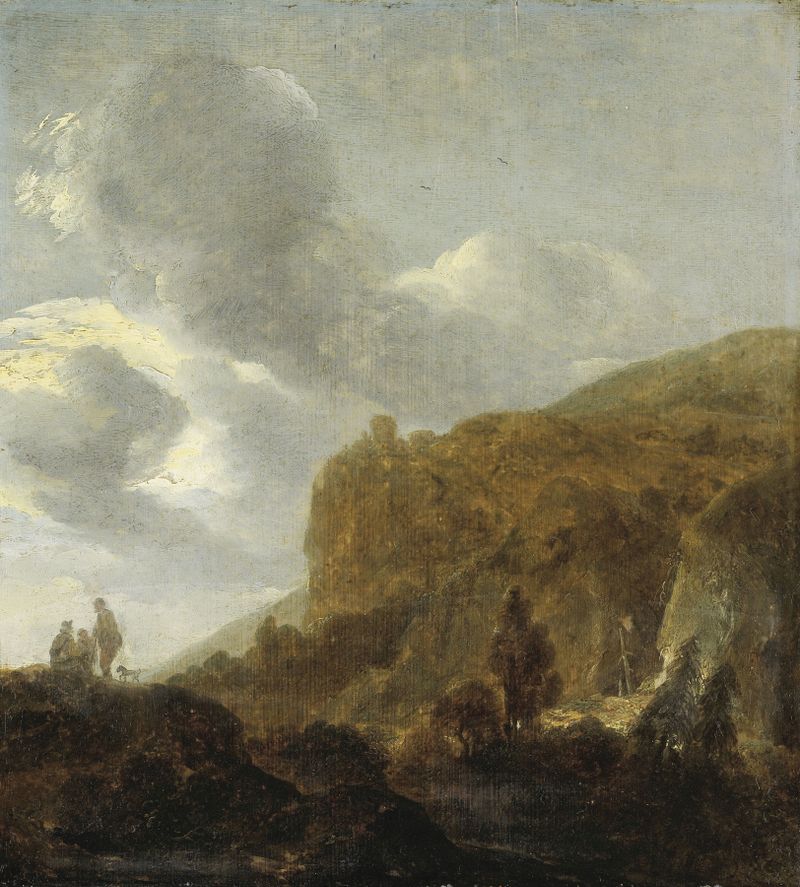
In the silent shadows of the Felsenhöhle, there resides an unsettling tension that straddles vulnerability and survival, urging us to peer closer into the hearts of its inhabitants. Focus first on the two shepherds perched upon the rocky ledge, their weary figures silhouetted against the cave's dim interior. The muted palette of browns and greys envelops them like a thick mist, while dappled light filters through the crevices above, casting an ethereal glow on their pensive faces. Notice how the textured brushstrokes of the rugged terrain contrast with the softness of their woolen garments, suggesting a deep connection to both the land and their burdened existence. Yet, within this tranquil setting lies an undercurrent of fear.
The shepherds do not merely rest; they seem to be holding their breath, suspended between shelter and the encroaching unknown outside. The cave itself, while a refuge, represents a womb-like space, intimate yet claustrophobic, hinting at the wildness that lurks just beyond reach. The subtle play of light and shadow embodies a duality—safety intertwined with the dread of what may come when the darkness stirs. In 1653, Guillam Dubois created this poignant work during a period marked by socio-political upheaval in Europe.
While many artists were exploring grand historical themes and mythological narratives, Dubois turned his gaze to the everyday struggle of ordinary people, capturing their resilience amid uncertainty. This painting reflects not just the artist’s own observations but also a collective consciousness grappling with fear and survival against the backdrop of a tumultuous world.