
Feodosia moon — History & Facts
A sweep of sky dominates, drawing the eye upward before it ever settles on the clustered rooftops below. The light here is neither day nor night: a cool, diffused glow hovers between the last gold of sunset and the first hints of moonrise, washing the bay and the distant town in a gentle, uncertain radiance. Clouds drift in improbable, sculpted forms, their edges softened as if shaped by memory rather than meteorology.
A flock of birds rises in a loose, vertical column, threading through the clouds and pulling the gaze higher still—reminding us that this is a moment of transition, both in nature and in mood. The hillside in the foreground, dotted with figures and shrubs, anchors the scene, but it is the vastness above that holds sway. Painted in 1914, Feodosia moon by Apollinari Mikhailovich Vasnetsov belongs to a world on the brink of upheaval, when Russian artists were turning to landscape not just for beauty, but for meaning and solace. The early twentieth century saw a flourishing of such panoramic views, commissioned by patrons eager to celebrate the land’s character or preserve a vision of peace.
Vasnetsov, known for his atmospheric cityscapes and historical scenes, here offers something quieter—a meditation on place and time, where the old town and the open sky seem to negotiate their boundaries. History has kept few traces of this particular work beyond its date and its presence in a Russian collection, but its sense of pause and possibility invites the viewer to linger, searching for stories in the gathering dusk.
More Artworks by Apollinari Mikhailovich Vasnetsov

Landscape With Lake
Apollinari Mikhailovich Vasnetsov
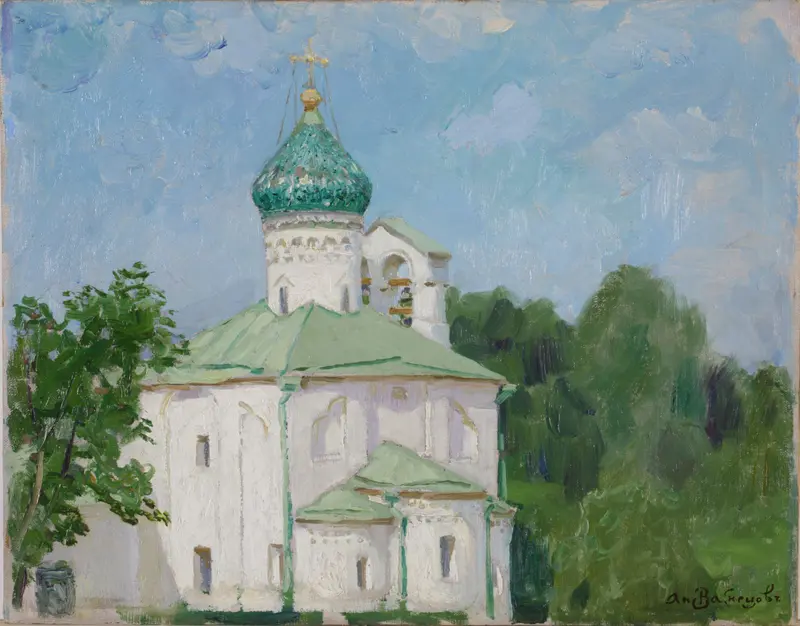
Sergius Luzhki
Apollinari Mikhailovich Vasnetsov
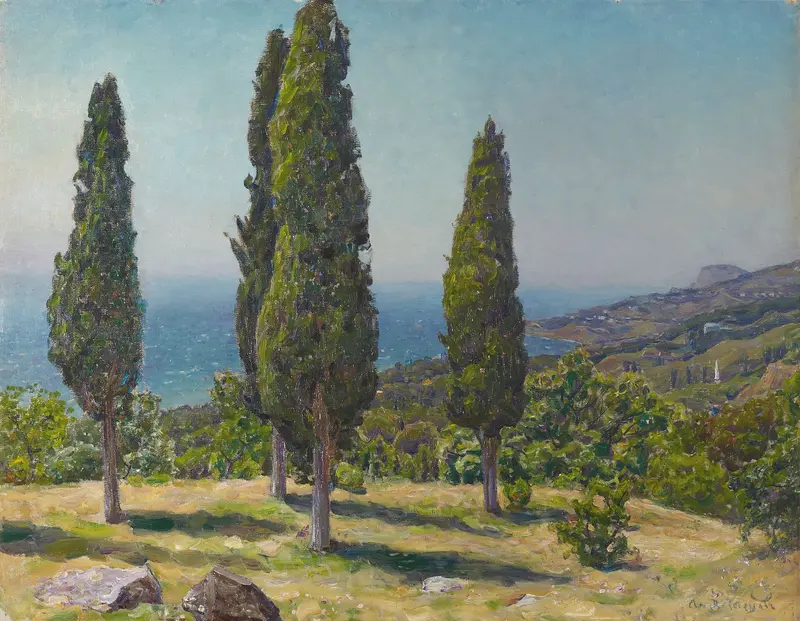
cypresses. Crimea
Apollinari Mikhailovich Vasnetsov
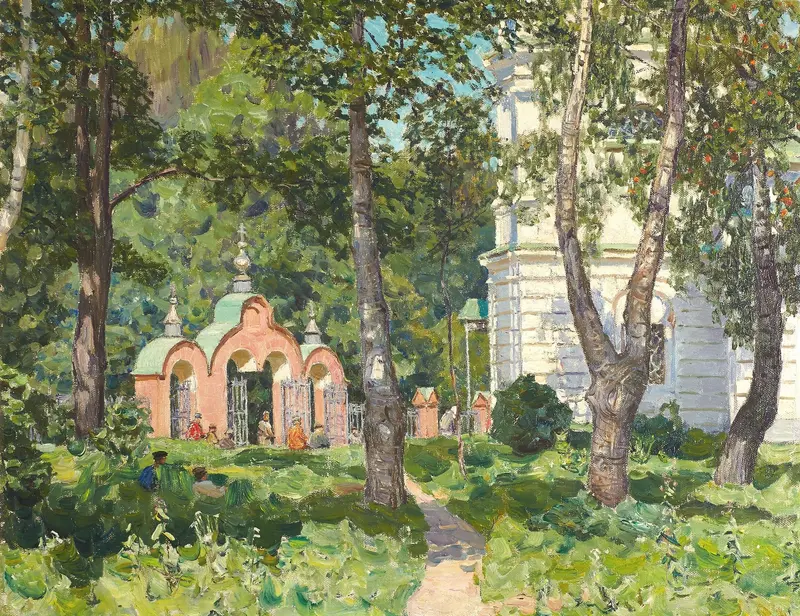
Demyanovo. At the churchyard
Apollinari Mikhailovich Vasnetsov
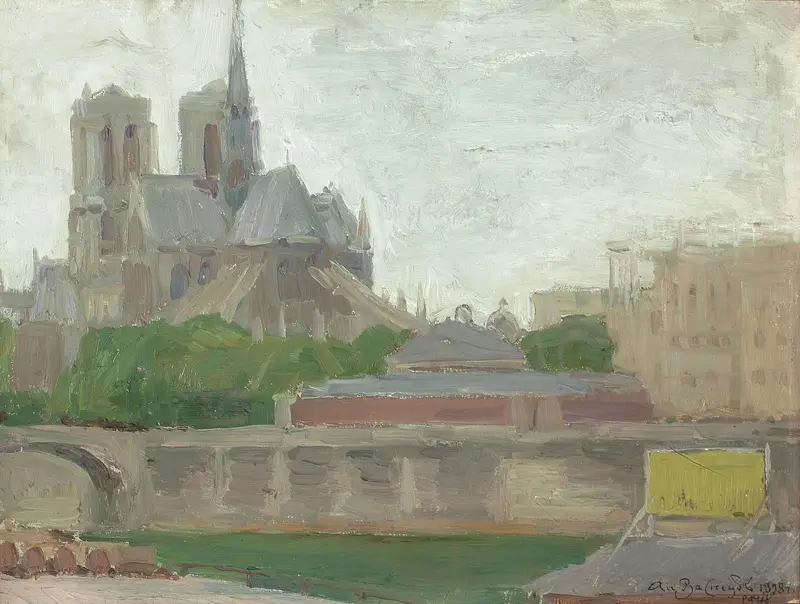
Notre Dame de Paris
Apollinari Mikhailovich Vasnetsov
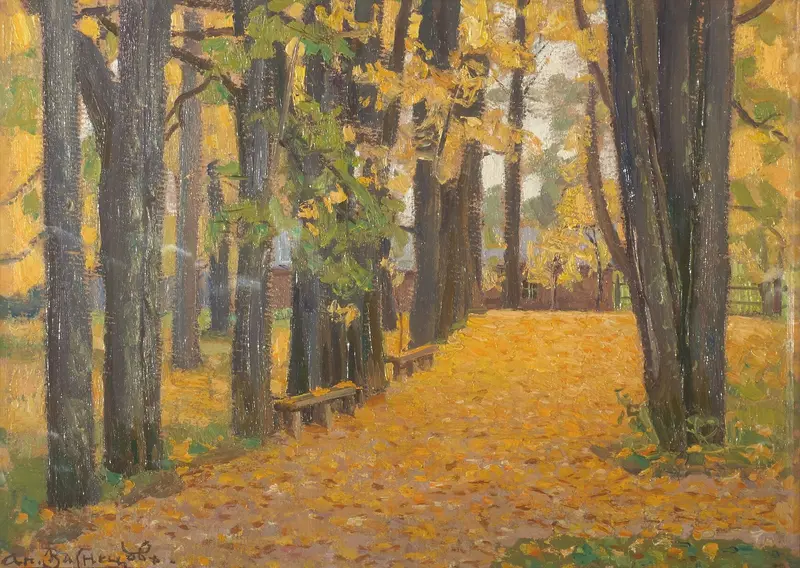
Autumn park
Apollinari Mikhailovich Vasnetsov
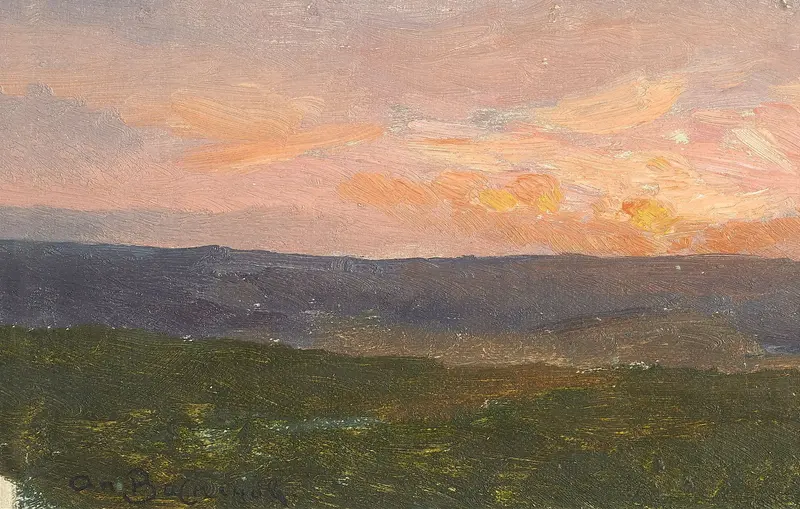
Sunset. Shurma
Apollinari Mikhailovich Vasnetsov

Via delle Tombe Pompeii
Apollinari Mikhailovich Vasnetsov
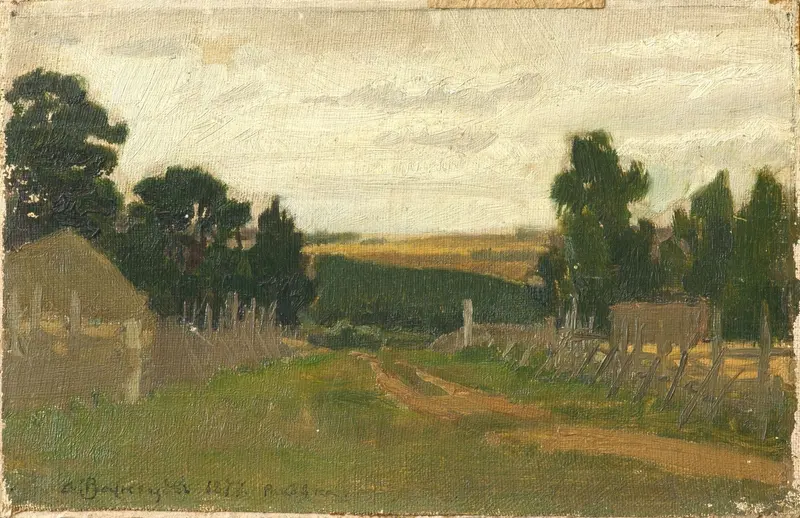
Rakovka
Apollinari Mikhailovich Vasnetsov
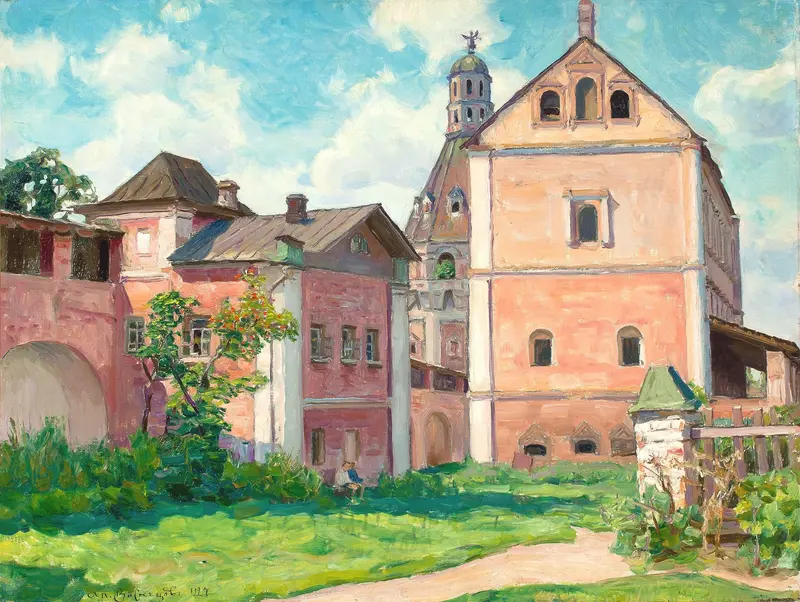
Simonov tower
Apollinari Mikhailovich Vasnetsov
More Landscape Art

The Starry Night
Vincent van Gogh

View of Delft
Johannes Vermeer

Water Lilies
Claude Monet

The Grand Canal, Venice, looking north-west from the Ca' Corner to the Ca' Contarini degli Scrigni, with the campanile of Santa Maria della Carità
Canaletto

Windsor Castle
Canaletto

The Grand Canal looking North-East from the Palazzo Dolfin-Manin to the Rialto Bridge
Canaletto