
Fifth Avenue, New York — History & Facts
A flurry of vehicles and pedestrians animates a broad city avenue seen from above, with the traffic flowing diagonally across the composition. Automobiles in shades of green, white, and dark blue move along the street, their forms quickly sketched with loose, energetic brushstrokes that suggest motion and the bustle of urban life. Several horse-drawn carriages are interspersed among the cars, their silhouettes rendered in dark tones, while figures in hats and coats cluster on the sidewalks and cross the street at various points.
On the right, red-and-white striped awnings jut into the frame, casting angled shadows and anchoring the scene with bold, rhythmic color. The sunlight falls unevenly across the avenue, illuminating patches of pavement and highlighting the tops of vehicles, while the left side of the street is bordered by a sweep of green lawn and a curved white path. At the top edge, small groups of people are visible in the distance, their forms reduced to dabs of paint that evoke the city's constant movement.
The artist uses broad, visible brushstrokes and areas of exposed canvas, lending the work a sense of immediacy and spontaneity. Shadows stretch across the street in violet and grey, reinforcing the impression of a bright day and the changing light of a busy metropolis. Touches of yellow and orange punctuate the otherwise cool palette, drawing attention to the cabs and the sunlit facades.
The composition is arranged on a steep diagonal, with the avenue receding sharply into the top left, creating a dynamic perspective that emphasizes the speed and energy of the scene. Joaquín Sorolla creates this urban view in 1911, capturing the vitality of Fifth Avenue in New York. Sorolla’s quick, expressive handling of paint reflects his interest in light and movement, hallmarks of his mature style. The energetic brushwork and vibrant color choices align with Sorolla’s approach to capturing fleeting moments and the atmosphere of a place.
Every element, from the bustling traffic to the striped awnings and scattered pedestrians, contributes to a vivid impression of New York’s urban dynamism as seen through Sorolla’s eyes in 1911.
Sources: Wikidata Q135617723
More Artworks by Joaquín Sorolla

Sad Inheritance
Joaquín Sorolla
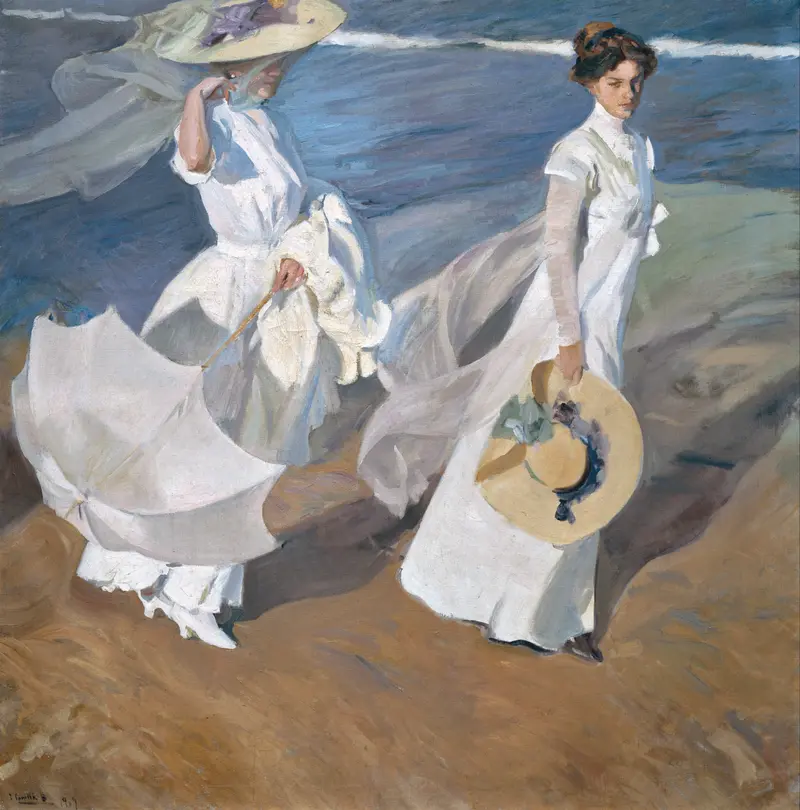
Walk on the Beach
Joaquín Sorolla

Mother
Joaquín Sorolla
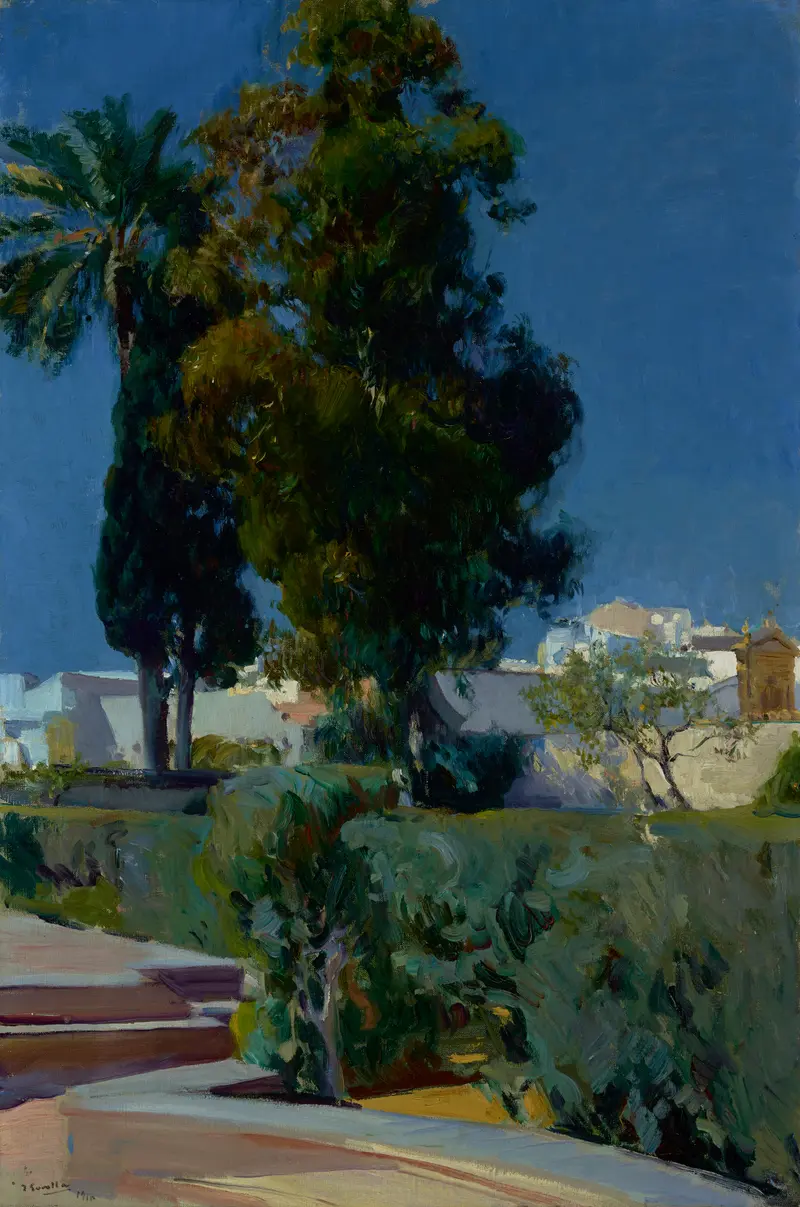
Corner of the Garden, Alcazar, Sevilla
Joaquín Sorolla

Fishing Boats On The Beach, Valencia
Joaquín Sorolla
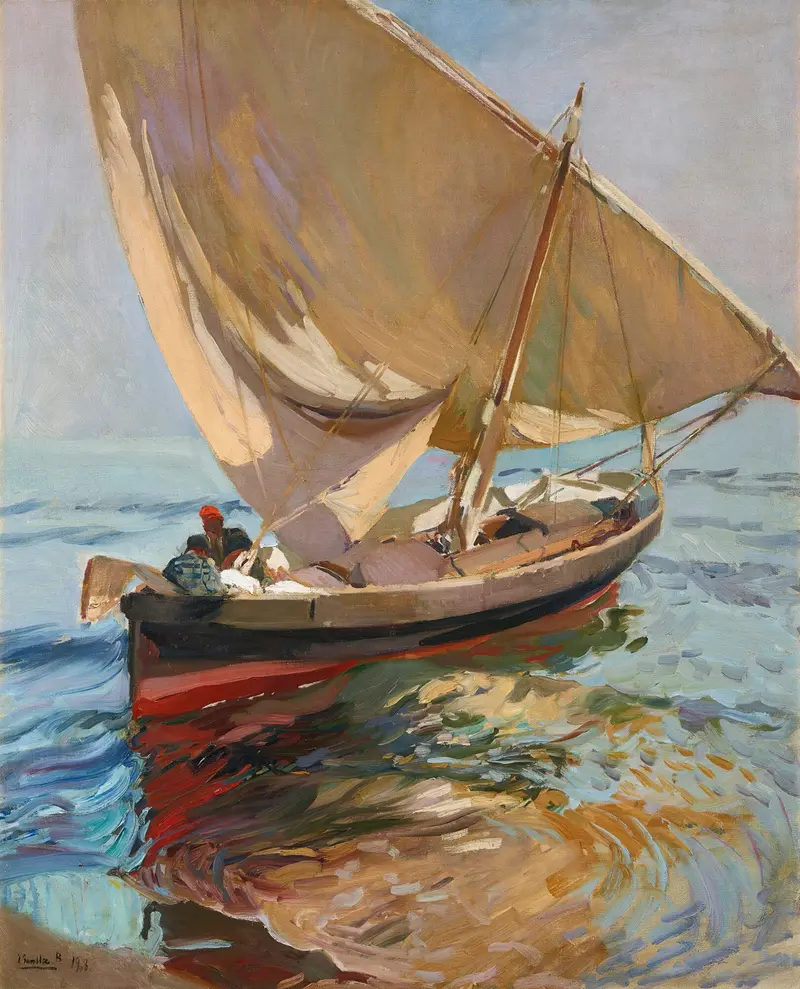
Camino De La Pesca. Valencia (Setting Out To Sea. Valencia)
Joaquín Sorolla
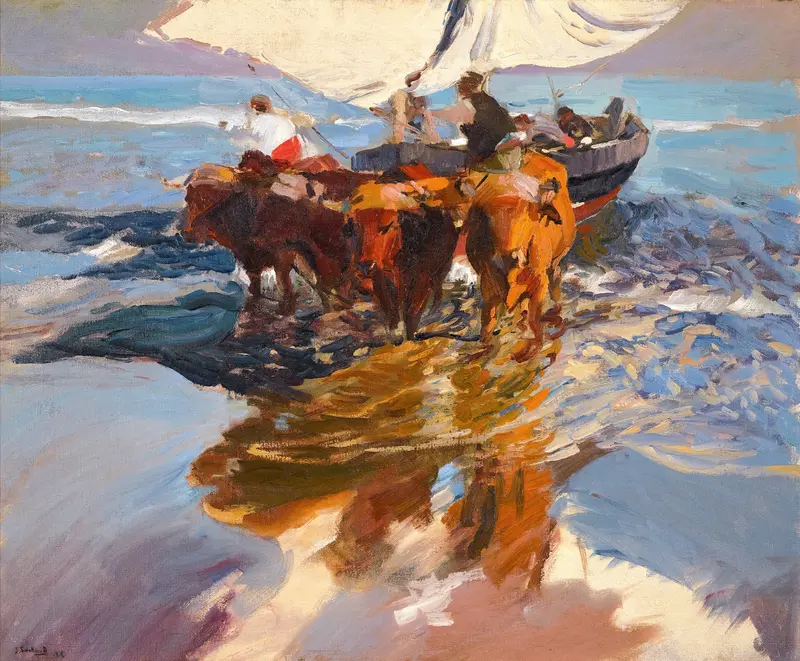
Vuelta De La Pesca. Playa De Valencia (The Return From Fishing, Valencia Beach)
Joaquín Sorolla
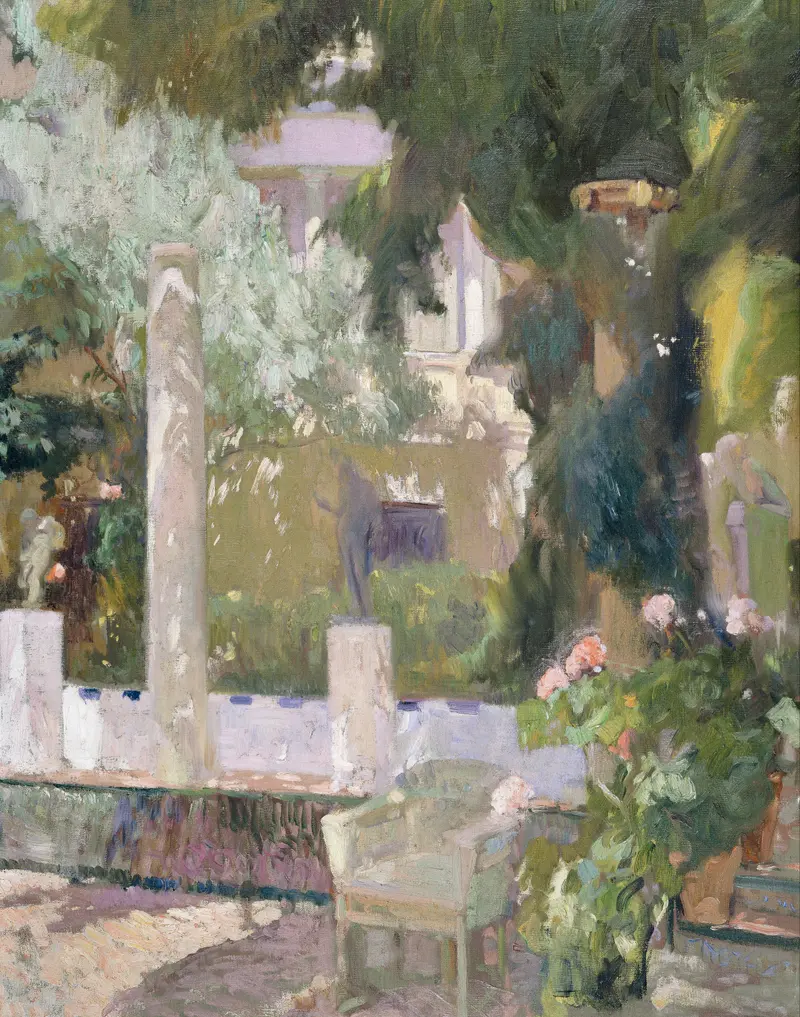
The Gardens at the Sorolla Family House
Joaquín Sorolla
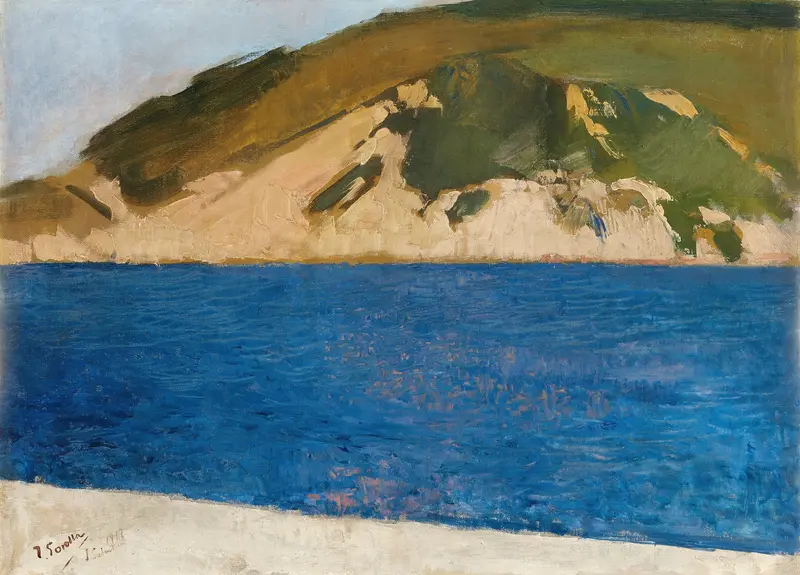
Monte Ulía, San Sebastián
Joaquín Sorolla

Barcas En La Playa
Joaquín Sorolla
More Genre Scene Art

Banquet of the Officers of the St George Civic Guard
Frans Hals

Rembrandt and Saskia in the Scene of the Prodigal Son
Rembrandt van Rijn

Bal du moulin de la Galette
Pierre-Auguste Renoir

Quadrille at the Moulin Rouge
Henri de Toulouse-Lautrec

A Burial at Ornans
Gustave Courbet

When Will You Marry?
Paul Gauguin