
Fishhouses Swampscott — History & Facts
In the quiet, undulating waves of a sunlit sea, innocence dances along the shoreline, entangled with the whispers of the past. The essence of childhood, with its simplicity and joy, pulsates through the heart of every brushstroke. Look to the left at the soft interplay of light and shadow that bathes the fishhouses in a golden hue, illuminating their rustic facades. Notice how the artist employs a loose, almost impressionistic style, allowing colors to blend and blur, creating a dreamlike quality.
The palette, a medley of warm earth tones and cool blues, invites the eye to wander, effortlessly leading one’s gaze from the anchored boats to the distant horizon. Yet behind this serene depiction lies an emotional tension that speaks of fleeting moments. The vibrant colors evoke a sense of longing for innocence, while the starkness of the fishhouses hints at a deeper, unspoken vulnerability. The juxtaposition of the lively scene against the stillness of the water suggests a world teetering between delight and despair, an ephemeral beauty that captures the essence of life's fragility. Childe Hassam painted this work in 1882 while living in the coastal town of Swampscott, Massachusetts.
At this time, he was part of a burgeoning American art scene that was embracing Impressionism, seeking to break free from traditional forms. This painting emerged when the artist was exploring the interplay of light and color, a pivotal moment in his career that would solidify his reputation as a master colorist and dynamic observer of everyday life.
More Artworks by Childe Hassam
Browse all →
Beach at Newport
Childe Hassam

Washington Arch, Spring
Childe Hassam

Thaxter’s Garden
Childe Hassam

New England Headlands
Childe Hassam

Rocks At Appledore, Morning
Childe Hassam
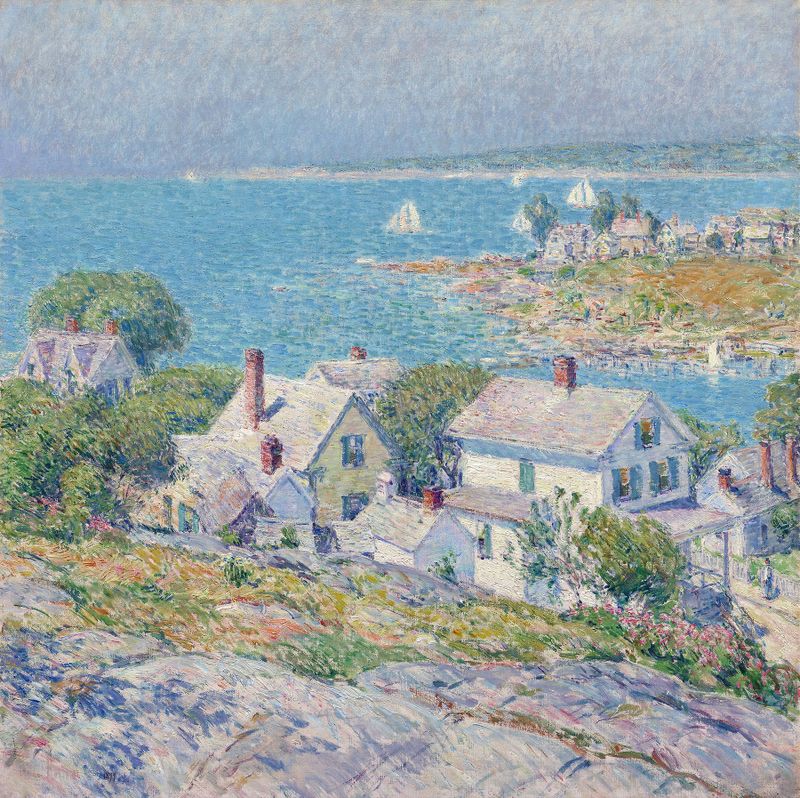
New England Headlands
Childe Hassam
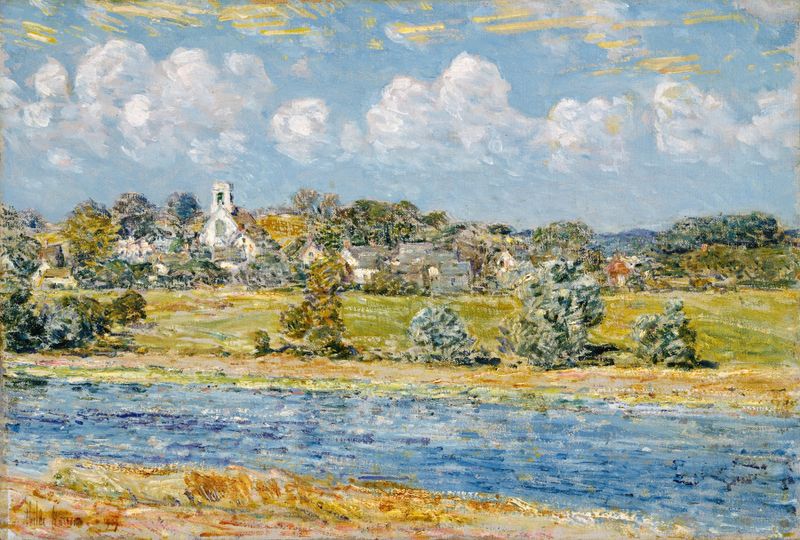
Landscape at Newfields, New Hampshire
Childe Hassam

Piazza di Spagna, Rome
Childe Hassam

The Harbor
Childe Hassam

Late Afternoon, New York, Winter
Childe Hassam





