Flat Rocks in Moonlight — History & Facts
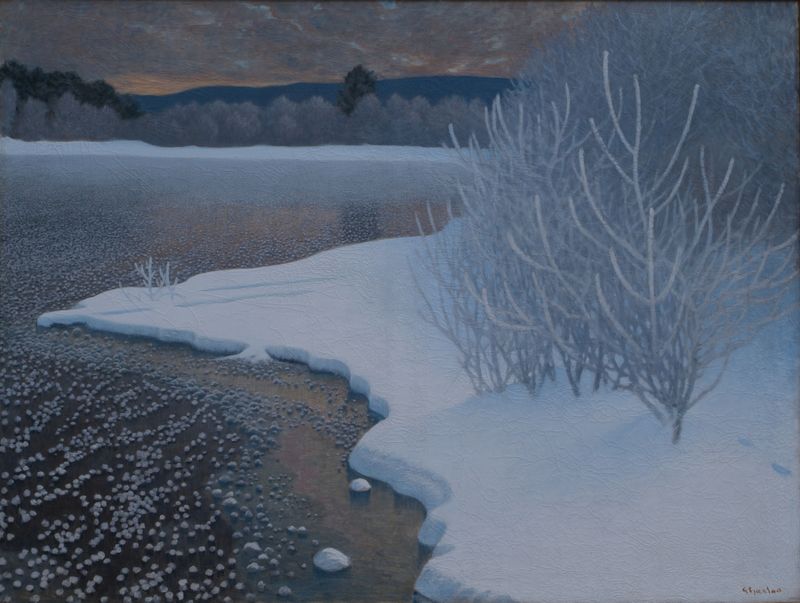
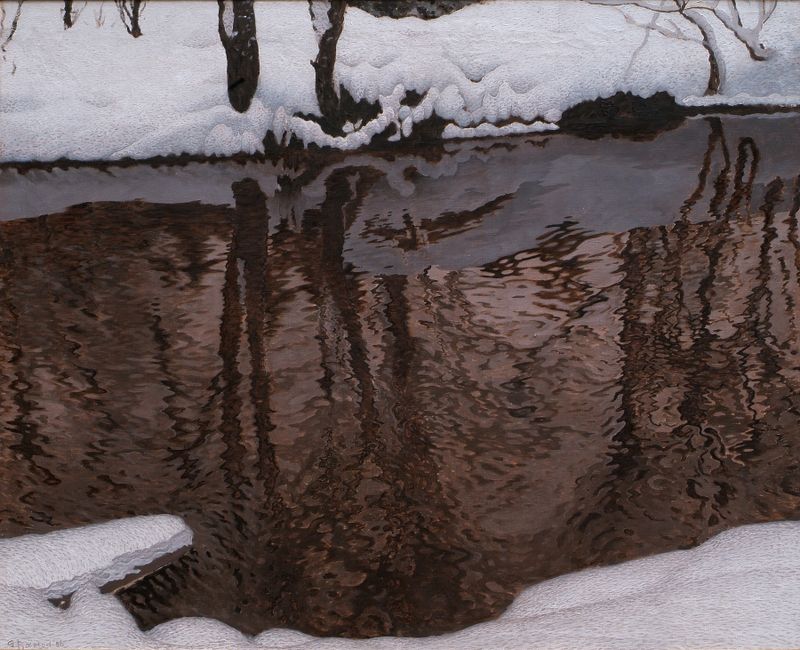
Can beauty exist without sorrow? Gustaf Fjæstad invites us to ponder this as we delve into the enigmatic allure of Flat Rocks in Moonlight. This artwork captures the essence of illusion—the shimmering surface of the water reflects not only the moonlight but also the hidden depths of emotion that lie beneath its serene exterior. Look to the tranquil expanse where the water meets the flat rocks, glistening under a silvery glow. Notice how the moon casts a halo over the scene, illuminating the smooth contours of the stones with delicate shades of blue and gray.
The composition balances light and shadow, leading the viewer’s gaze across the canvas, while the gentle ripples suggest movement, echoing the ebb and flow of thought and feeling. Each brushstroke breathes life into the stillness, creating an atmosphere both calming and contemplative. Beneath the surface, a tension arises—there is a juxtaposition of tranquility and an underlying sense of longing. The quiet presence of the moonlight is both a comfort and a reminder of loneliness, as it bathes the rocks in both beauty and isolation.
The illusion of peace is tempered by the knowledge that night can bring both solace and despair, inviting viewers to reflect on their own encounters with beauty and sorrow, intertwined like the shadows cast upon the rocks. Created in 1906, this painting reflects Fjæstad’s deep engagement with the Nordic landscape and his exploration of light and atmosphere. At this time, he was part of the vibrant artistic movements in Sweden that sought to capture the essence of natural beauty amid a rapidly changing world. This piece marks a significant moment in his career, illustrating his mastery of color and form while also tapping into deeper emotional currents that resonate with the viewer.