The First Breath of Cold on the Water — History & Facts
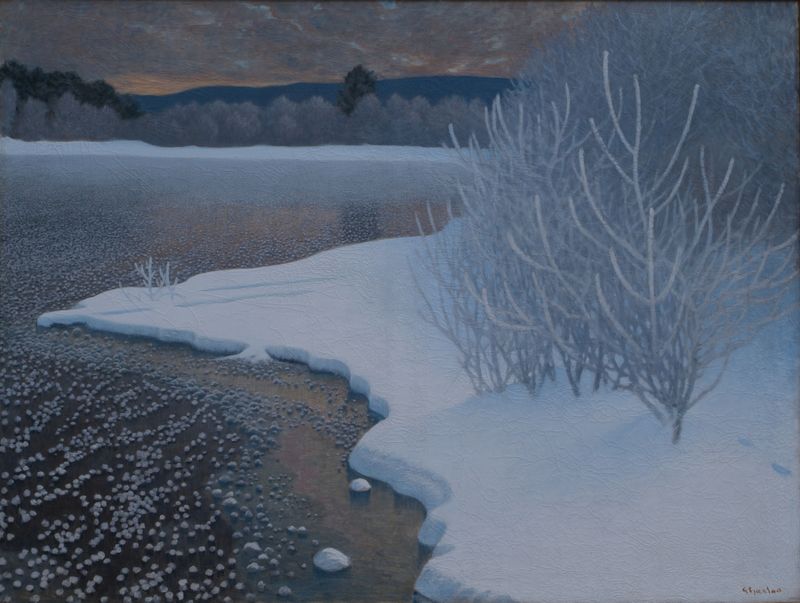
What if beauty was never meant to be finished? In Gustaf Fjæstad’s The First Breath of Cold on the Water, the fleeting moment of winter’s arrival transforms the tranquil landscape into a canvas of tension and impending violence. Look to the left at the swirling clouds, painted in deep blues and grays, casting a foreboding shadow over the icy surface of the water. Notice how the delicate strokes capture the rippling waves, their frosty edges highlighted by hints of white, creating a stark contrast against the darkening sky. The light breaks through the clouds in sharp beams, illuminating the lone figure standing at the water's edge, the brushwork suggesting both solitude and anticipation, as if nature itself holds its breath. Hidden within the vastness of the landscape is a profound commentary on the duality of beauty and brutality.
The serene scene, while mesmerizing, carries a weight of violence — lurking beneath the surface are the remnants of a harsher climate, a reminder that nature’s splendor is often ephemeral. The figure's posture, seemingly poised in quiet reflection, hints at an inner turmoil, echoing the turmoil of the changing seasons as life teeters on the brink of frost and thaw. In 1895, Fjæstad created this work amidst a burgeoning Swedish art scene that was beginning to navigate away from traditional forms towards a more expressive representation of nature. During this period, the Symbolist movement was gaining traction, influencing artists to explore deeper emotional and psychological undercurrents in their work.
The lingering nostalgia for the past combined with the stark realities of nature reflects the artist’s own life, embodying both the beauty and the potential violence inherent in the world around him.