Hoar-Frost on Ice — History & Facts
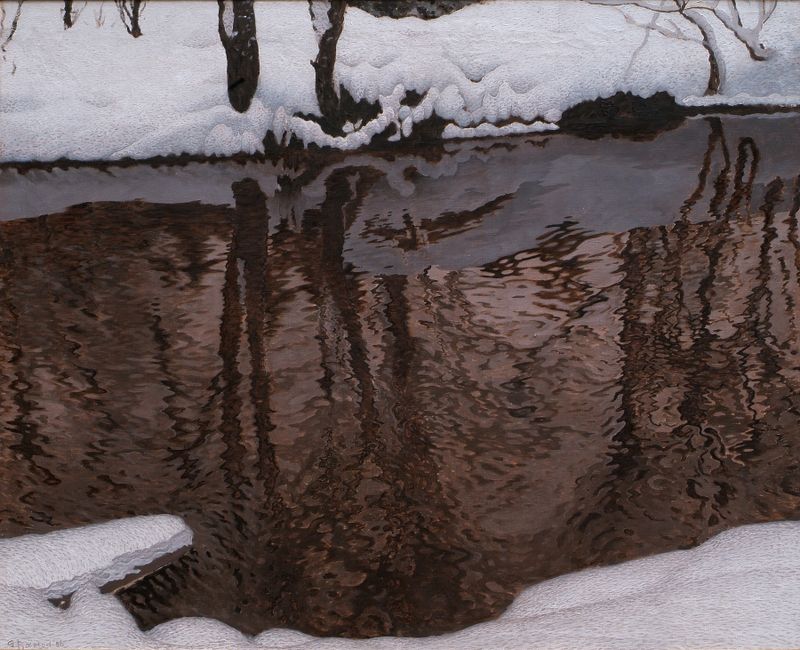
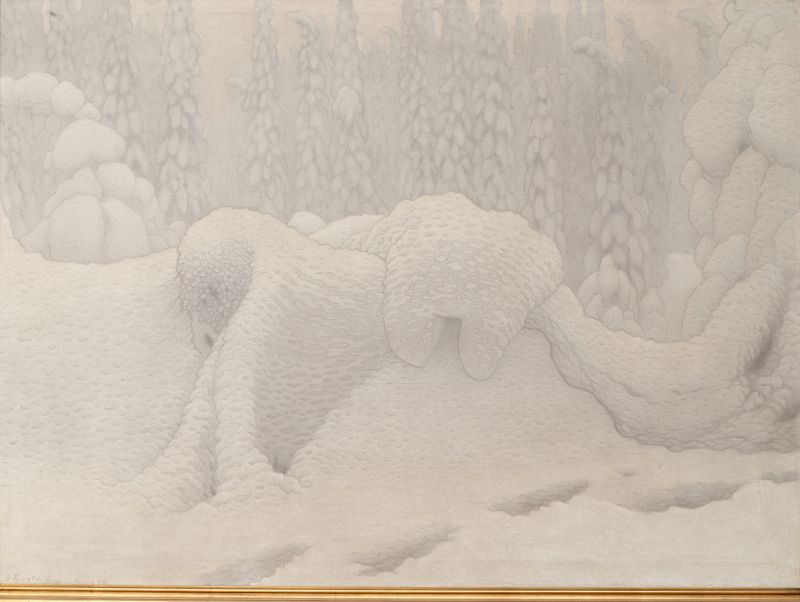
What if silence could speak through light? In Gustaf Fjæstad’s Hoar-Frost on Ice, the quietude of winter whispers a poignant tale of solitude and reflection. Look to the center of the canvas, where the intricate frost clings to the surface of the ice, capturing a fragile beauty. The artist employs a delicate palette of cool blues and whites that evoke the chill of the season, while soft brushstrokes blend seamlessly into a misty background, allowing the frosty details to emerge with crystalline clarity. Notice how the play of light glimmers subtly, illuminating the icy surface, as if trying to break through the stillness of the scene. In this artwork, the interplay of shadow and light creates a melancholic aura.
The stark contrast between the luminous frost and the deep shadows hints at the transient nature of beauty, inviting contemplation on the passage of time. The isolation of the ice, set against a muted horizon, evokes a sense of longing—perhaps for warmth or companionship. Each delicate frost crystal symbolizes resilience amidst a harsh landscape, encapsulating the bittersweet essence of winter’s embrace. Fjæstad painted Hoar-Frost on Ice in 1901, during a period marked by artistic experimentation and a deepening fascination with nature’s subtleties.
Living in Sweden, he found inspiration in the stark northern landscapes, as the Symbolist movement resonated with his exploration of emotion through natural scenes. This work not only showcases his technical prowess but also reflects a broader artistic dialogue of the time, where light and atmosphere became conduits for deeper human experience.