Neugefallener Schnee — History & Facts
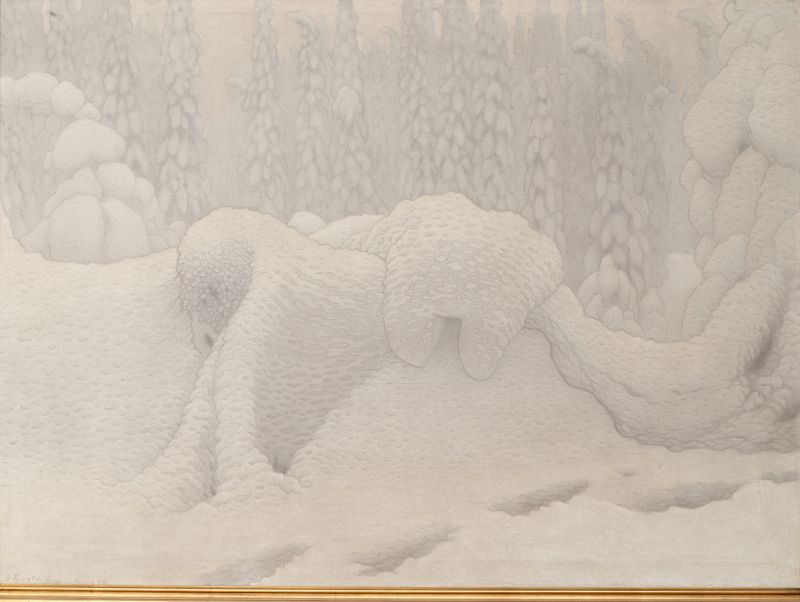
When did color learn to lie? In Neugefallener Schnee, shades of white and gray whisper secrets of solitude and introspection, enveloping viewers in a landscape that is both stark and hauntingly beautiful. Focus on the gentle undulation of the snow-covered hills, where delicate brushstrokes evoke a sense of quiet stillness. Notice how the pale light bathes the scene, illuminating the soft contours of the landscape while casting shadows that hint at unseen depths. The sparse tree branches, stark against the ethereal white, reach out like frail arms, adding to the atmosphere of isolation.
Each element appears to breathe with a serene yet melancholic rhythm, inviting contemplation. As the viewer delves deeper, the contrasts begin to unveil themselves—the brightness of the snow against the dark, twisted trunks of the trees suggests a struggle between hope and despair. The snow may seem inviting, yet its untouched surface speaks of desolation, a reminder of the loneliness that often accompanies beauty. This emotional tension resonates, revealing a profound connection between nature and the human experience, where moments of solitude are often coupled with introspective clarity. Created in 1909, this work emerged during a transformative period for Gustaf Fjæstad, who was influenced by the Symbolist movement and the Scandinavian landscape.
At the time, he was exploring themes of nature and emotional expression in art, striving to convey the essence of his surroundings while reflecting on his personal sense of isolation. This painting stands as a testament to his ability to encapsulate both the grandeur and the loneliness of the Nordic wilderness.