Snow — History & Facts
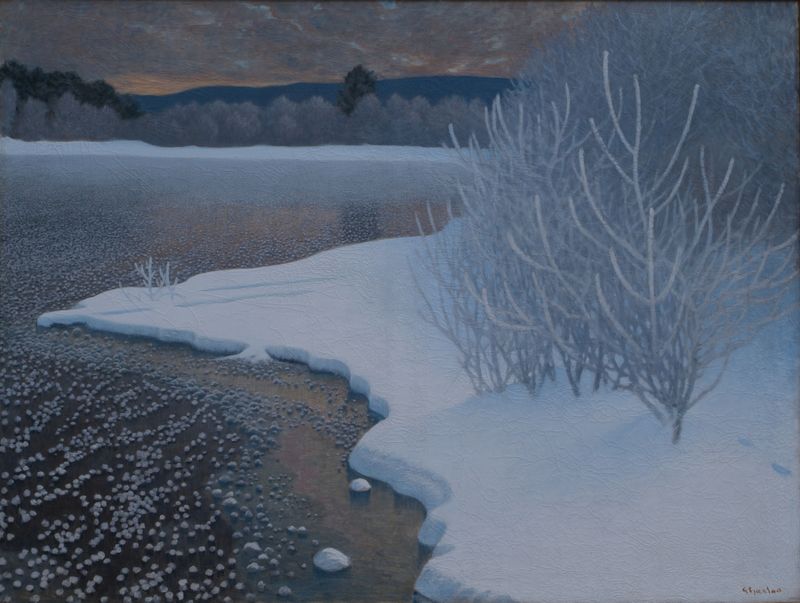
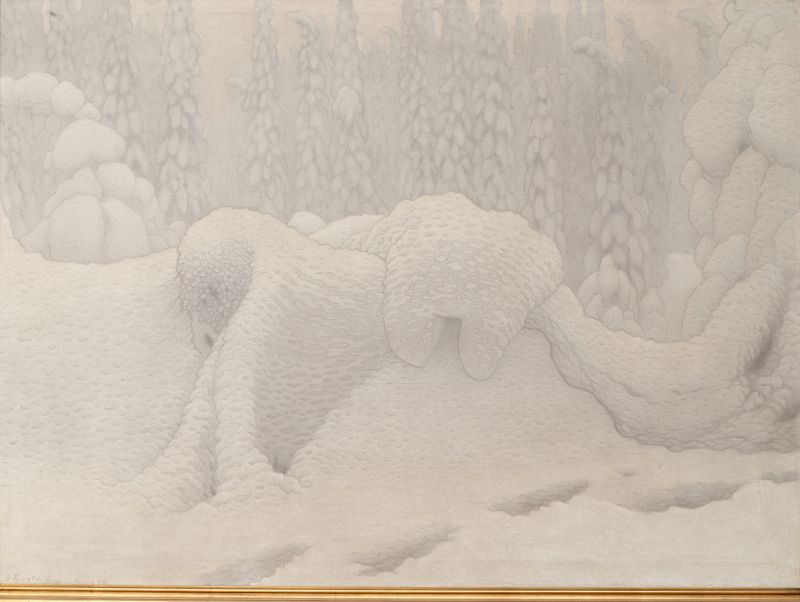
In the quiet aftermath of betrayal, can silence speak louder than words? Look to the left at the ethereal white swirls of snowflakes that dance effortlessly across the canvas. Gustaf Fjæstad employs a delicate palette of blues and whites, evoking an atmosphere of chill yet wonder. Notice how the soft, textured brushstrokes create a sense of movement, as if the snow itself is falling in real time.
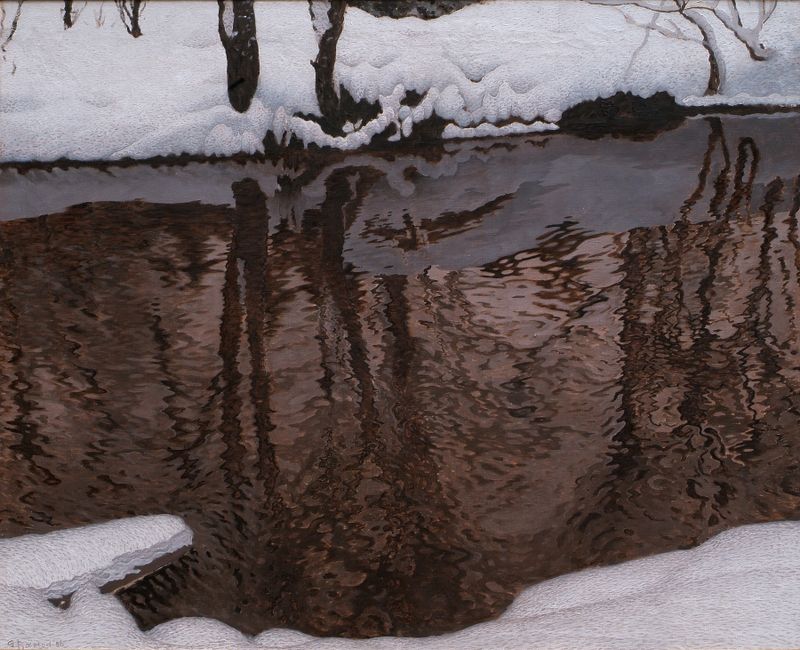
The composition draws the eye inward, inviting the viewer to feel the serene isolation that blankets the landscape. As you explore further, hidden meanings emerge beneath the tranquil surface. The stark contrast between the serene whiteness of the snow and the shadowed elements nearby reveals a delicate tension, hinting at underlying emotional turmoil. The trees, stoic and frozen, seem to bear witness to a story of love lost or trust fractured, their branches delicately outlined against the luminous backdrop.
Each layer of paint whispers of isolation, yet also of beauty, capturing the paradox of coldness that accompanies betrayal. In 1900, Fjæstad painted this evocative piece during a time of burgeoning modernism in Sweden. He was deeply influenced by the natural landscapes of his homeland, combining elements of impressionism with his own expressive style. The turn of the century was a period of exploration in art, as artists sought to capture the subtleties of emotion and experience, making Snow a poignant reflection of both personal and universal themes.