Running Water — History & Facts
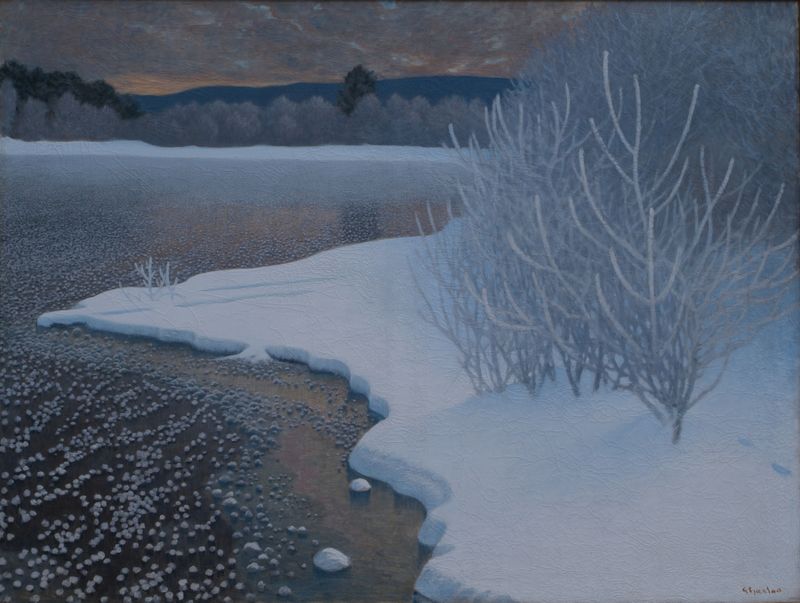
What if silence could speak through light? In Running Water, a serene transformation unfolds before our eyes, as nature breathes life into the canvas, beckoning the viewer to listen. The interplay of elements transforms the mundane into the profound, suggesting a deeper narrative beneath the surface. Focus on the center of the piece, where the shimmering water cascades down a gentle slope. Notice how the brushwork captures the fluidity of the stream, with delicate strokes that mimic the movement of water.
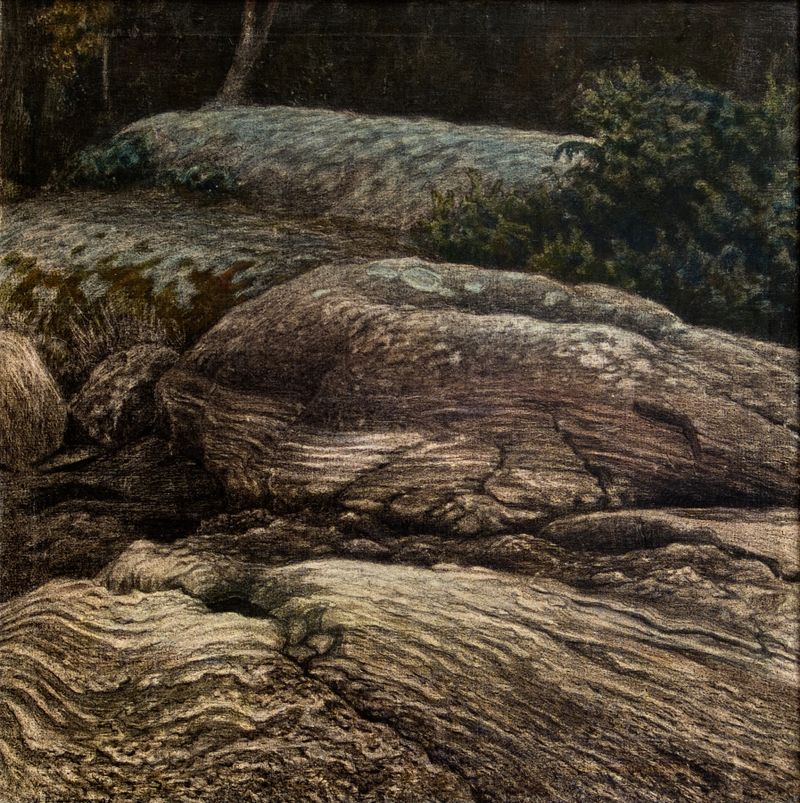
The light plays a crucial role, dancing across the surface and casting reflections that shimmer like jewels. The palette is rich yet muted, with earthy tones that evoke a sense of calm and harmony, inviting an exploration of the relationship between water and earth. Amidst the tranquil scene, contrasts emerge—between stillness and motion, solidity and fluidity. The rocks, steadfast and ancient, stand in stark juxtaposition to the ephemeral flow of water, symbolizing the ebb and flow of life itself.
Subtle hints of green foliage peek through, representing growth and rebirth, reinforcing the theme of transformation that runs through the artwork. Created in 1906, during a time of artistic experimentation, Gustaf Fjæstad was immersed in the Swedish landscape, often exploring the interplay between light and nature. This period was marked by a growing interest in Impressionism, yet Fjæstad's work stands out for its unique capture of the Scandinavian essence. His exploration of natural beauty not only reflects his personal experiences but also aligns with the broader artistic movements transitioning into the 20th century.