Flores da rua — History & Facts
Can paint confess what words never could? In Flores da rua, colors bloom with an unspoken sorrow, whispering secrets of loss and longing that linger in the air. Look closely at the exuberant array of flowers spilling from their clay pots. Notice how the soft, sunlit hues of pinks and yellows blend seamlessly with the earth-toned container, creating a palpable warmth that invites the viewer closer. The artist's delicate brushwork captures the gentle flutter of petals, suggesting both fragility and resilience.
Each bloom stands as a testament to life’s fleeting beauty, while the carefully arranged composition draws your eye in a gentle embrace, creating a moment suspended in time. Yet, within this vibrant display lies a poignant contrast. The lush blooms, so alive and vivid, starkly oppose the muted background that hints at an absence—perhaps a reminder of the life once shared with these flowers. The juxtaposition of vitality and decay evokes a sense of nostalgia, revealing a deeper emotional tension that resonates with anyone who has experienced loss.
Each flower serves not just as a symbol of beauty, but as a silent elegy, an acknowledgment of what once was and can never be again. In 1916, Eliseu Visconti painted this piece during a time of significant change in Brazil, as the country grappled with modernization and its cultural identity. Balancing his artistic vision with the growing influence of European styles, he sought to capture the essence of Brazilian life and nature. This work emerged from a period marked by personal and societal upheaval, reflecting the complex interplay of joy and sorrow that colors human experience.
More Artworks by Eliseu Visconti
Browse all →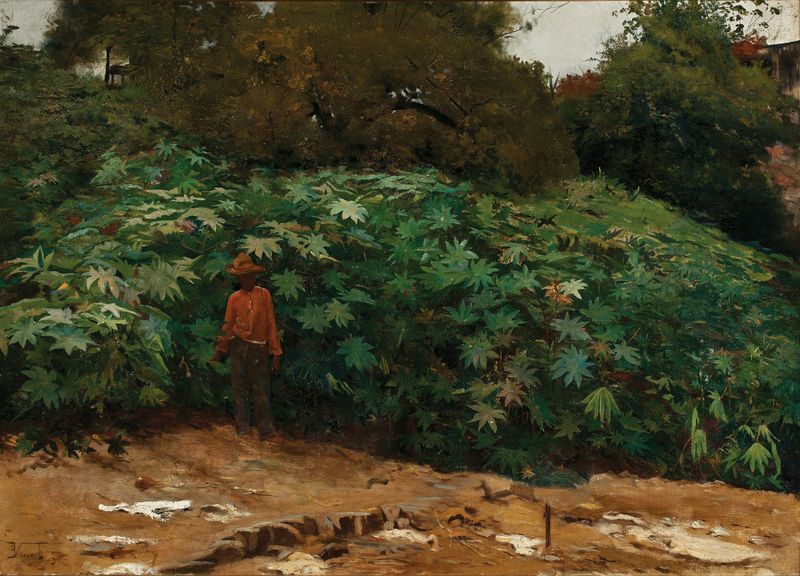
Mamoneiras – Morro de São Bento
Eliseu Visconti
Marina com Pão de Açúcar
Eliseu Visconti

O batismo da boneca
Eliseu Visconti
Canto de Luxemburgo (Outono)
Eliseu Visconti
Raios de sol
Eliseu Visconti
Tarde em Saint Hubert
Eliseu Visconti

Efeito matinal
Eliseu Visconti
A Igrejinha (Copacabana)
Eliseu Visconti

A caminho da escola
Eliseu Visconti
As lavadeiras
Eliseu Visconti