Flower market in Amsterdam — History & Facts
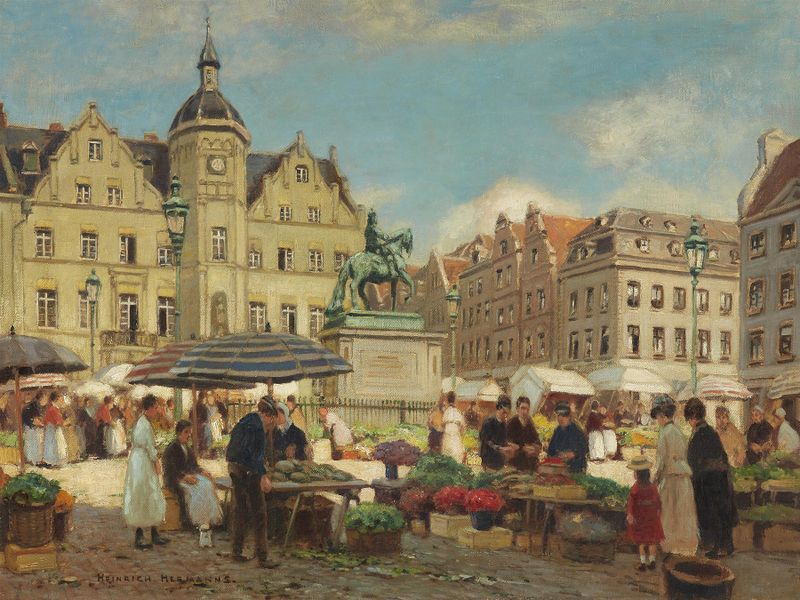
In the vibrant chaos of life, how do we mourn what is ephemeral yet beautiful? Look to the bottom left, where a riot of blooming flowers spills into the cobbled street, each petal a burst of color against the muted tones of the surrounding market stalls. The artist’s deft brushwork captures the delicate interplay of light and shadow, illuminating the draped fabrics and weathered wooden carts. Notice how the vivid reds and yellows of the blossoms almost pulse with energy, beckoning the viewer to pause and appreciate the fleeting beauty that life offers. Yet beneath this lively surface lies an undercurrent of sorrow, hinted at through the subdued expressions of the market-goers.
The contrast between the bright flora and the weary faces reflects a poignant tension: life’s joy rivaling the weight of loss. Every flower, vibrant in its existence, evokes the grief that accompanies the transient nature of beauty, reminding us that every moment of joy carries with it the shadow of what cannot endure. Heinrich Hermanns painted this scene during a time when the art world was experiencing profound shifts, though the exact date remains unknown. Nestled in the heart of Amsterdam’s bustling markets, he sought to encapsulate the essence of life—its vibrancy mingled with an inevitable melancholy.
Amidst personal trials and the changing tides of artistic expression, the creation stands as a testament to the enduring relationship between beauty and grief.