Flowers of the Four Seasons — History & Facts
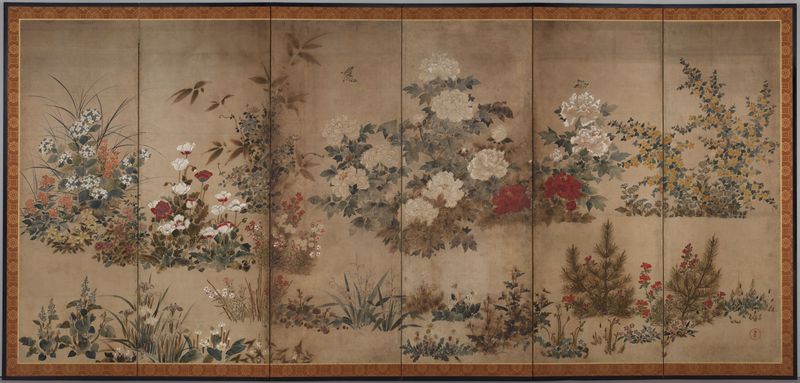
This sentiment resonates within the delicate chaos of nature, where vibrant flowers bloom amidst the impermanence that defines existence. Begin by focusing on the intricate details of the piece; notice the way the flowers unfurl across the canvas, each petal meticulously painted with a combination of gold and vivid hues. The lush colors breathe life into the artwork, drawing your gaze from one bloom to another. Look closely at the background, where soft strokes of gold leaf shimmer subtly, suggesting a connection between the flora and a world of ephemeral beauty, as if the seasons themselves are whispering their fleeting secrets. Dive deeper into the emotional layers of the composition—each flower represents a season, encapsulating both its vibrancy and inevitable decay.
The juxtaposition of the lively blooms against the understated yet opulent gold creates a tension that speaks to the chaos of existence. This duality reflects not only the transient nature of beauty but also the turmoil that often accompanies it, as joy and sorrow intertwine like the petals of the blossoms. In the 17th century, as Tawaraya Sōtatsu painted Flowers of the Four Seasons, he was navigating the burgeoning Edo period in Japan, a time when art flourished, blending traditional aesthetics with new influences. His work emerged from a desire to capture the essence of nature, amidst a shifting cultural landscape, marking him as a pivotal figure in the evolution of Japanese painting.