Flowers of the Four Seasons — History & Facts
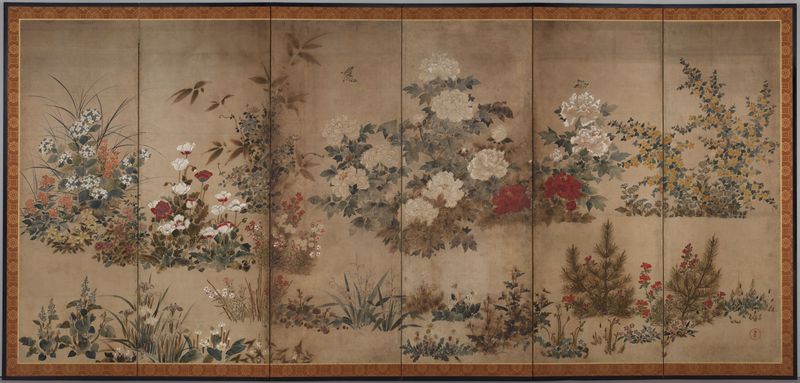
In the delicate layers of this artwork, dreams bloom and fade, evoking a world where nature and spirit intertwine seamlessly. Look to the right at the vibrant bursts of seasonal flowers, their petals painted with a meticulous touch that seems to invite the viewer into their ephemeral beauty. Notice how the ink flows gracefully over the silk, creating fluid forms that dance between realism and abstraction. The rich hues of gold and blue contrast softly against the muted background, suggesting a harmony that whispers of deeper connections within the cycles of life. Each flower represents a fleeting moment, a pause in the heartbeat of nature, yet they collectively embody the passage of time.
The deliberate placement of the blossoms hints at the juxtaposition of life's transience and the desire for permanence. The delicate outlines suggest fragility, while the bold colors breathe a sense of vitality, reinforcing the tension between joy and impermanence. Tawaraya Sōtatsu created this work in the early 17th century, a time when Japan was experiencing profound cultural shifts during the Edo period. As a pioneer of the Rinpa school, he embraced the beauty of simplicity and nature, weaving traditional motifs with a fresh perspective.
Amidst a society evolving toward urban sophistication, his artistry reflected a yearning to capture the essence of fleeting moments, connecting the material world with the ethereal.