Flowers of the Four Seasons — History & Facts
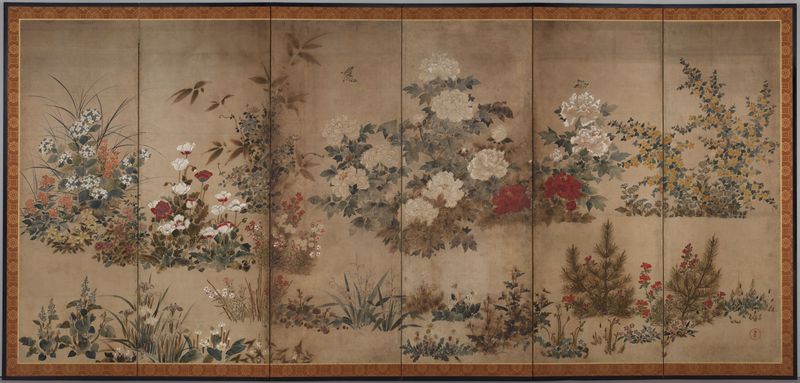
In the delicate world of Flowers of the Four Seasons, a void is transformed into a vibrant dance of nature’s beauty. Each petal and leaf breathes life into stillness, as if the ephemeral moments of spring, summer, autumn, and winter have been plucked from the air and captured on paper. Look closely at the swirling composition, where the blossoms intertwine, guiding your gaze across the canvas. The intentional use of gold leaf creates a shimmering backdrop that elevates the flowers, casting a gentle glow.
Notice the striking contrasts among the hues—deep reds, soft pinks, and brilliant yellows against the muted tones of the seasons. Each brushstroke sings with the elegance of simplicity, yet reveals a profound complexity beneath the surface. These flowers are more than mere representations of nature; they embody the transient beauty of life itself. The deliberate choice of seasonal blooms speaks to the impermanence of existence, while the gold accents suggest a richness in the moment that belies its fleeting nature.
The void in the background serves as a canvas for contemplation, inviting the viewer to explore the balance between emptiness and abundance, echoing the cycles of growth and decay inherent in life. Tawaraya Sōtatsu painted Flowers of the Four Seasons during the 17th century, a time when Japan was experiencing a cultural renaissance. The artist was known for his innovative approaches to traditional styles, often merging elements of painting and calligraphy. In this period, there was a growing appreciation for nature, which became a central theme in art, reflecting the society’s desire to connect more deeply with the world around them.