
Forest Floor — History & Facts
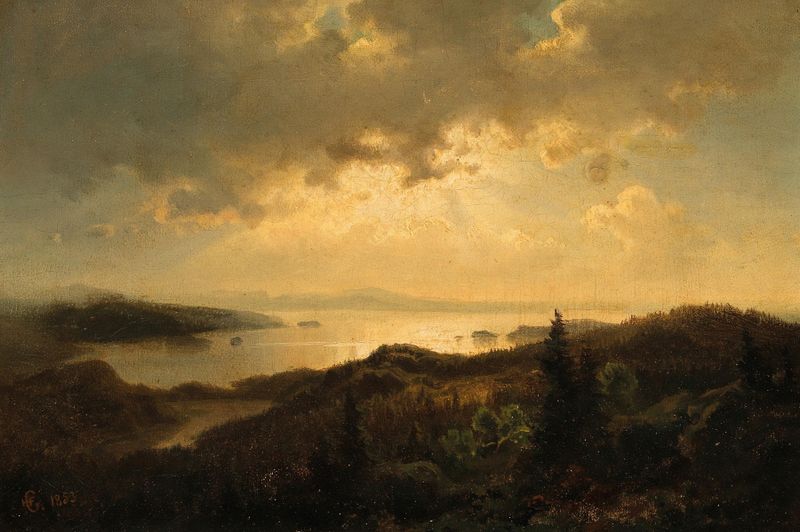
What secret hides in the quiet of the canvas? In Forest Floor, a haunting stillness envelops the viewer, inviting introspection and a deep emotional resonance that lingers long after the gaze is lifted. Look to the foreground, where a tapestry of rich earth tones sprawls beneath the towering trees. The delicate interplay of light and shadow creates a dappled effect on the fallen leaves, inviting us to trace the contours of nature’s artistry. Notice how the brushwork blends seamlessly, capturing the intricate details of twigs and moss—each stroke reverberating with a tender care that speaks to a moment frozen in time. This scene resonates with a sense of longing, as if the forest itself whispers secrets of the past.
The vibrant greens contrast with the muted browns to evoke a harmony that suggests life teeming beneath the surface, hidden yet palpable. The stillness signifies a pause, a breath held in anticipation of what might emerge from this serene yet enigmatic woodland. In 1858, the artist captured this moment amidst a burgeoning appreciation for nature in the Romantic tradition. Gude, who was living in Norway at the time, was deeply influenced by the landscapes around him, reflecting a desire to reconcile the sublime beauty of his surroundings with the emotional truths of human experience.
This painting is a testament to both his technical skill and the broader art movements that sought to bridge the gap between the natural world and inner reflection.
More Artworks by Hans Gude
Browse all →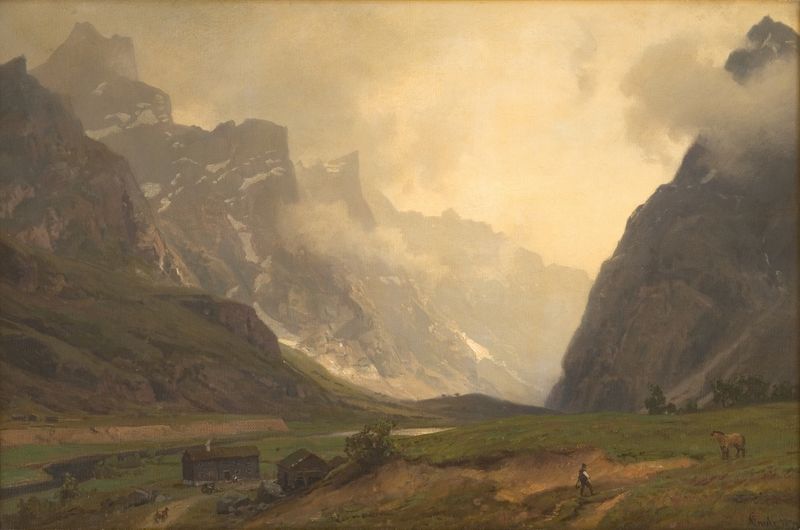
The Troll Peaks in Romsdalen, The Foot of Romsdalshorn to the Right
Hans Gude
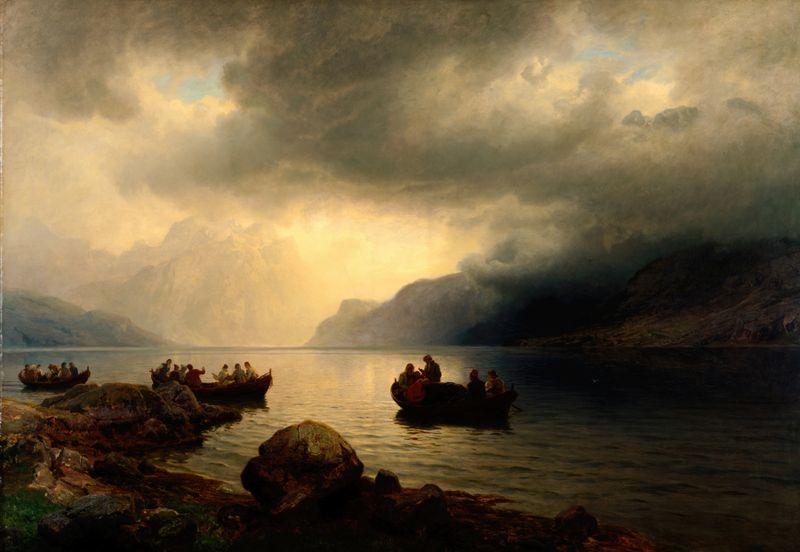
Funeral Procession on the Sogne Fjord
Hans Gude
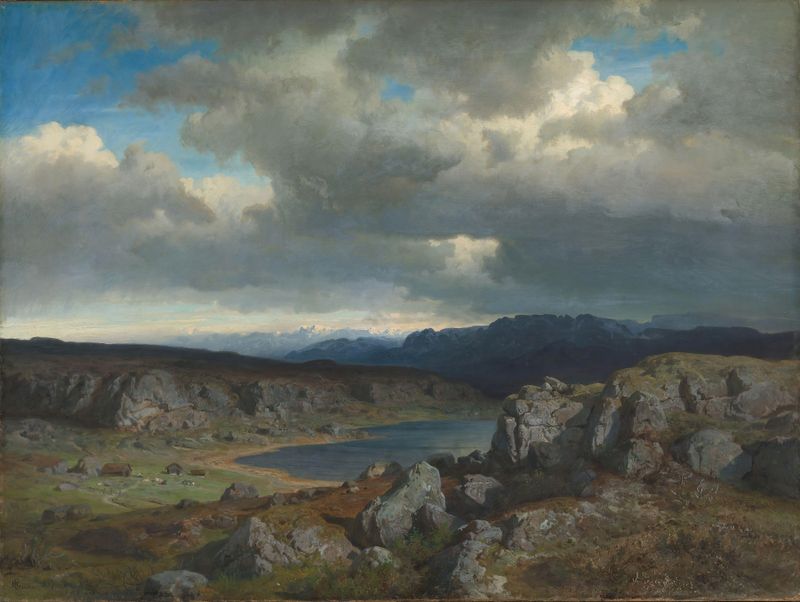
Norwegian Highlands
Hans Gude
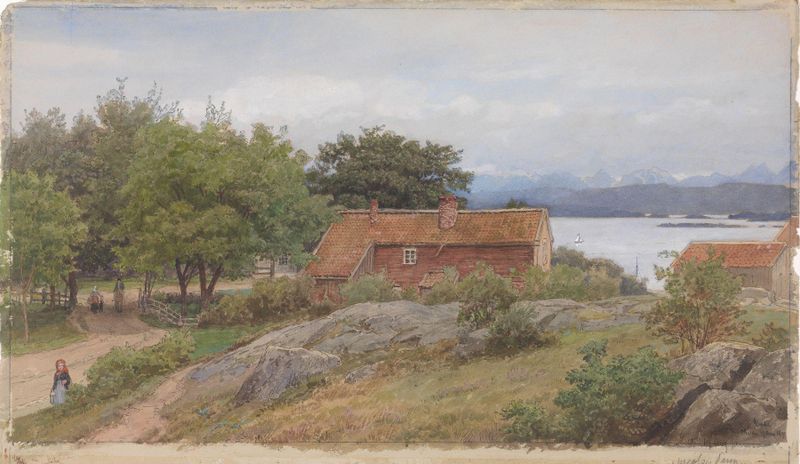
Landskap med bondegård ved Molde
Hans Gude
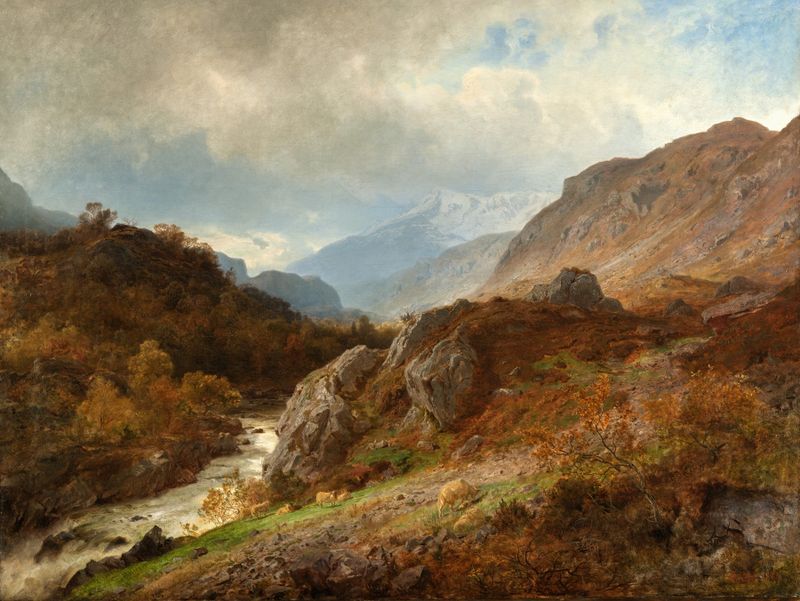
Mountain Landscape
Hans Gude

Fresh Breeze on the Norwegian Coast
Hans Gude
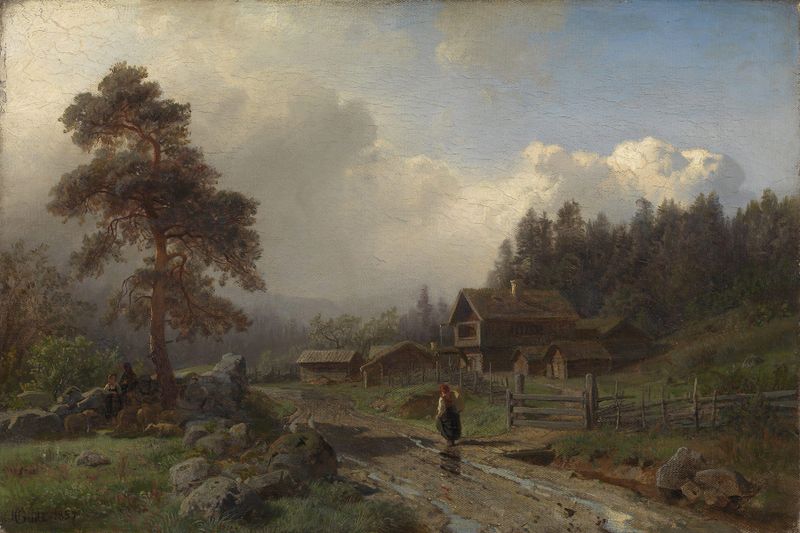
Norwegian Landscape in Rain
Hans Gude
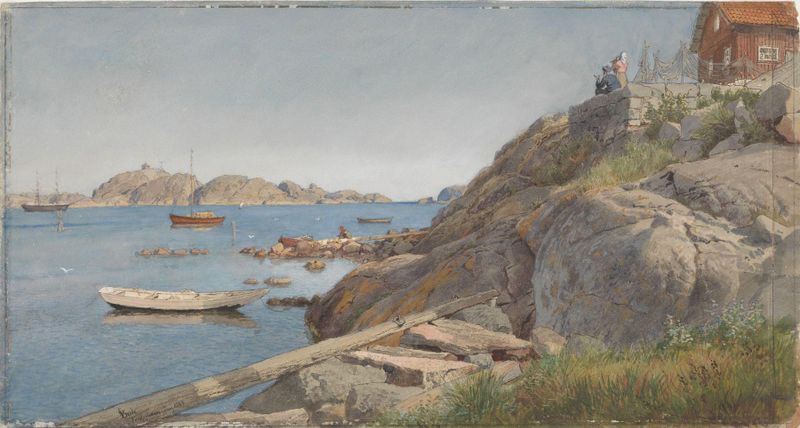
Landscape by Stavern
Hans Gude
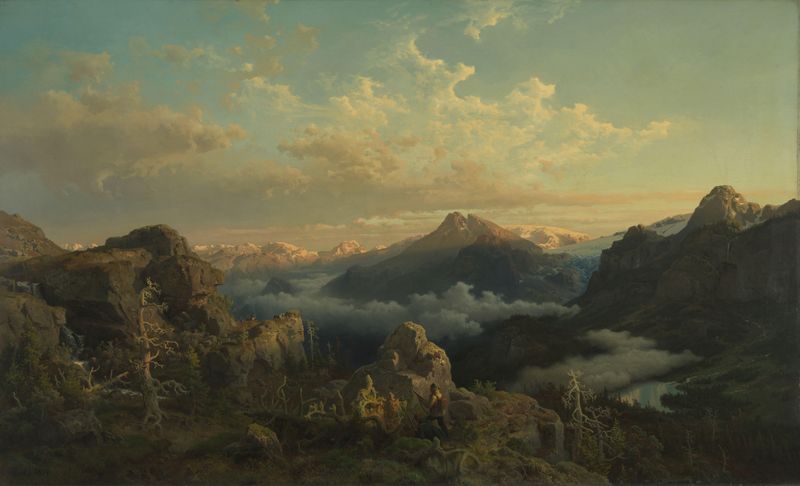
Norwegian Highlands in Sunrise
Hans Gude
A Scene at Dusk in Norway
Hans Gude





