
Forest scene with red deer. — History & Facts
What first catches the eye in Forest scene with red deer is the almost theatrical entrance of a white hind, flanked by her russet companions and watched over by a stag whose antlers echo the tangled branches above. The animals stand at the edge of a sunlit glade, their bodies picked out by crisp autumn light that glances off the water at their feet. The white deer, rare in nature and often a symbol of mystery or otherness, commands the center, her gaze alert and unafraid, while the stag’s proud posture and the wary turn of the second hind’s head suggest a moment of sudden attention—perhaps a distant sound, or the approach of an unseen presence.
The painter’s brushwork lingers on the texture of fur and the dappled play of shadow, inviting the viewer to linger with these creatures in their moment of pause. Works like this, painted between 1851 and 1911, belong to a long tradition of animal painting that flourished in northern Europe, where artists often balanced scientific observation with romantic reverence for the natural world. Such scenes were prized by collectors eager to bring the grandeur of the hunt or the serenity of the wild into their homes, at a time when industrialization was rapidly changing the landscape outside. The presence of this work in the bruun-rasmussen.dk collection is a reminder of the enduring appeal of the forest as both subject and symbol—a place where the everyday and the extraordinary might meet, if only for an instant.
The careful rendering and gentle drama of Adolf Mackeprang’s painting draw us back, again and again, to the quiet tension at the heart of the woods.
More Artworks by Adolf Mackeprang

Vixen with puppy at the edge of the forest
Adolf Mackeprang
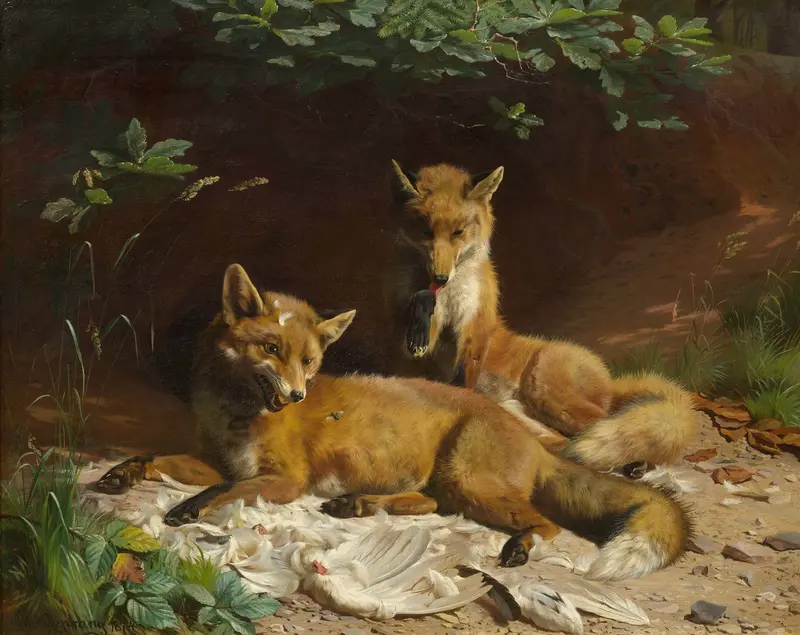
Two foxes
Adolf Mackeprang
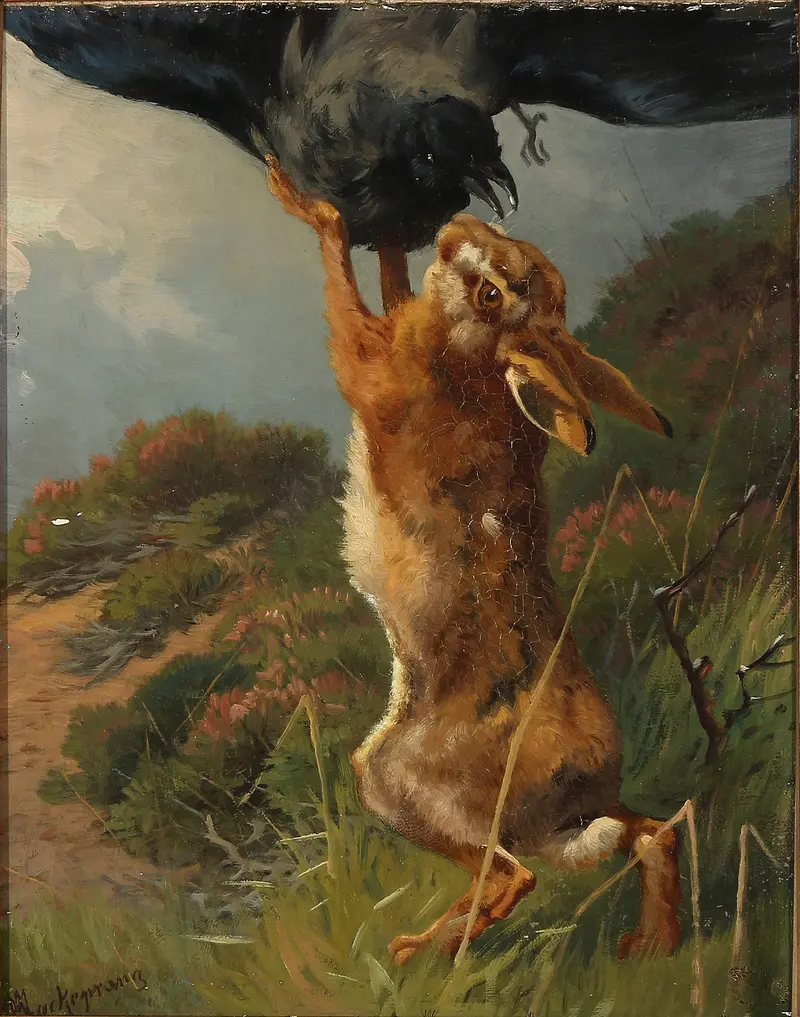
Young hare attacked by a crow
Adolf Mackeprang
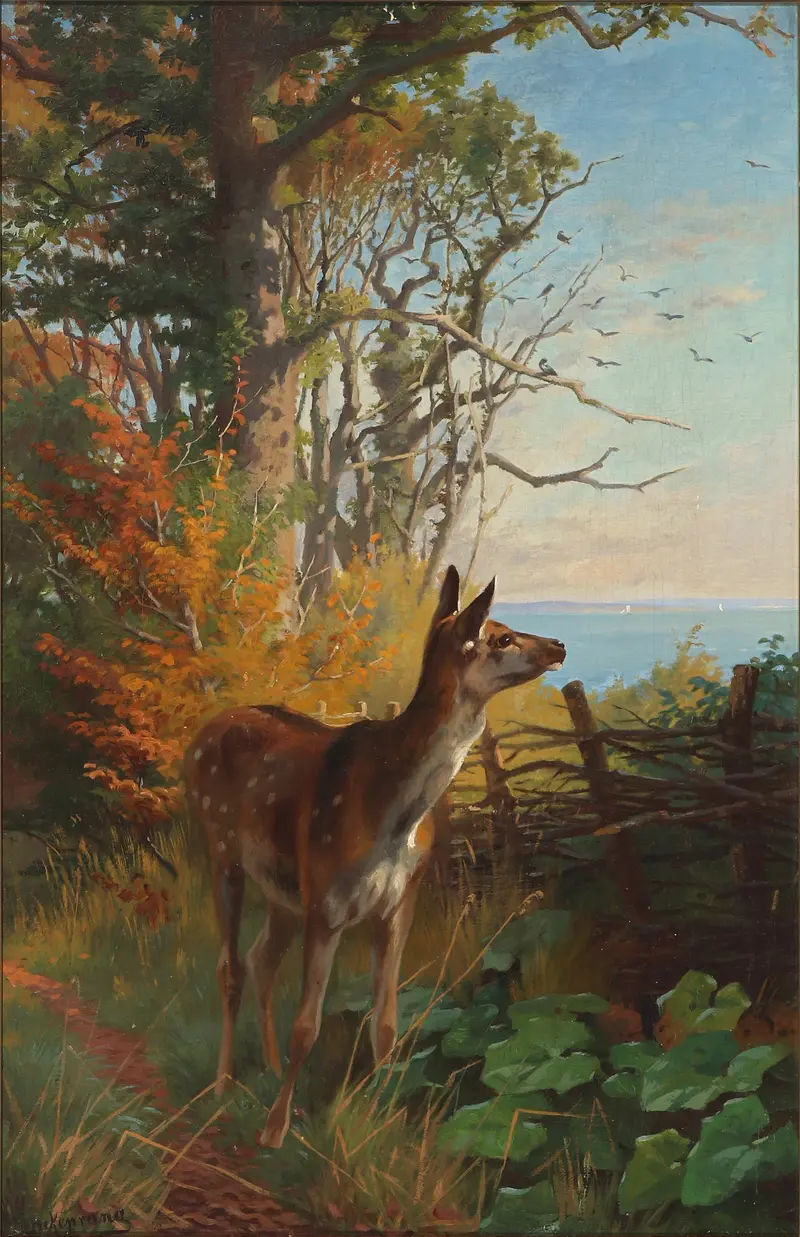
A deer in the forest
Adolf Mackeprang
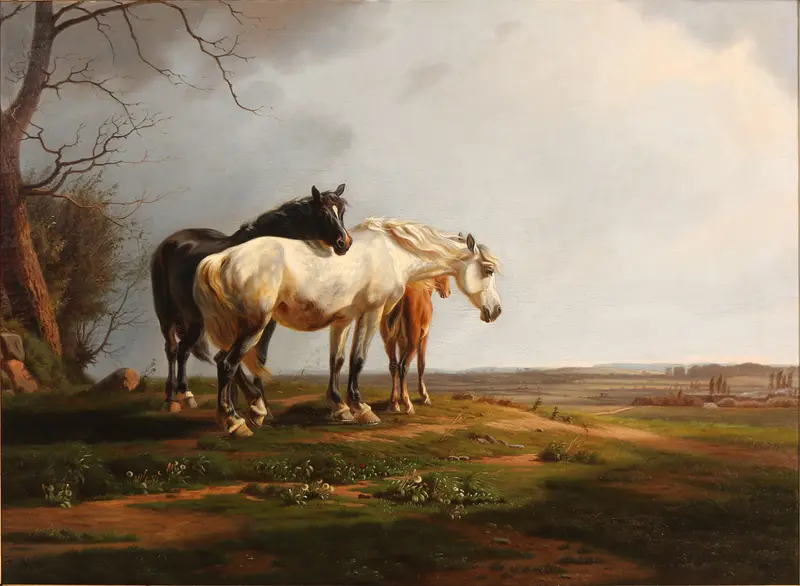
A flock of horses in a field in the sun
Adolf Mackeprang
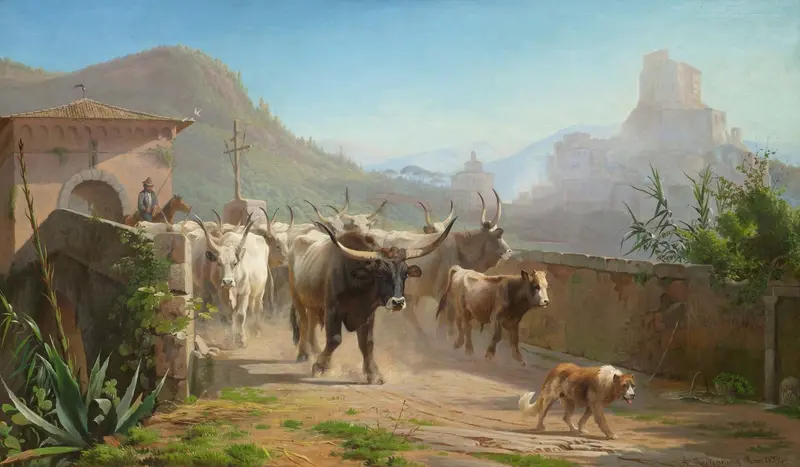
Cattle drive in Italy
Adolf Mackeprang
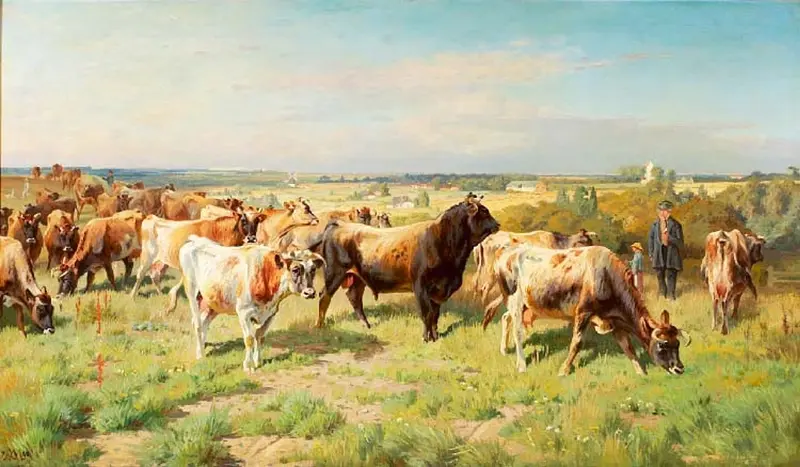
Cattle in the fields.
Adolf Mackeprang

Dogs chasing through a forest.
Adolf Mackeprang
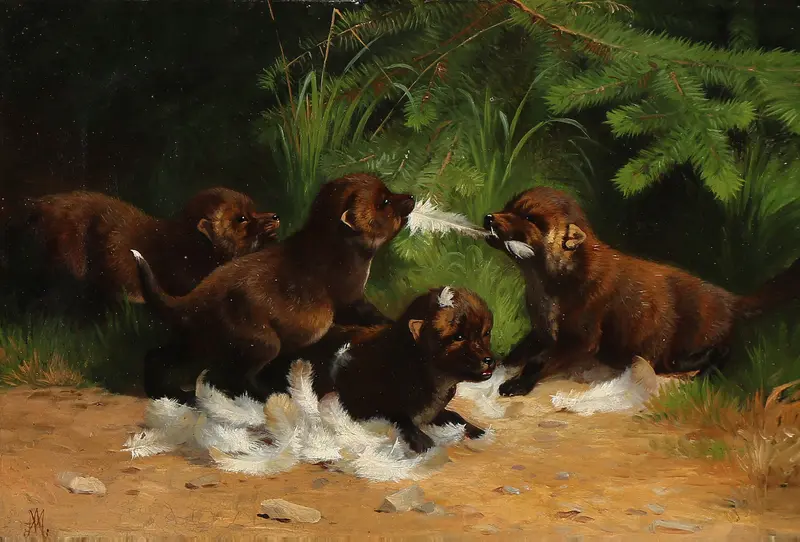
Forest scene with fox pubs fighting over the remains of a bird.
Adolf Mackeprang
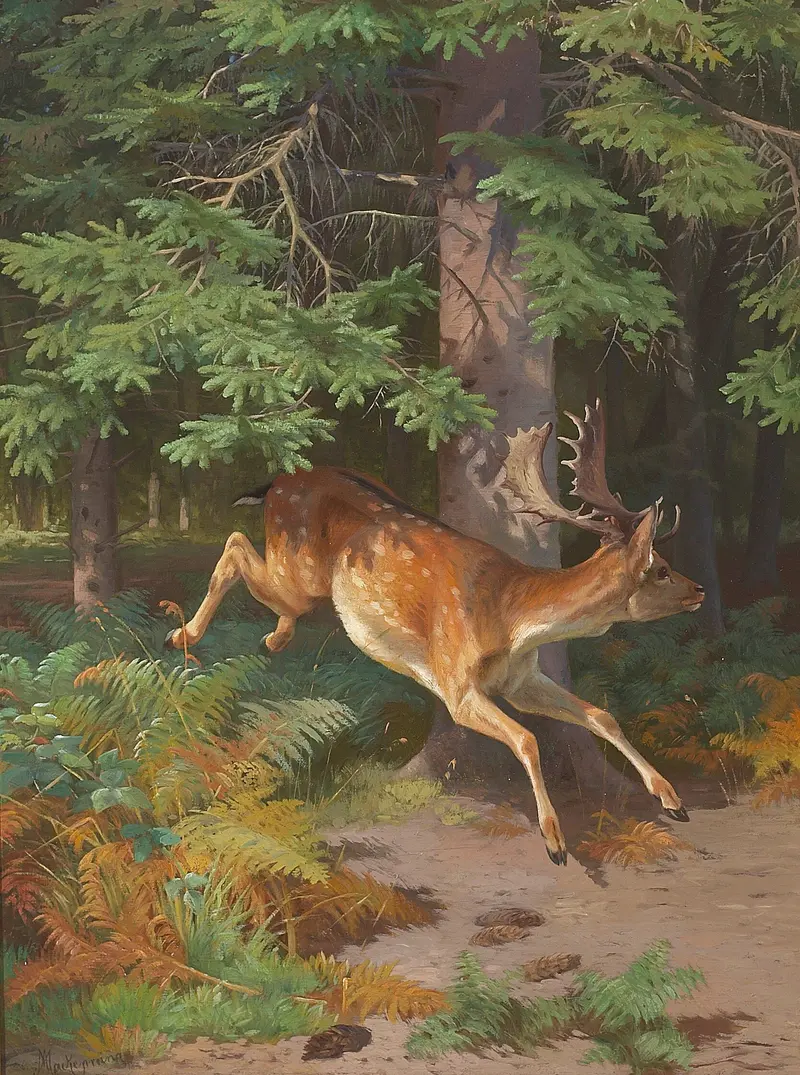
Red deer in a forest clearing.
Adolf Mackeprang





