
A deer in the forest — History & Facts
What first catches the eye in A deer in the forest is the way sunlight seems to pause on the animal’s back, as if nature itself is holding its breath. The deer stands at the edge of a tangled path, its head turned toward a distant, unseen sound or scent, caught between the shadowed safety of the undergrowth and the open promise of the blue horizon. The artist, Adolf Mackeprang, uses the dappled light filtering through autumn leaves to draw us into the animal’s alert stillness—each spot on the deer’s coat echoes the patches of sun that dance across the forest floor.
The fence, rough and half-collapsed, marks a boundary not just in the landscape, but in the story: here is a creature poised between worlds, both sheltered and exposed. Paintings of wildlife, especially in northern Europe during the late nineteenth and early twentieth centuries, often served as meditations on the relationship between civilization and the wild. Artists like Mackeprang responded to a growing fascination with nature as industrialization pressed in on rural life, and their works found eager audiences among collectors who longed for a glimpse of untamed beauty. Little is recorded about this specific painting beyond its presence in the bruun-rasmussen.dk collection, and its date remains unknown—a reminder of how many such quiet moments slip through history, leaving only the trace of a brushstroke and a shaft of light.
The deer’s watchful gaze invites us to linger, to imagine the world just beyond the frame.
More Artworks by Adolf Mackeprang

Vixen with puppy at the edge of the forest
Adolf Mackeprang
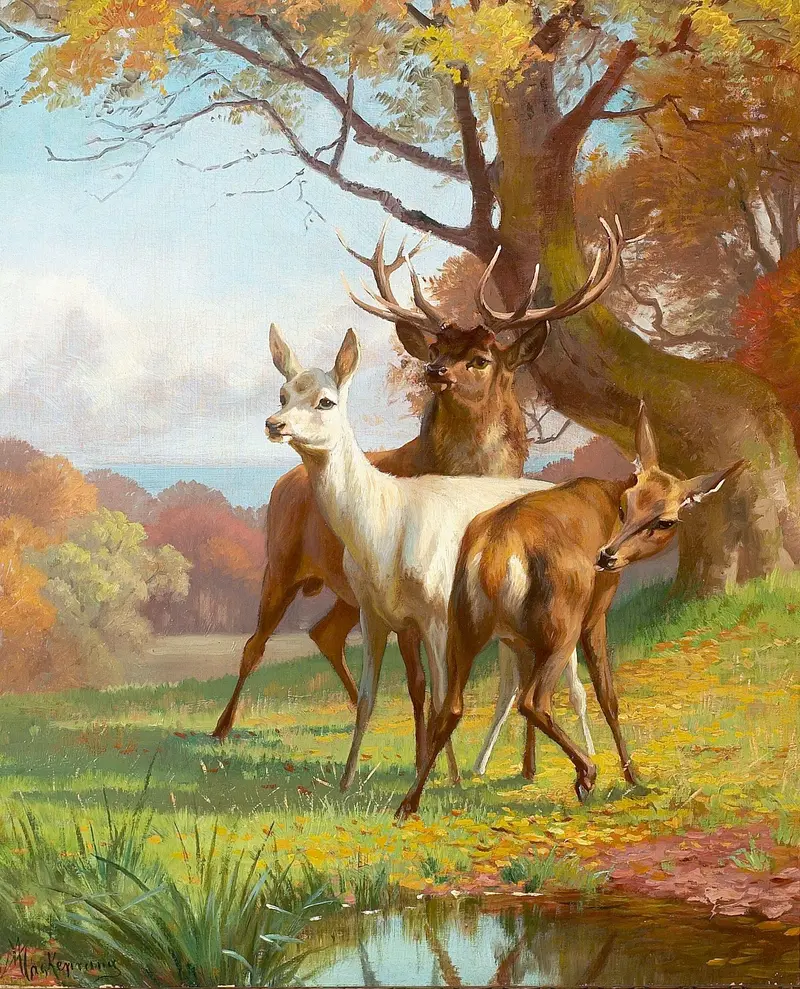
Forest scene with red deer.
Adolf Mackeprang
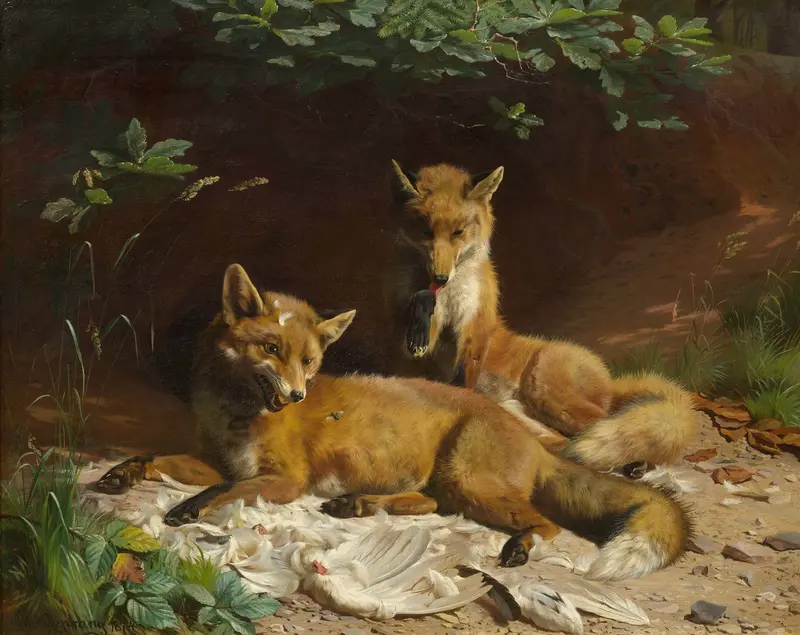
Two foxes
Adolf Mackeprang
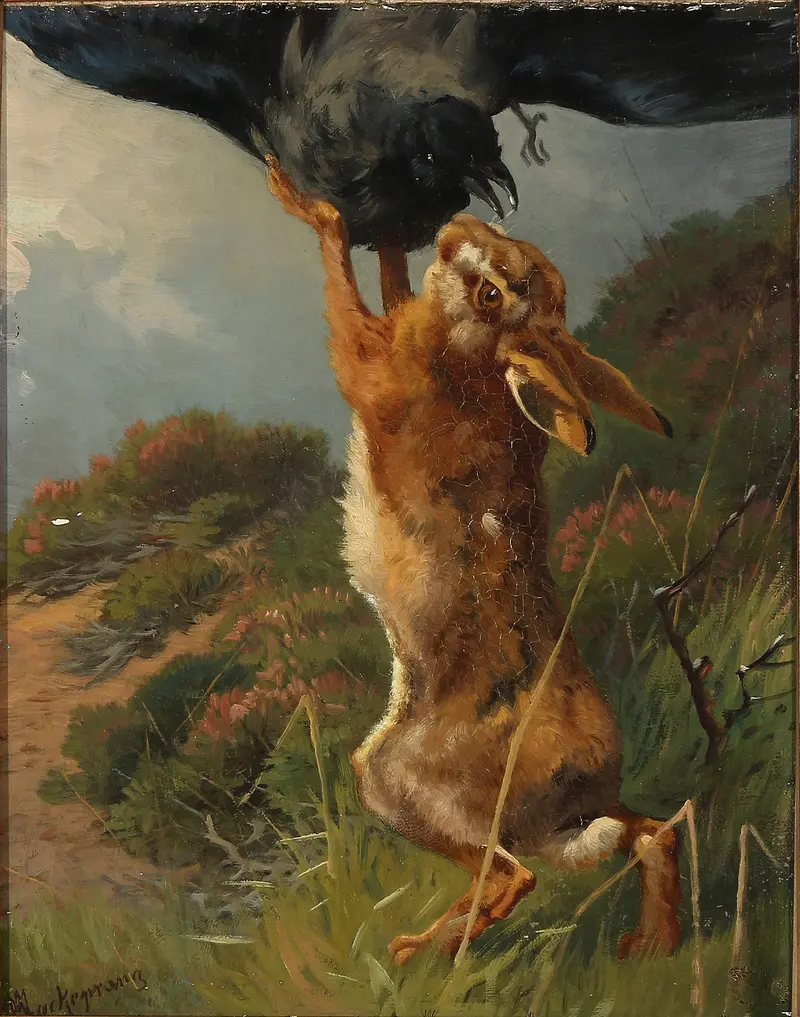
Young hare attacked by a crow
Adolf Mackeprang
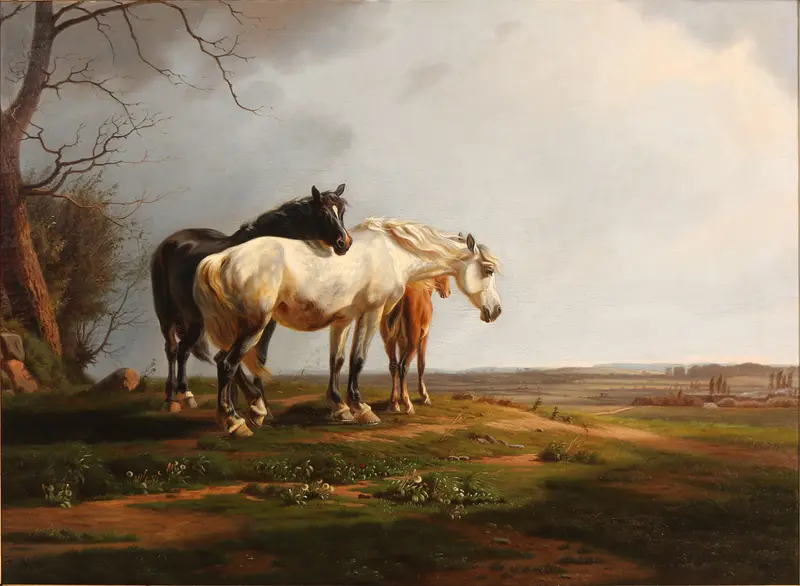
A flock of horses in a field in the sun
Adolf Mackeprang
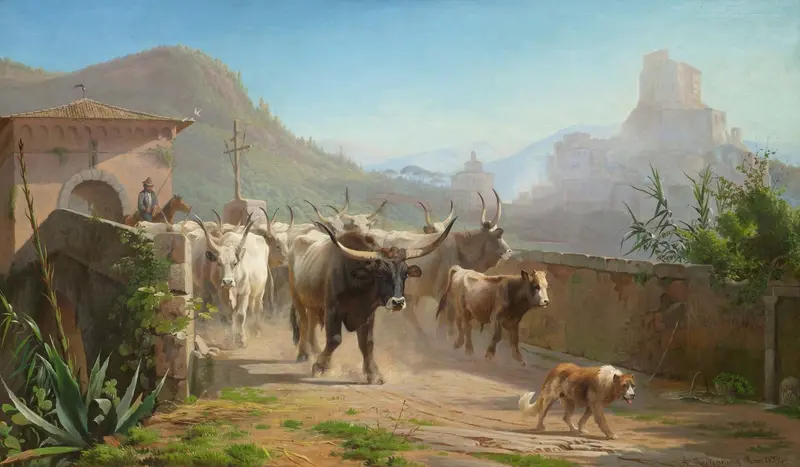
Cattle drive in Italy
Adolf Mackeprang
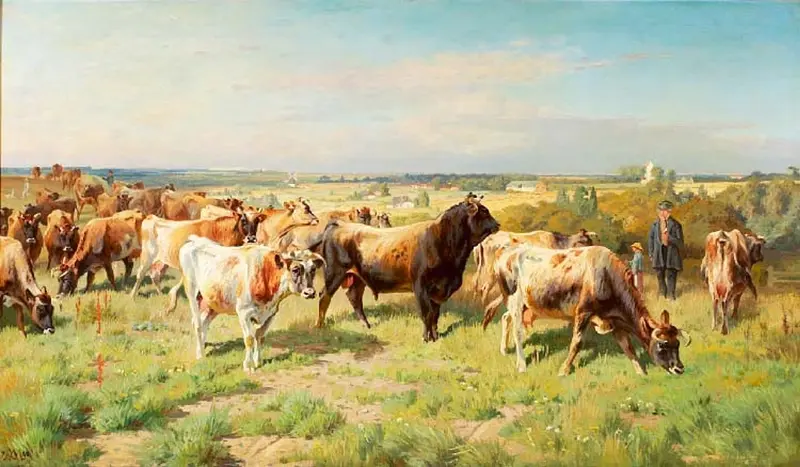
Cattle in the fields.
Adolf Mackeprang

Dogs chasing through a forest.
Adolf Mackeprang
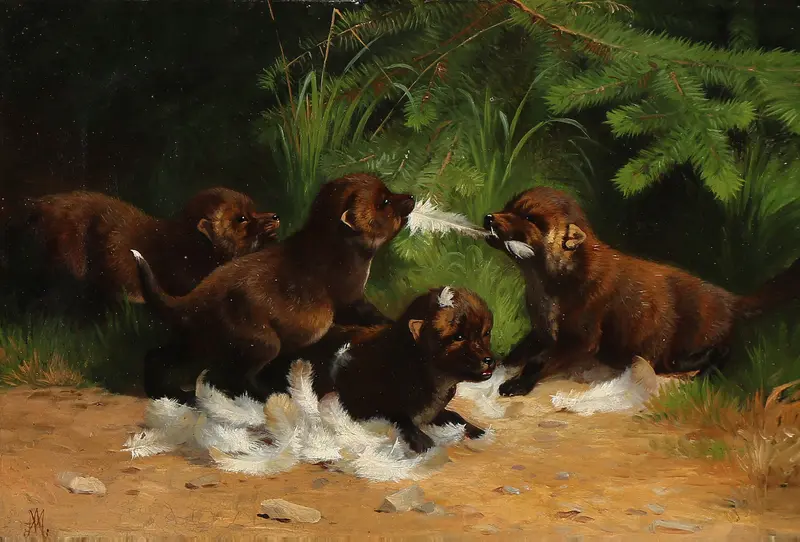
Forest scene with fox pubs fighting over the remains of a bird.
Adolf Mackeprang
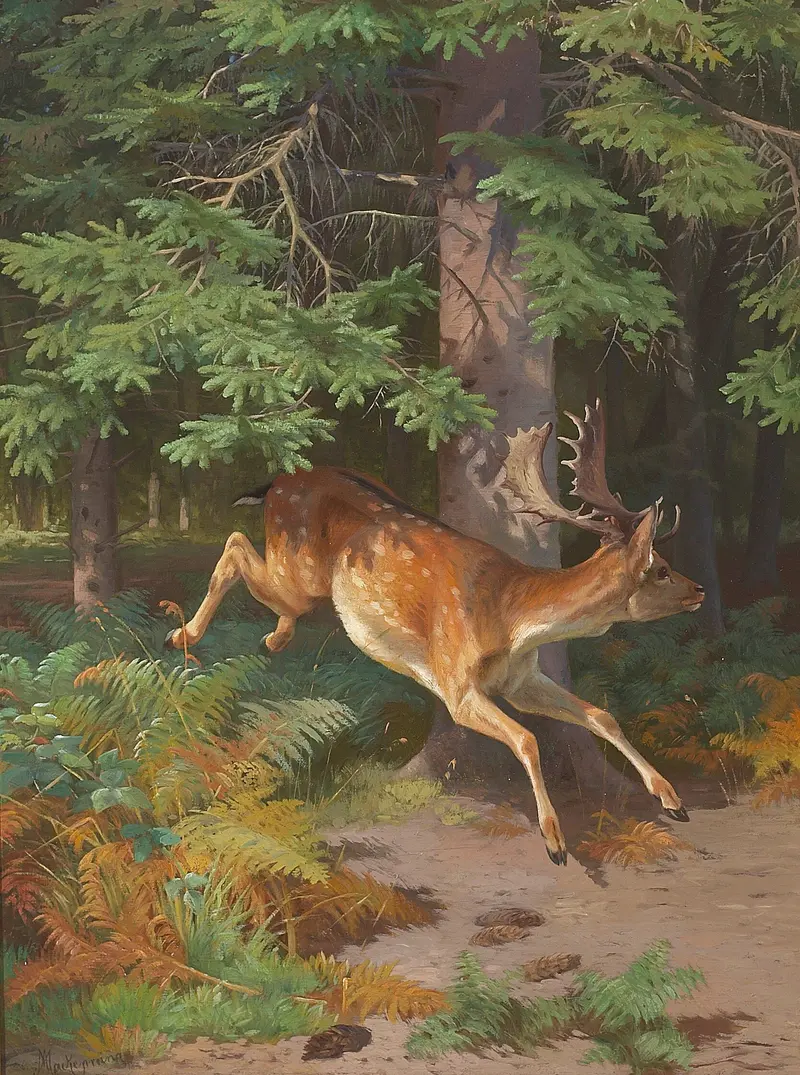
Red deer in a forest clearing.
Adolf Mackeprang





