Two foxes — History & Facts
What first catches the eye is the sly, almost conspiratorial glance of the fox reclining in the foreground, its muzzle parted in a gesture that suggests both satisfaction and alertness. The scattered white feathers and limp bodies of birds at its paws speak to a recent hunt, while the second fox, half-shaded under the dense foliage, pauses in the act of licking its paw—a moment of calm in the aftermath of action. The painter, Adolf Mackeprang, uses the dappled light filtering through the leaves to draw the viewer’s gaze from the lush greenery above, down to the vivid russet fur and then to the stark white of the prey.
Each detail—the glint of an eye, the twitch of an ear, the fly hovering over the spoils—serves to heighten the sense of immediacy, as if the scene might shift at any moment. Created in 1874, this painting belongs to a period when animal subjects were prized for their realism and narrative power, especially in Northern Europe. Works like this were often commissioned by collectors with a taste for the natural world, reflecting both a fascination with wildlife and a desire to capture fleeting moments of animal behavior. The painting’s journey has brought it to a Zurich auction in 2013, but little else is recorded about its travels or its patrons.
Such obscurity is typical for many works outside the canon of celebrated masterpieces, yet it only sharpens our attention to the vivid life contained within the frame. The foxes, caught between shadow and sunlight, invite us to linger and wonder what wild drama has just unfolded—and what might come next.
More Artworks by Adolf Mackeprang

Vixen with puppy at the edge of the forest
Adolf Mackeprang
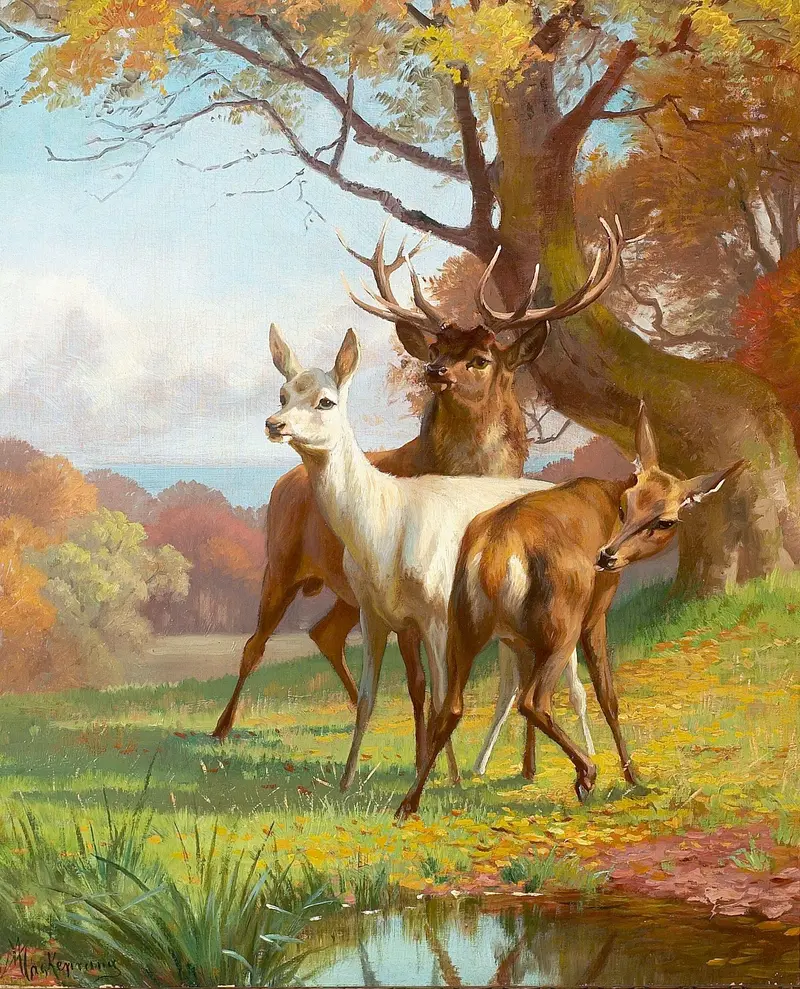
Forest scene with red deer.
Adolf Mackeprang
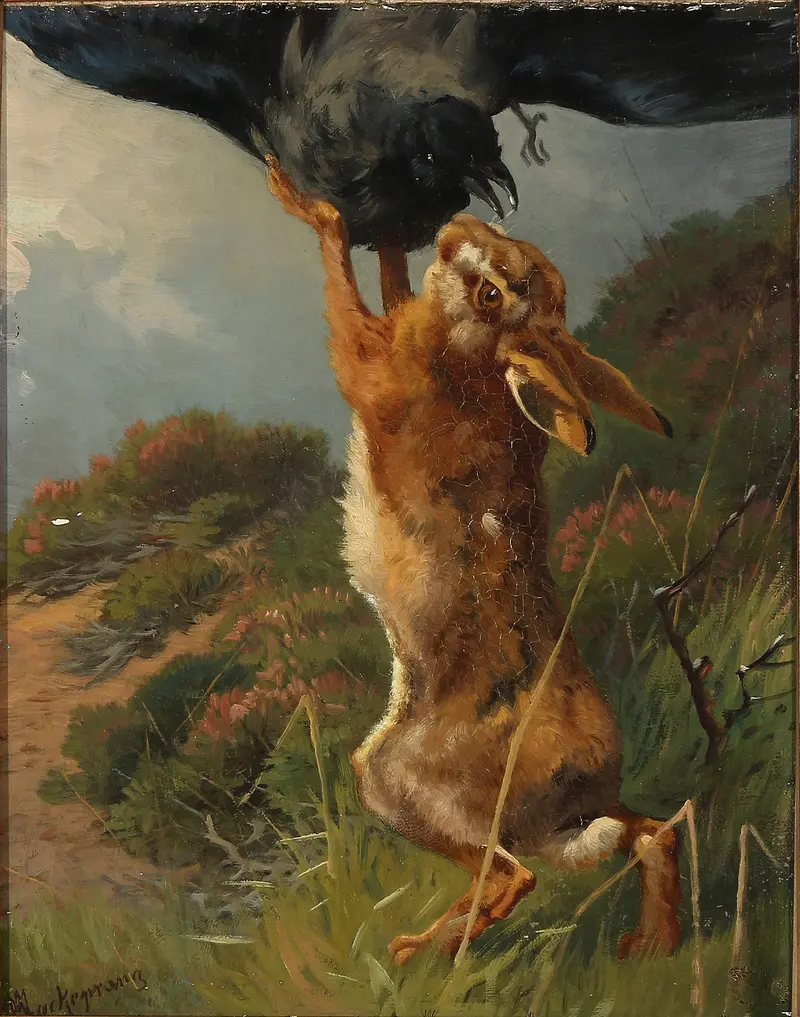
Young hare attacked by a crow
Adolf Mackeprang
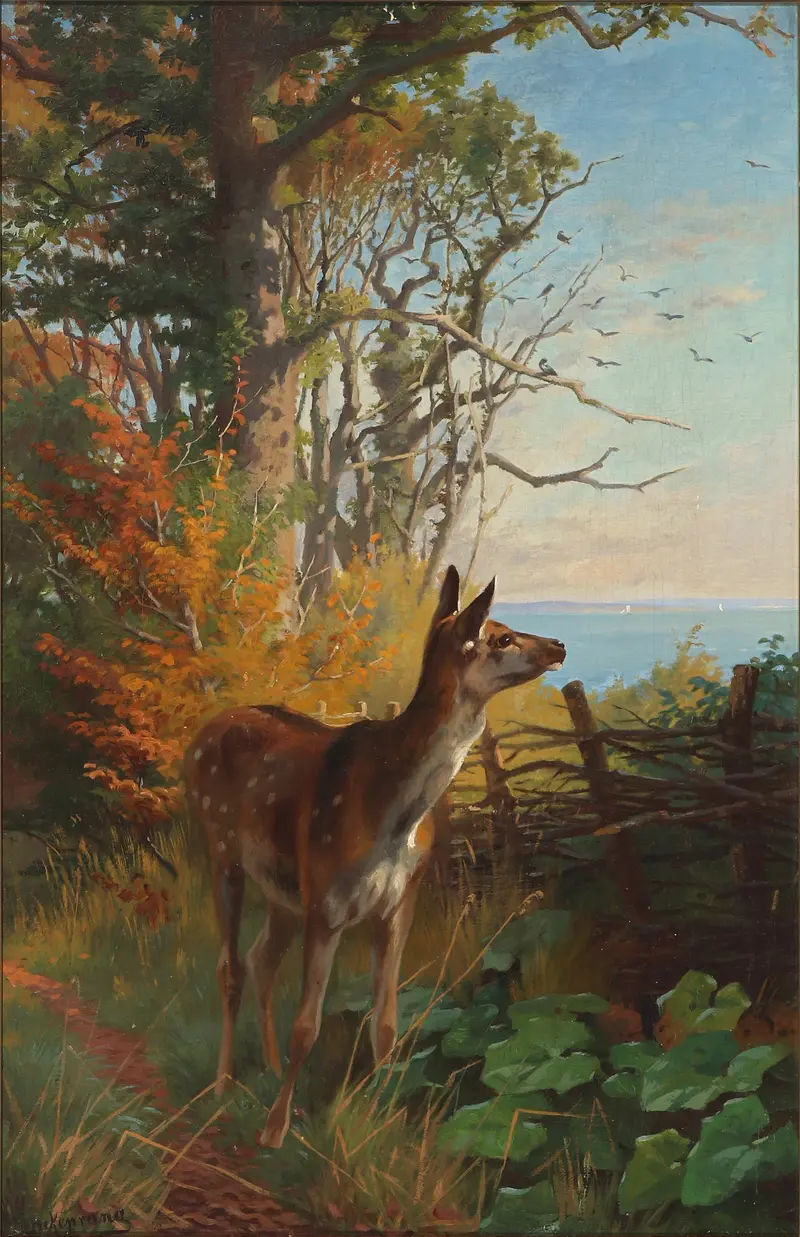
A deer in the forest
Adolf Mackeprang
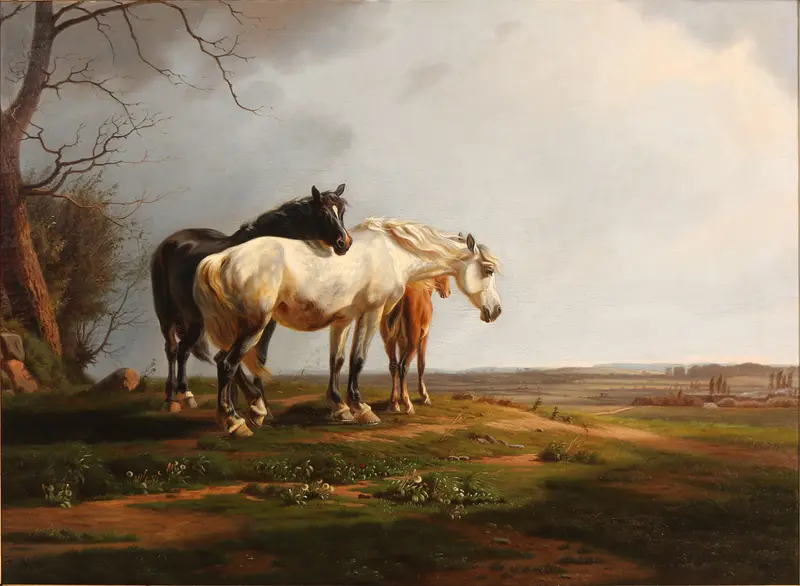
A flock of horses in a field in the sun
Adolf Mackeprang
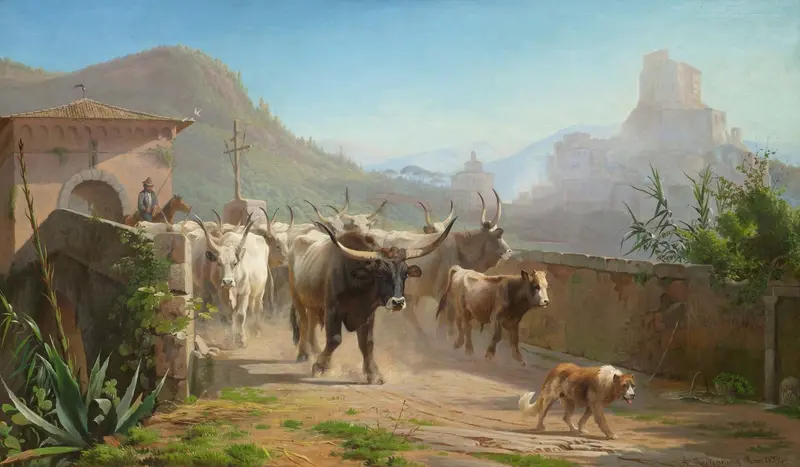
Cattle drive in Italy
Adolf Mackeprang
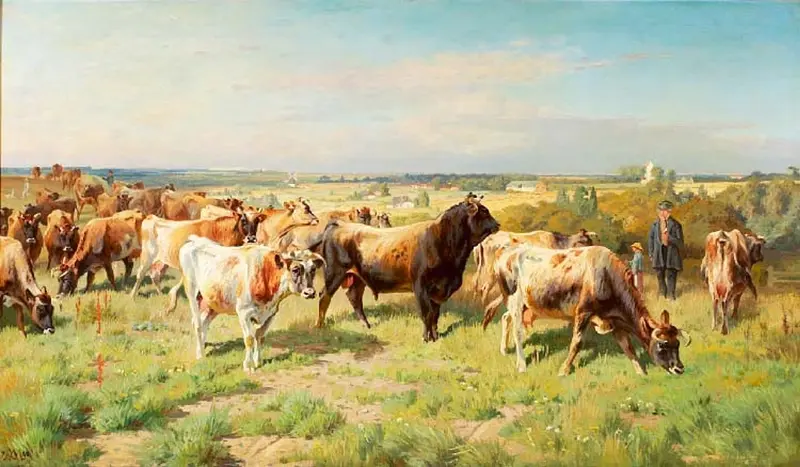
Cattle in the fields.
Adolf Mackeprang

Dogs chasing through a forest.
Adolf Mackeprang
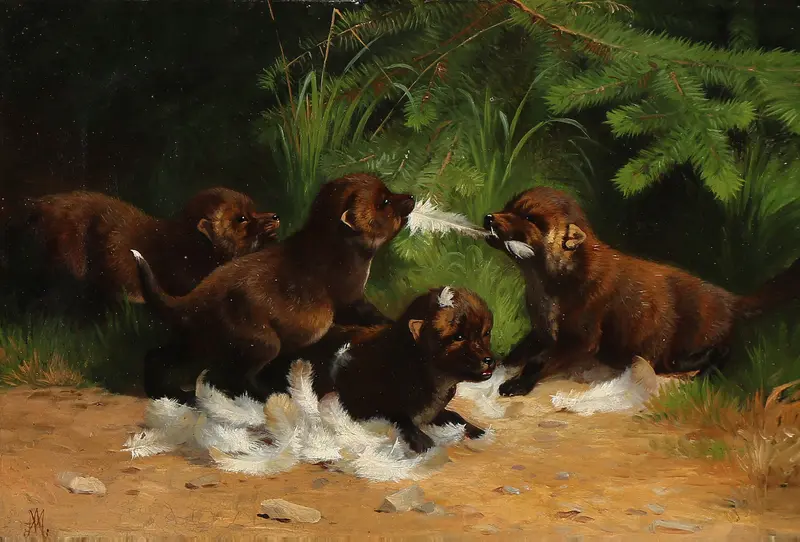
Forest scene with fox pubs fighting over the remains of a bird.
Adolf Mackeprang
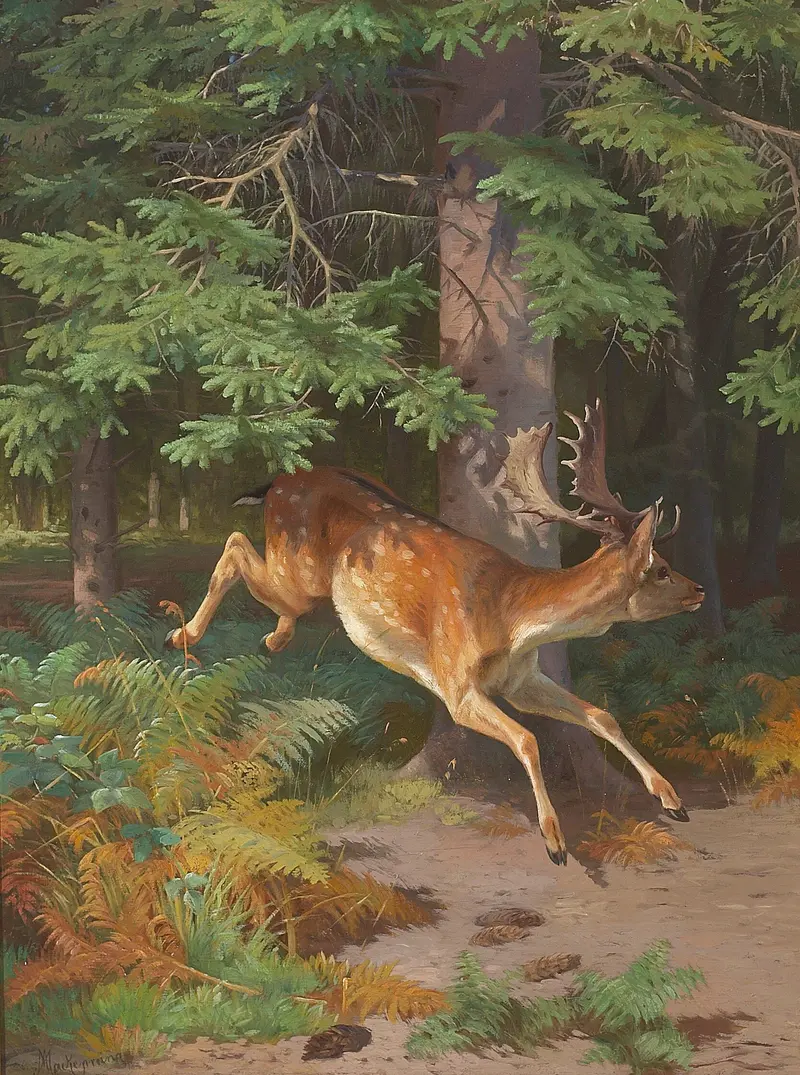
Red deer in a forest clearing.
Adolf Mackeprang