
Cattle drive in Italy — History & Facts
What first draws the eye in Cattle drive in Italy is the commanding presence of the lead ox, its horns sweeping wide, as if parting the very air. The animals surge across a sunlit stone bridge, their hooves sending up a faint haze of dust that catches the morning light. A dog trots at the front, purposeful and alert, guiding the herd with practiced confidence, while a mounted herder keeps watch from behind.
The bridge itself, overgrown with wild plants, hints at centuries of passage, and beyond it, the misty silhouette of an Italian hill town rises, its towers and domes softened by distance. The palette is warm and luminous, the shadows gentle, and the air feels almost tangible—a moment of rural life caught between movement and calm. Painted in 1872, this work belongs to a tradition of 19th-century European landscapes that celebrated both the everyday and the picturesque, often commissioned by collectors eager for scenes of southern sunlight and pastoral order. Artists like Adolf Mackeprang brought a northern eye for detail to Italian subjects, blending documentary precision with a sense of longing for a slower, rural world.
History has kept few traces of this particular painting’s journey, save for its appearance at Koller Auktionen in Zürich in 2013, but its scene remains instantly readable: the timeless rhythm of animals, people, and landscape, each shaping the other. The longer you look, the more the bridge itself seems to invite you to cross—into the painted world, and into the Italy of memory and imagination.
More Artworks by Adolf Mackeprang

Vixen with puppy at the edge of the forest
Adolf Mackeprang
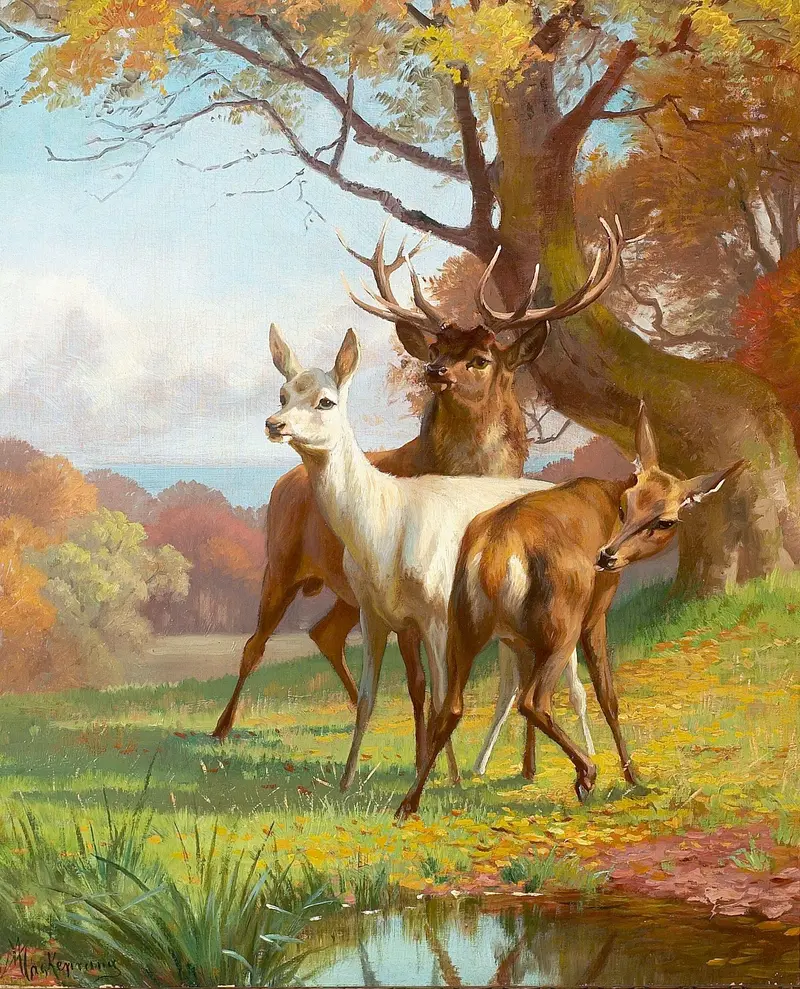
Forest scene with red deer.
Adolf Mackeprang
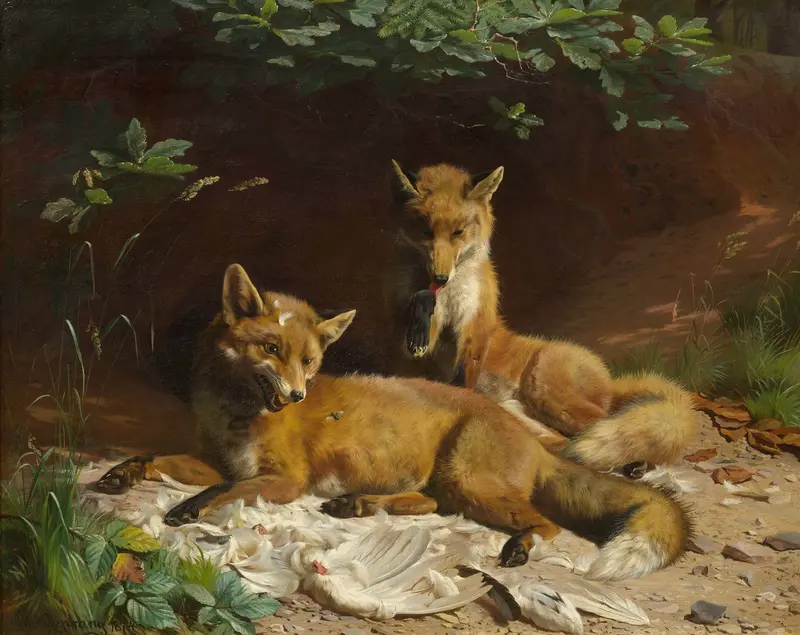
Two foxes
Adolf Mackeprang
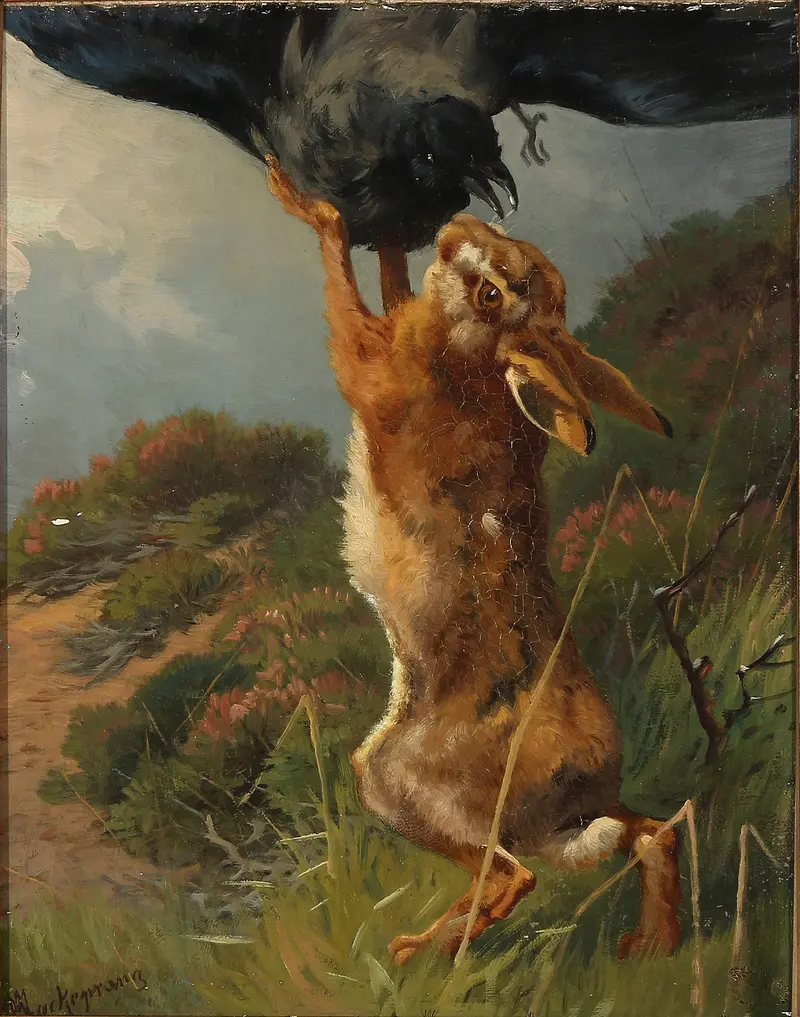
Young hare attacked by a crow
Adolf Mackeprang
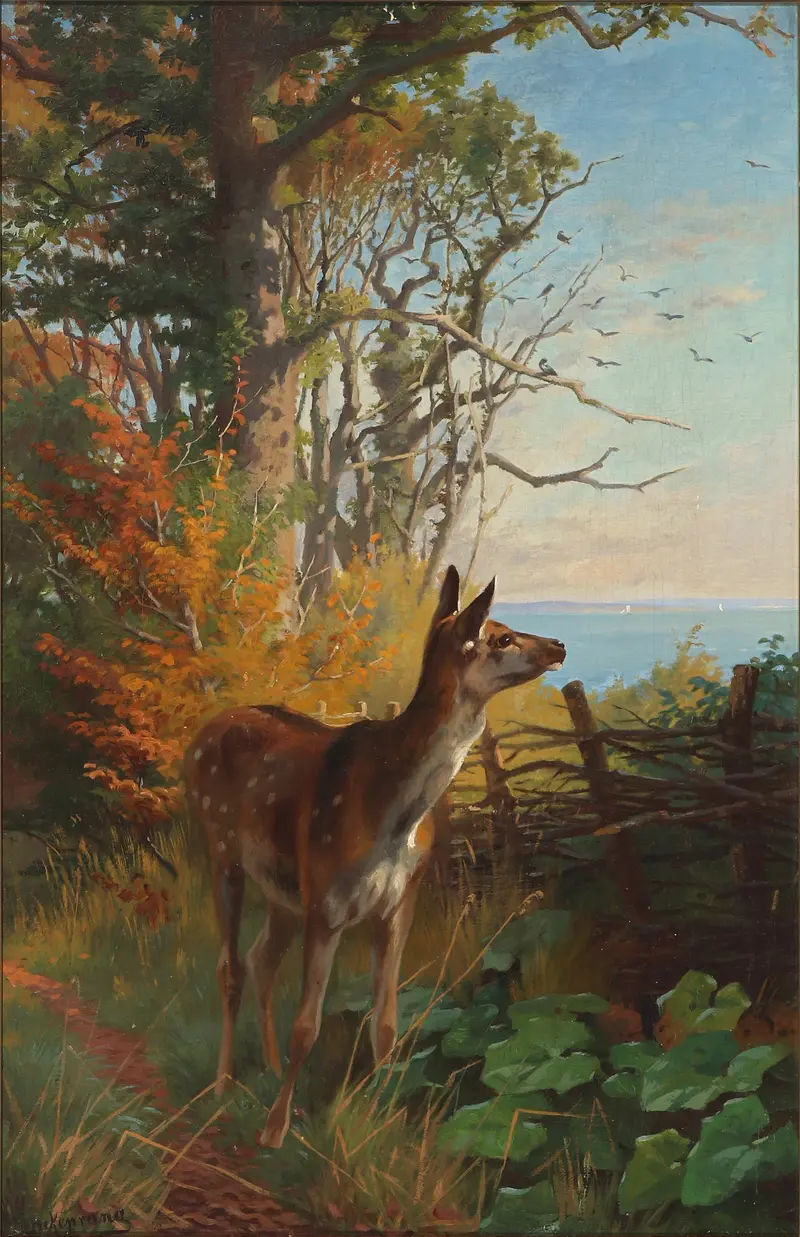
A deer in the forest
Adolf Mackeprang
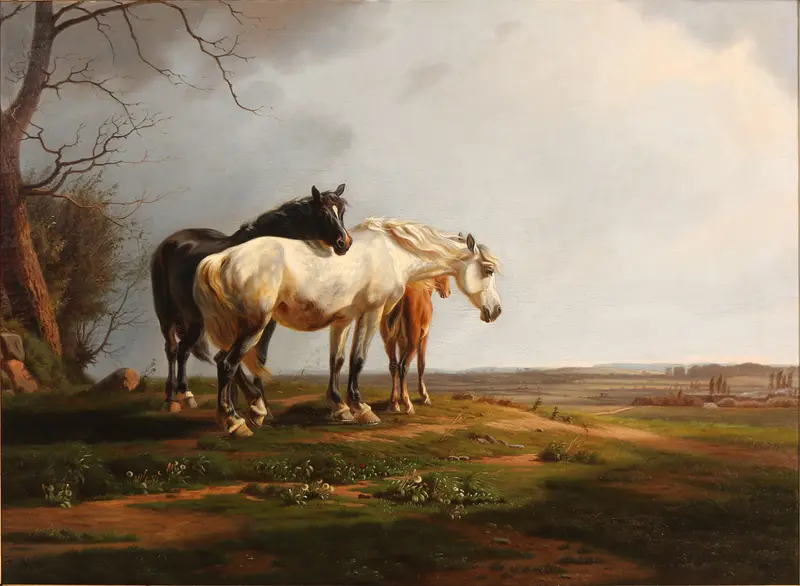
A flock of horses in a field in the sun
Adolf Mackeprang
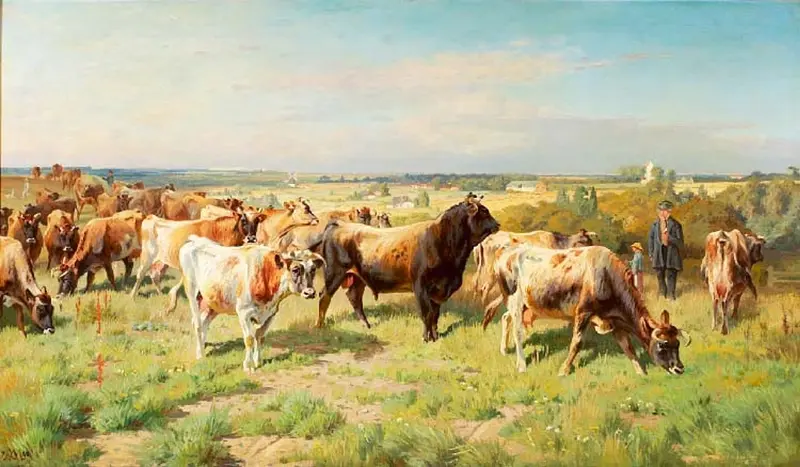
Cattle in the fields.
Adolf Mackeprang

Dogs chasing through a forest.
Adolf Mackeprang
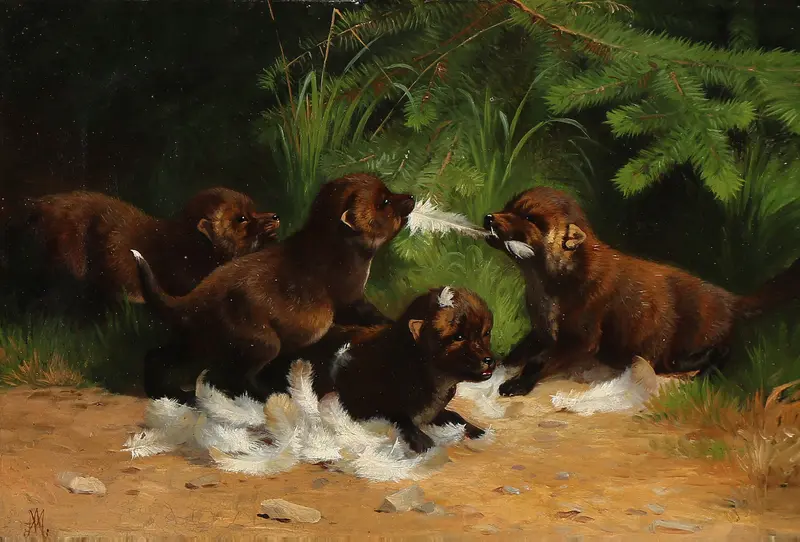
Forest scene with fox pubs fighting over the remains of a bird.
Adolf Mackeprang
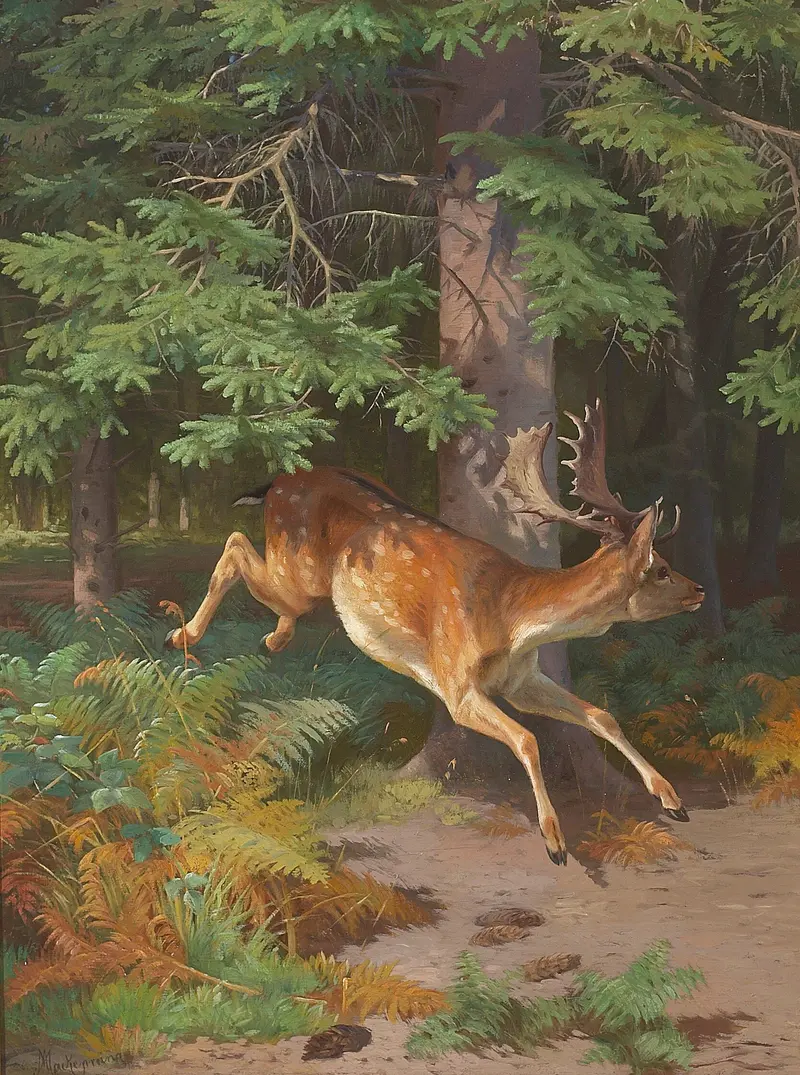
Red deer in a forest clearing.
Adolf Mackeprang
More Landscape Art

The Starry Night
Vincent van Gogh

View of Delft
Johannes Vermeer

Water Lilies
Claude Monet

The Grand Canal, Venice, looking north-west from the Ca' Corner to the Ca' Contarini degli Scrigni, with the campanile of Santa Maria della Carità
Canaletto

Windsor Castle
Canaletto

The Grand Canal looking North-East from the Palazzo Dolfin-Manin to the Rialto Bridge
Canaletto