
Red deer in a forest clearing. — History & Facts
A flash of russet and white leaps through the filtered light, muscles tensed in mid-flight, as if the viewer has startled the forest into sudden motion. The stag’s antlers slice through the dark fir branches, their shadows echoing the animal’s own alertness. Every fern and pine needle is rendered with a careful hand, but it is the animal’s poised energy that commands attention: the painter has frozen a single, fleeting instant, inviting us to imagine what lies just beyond the edge of the frame.
The low viewpoint and the tight cropping draw us into the clearing, turning us into silent witnesses to the deer’s escape. Works like Red deer in a forest clearing by Adolf Mackeprang belong to a tradition that flourished in the second half of the nineteenth century, when the natural world was both a scientific curiosity and a source of national pride. Painters in this period often specialized in animal subjects, responding to a growing urban audience’s longing for wildness and authenticity. Between 1851 and 1911, when this piece was created, such paintings were collected for private homes and hunting lodges, serving as trophies of observation and skill.
History has kept few traces of this particular work beyond its presence in the bruun-rasmussen.dk collection, but its vivid immediacy still asks the viewer to pause and look again—what might the deer have heard, and what else waits in the shadowed green?
More Artworks by Adolf Mackeprang

Vixen with puppy at the edge of the forest
Adolf Mackeprang
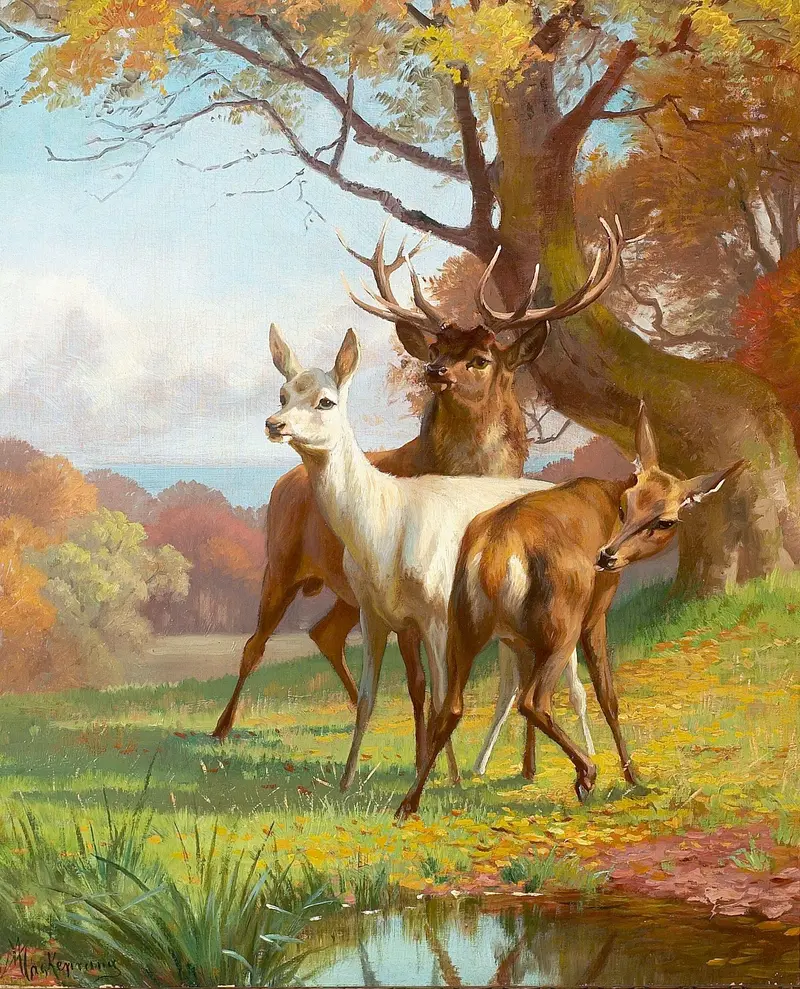
Forest scene with red deer.
Adolf Mackeprang
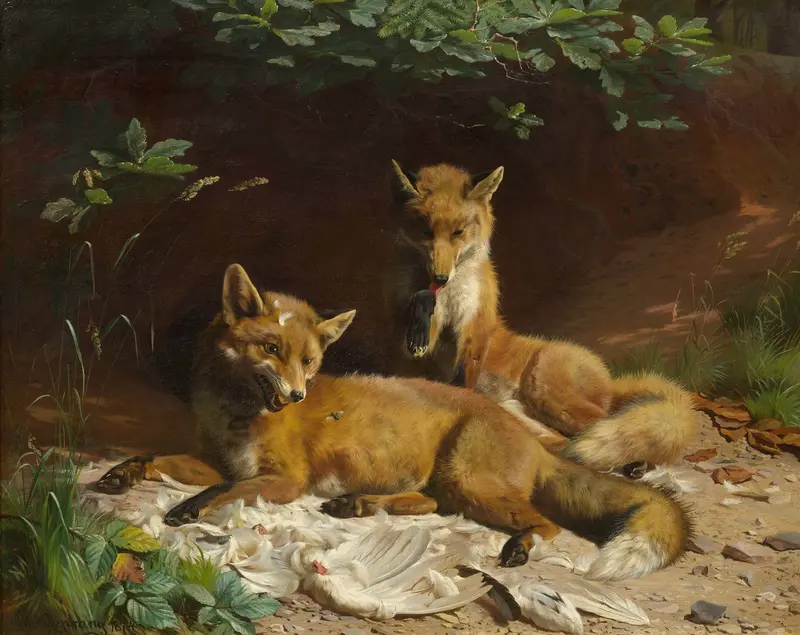
Two foxes
Adolf Mackeprang
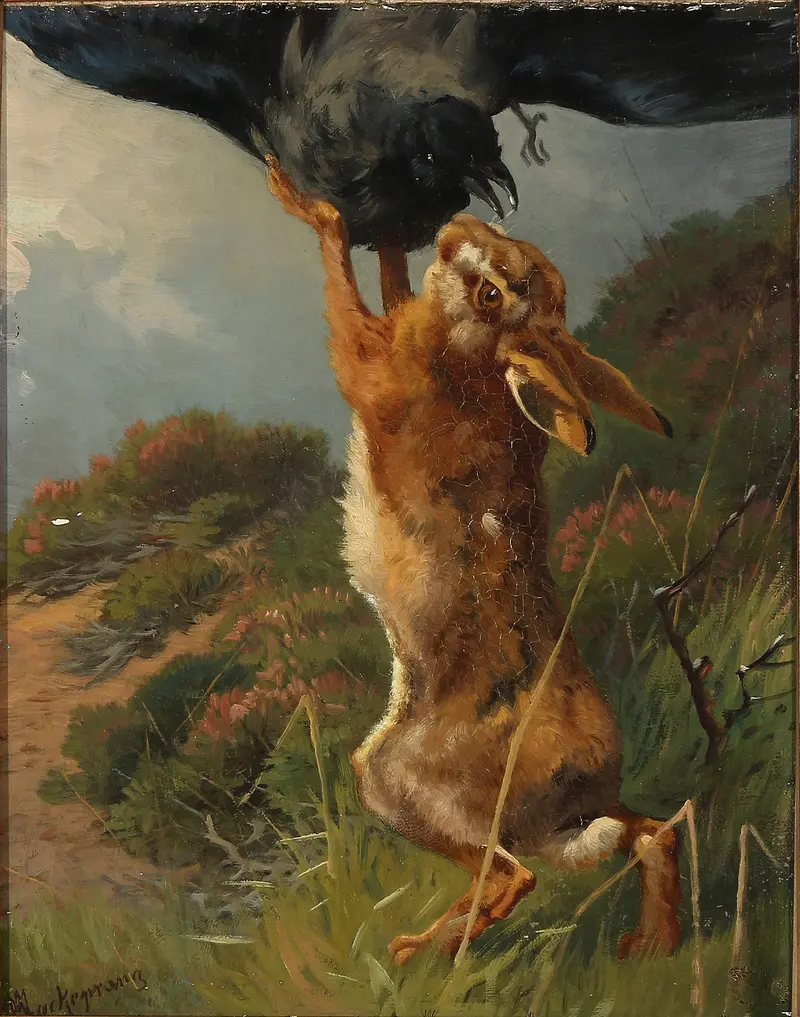
Young hare attacked by a crow
Adolf Mackeprang
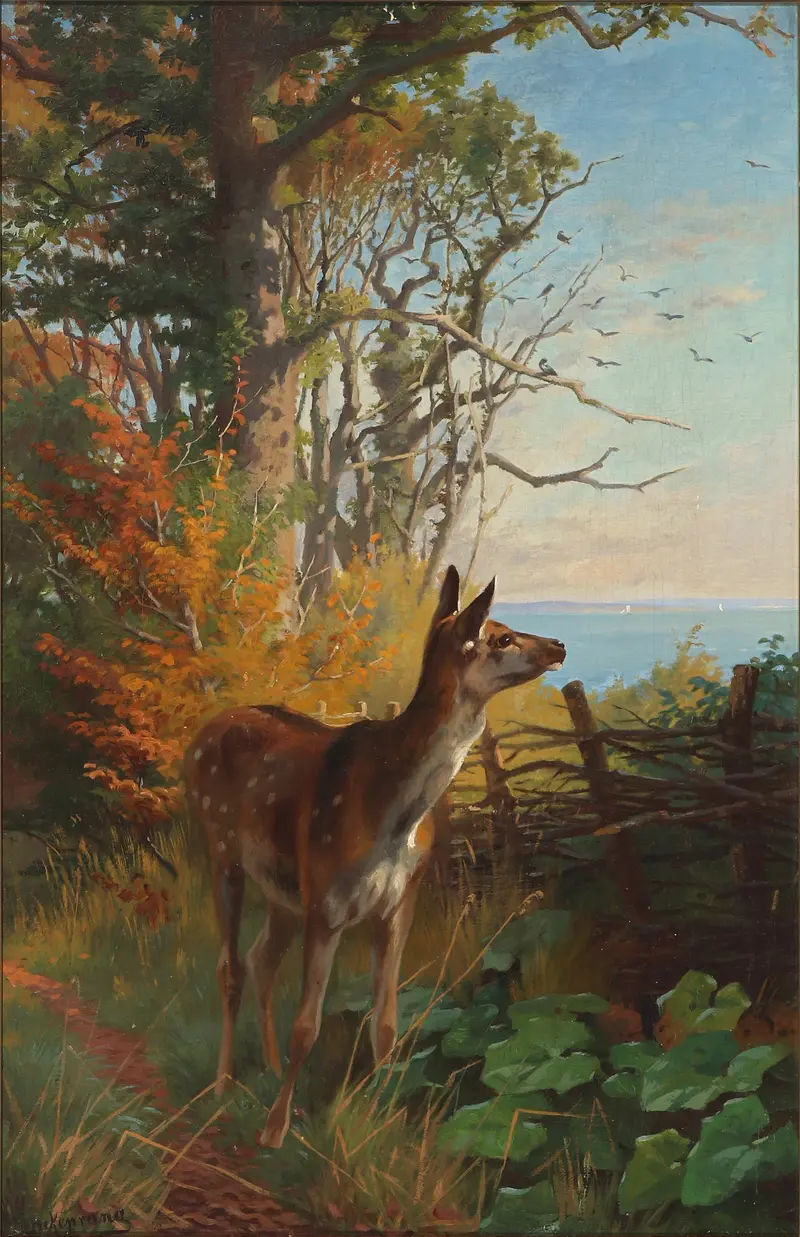
A deer in the forest
Adolf Mackeprang
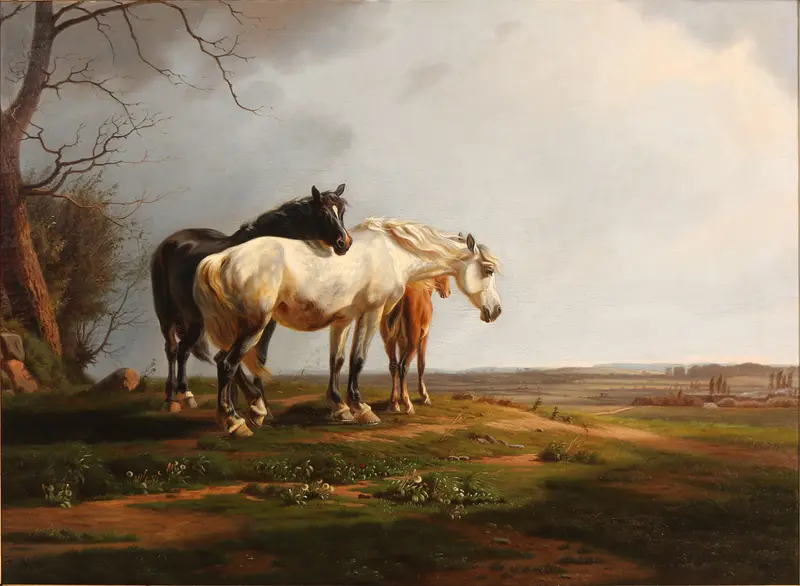
A flock of horses in a field in the sun
Adolf Mackeprang
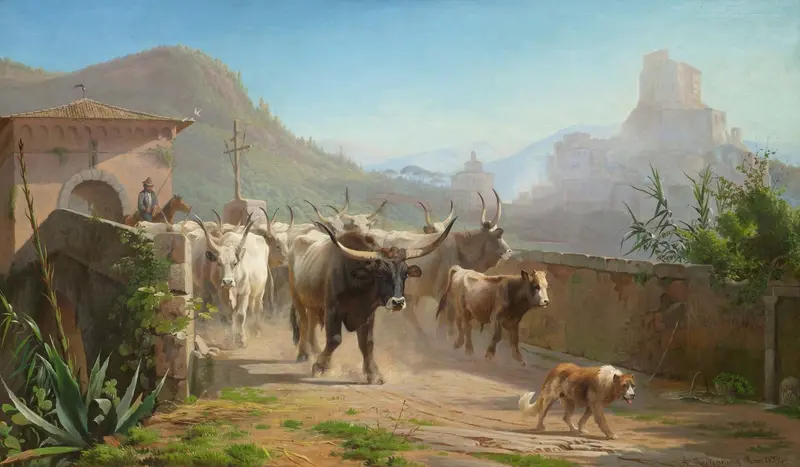
Cattle drive in Italy
Adolf Mackeprang
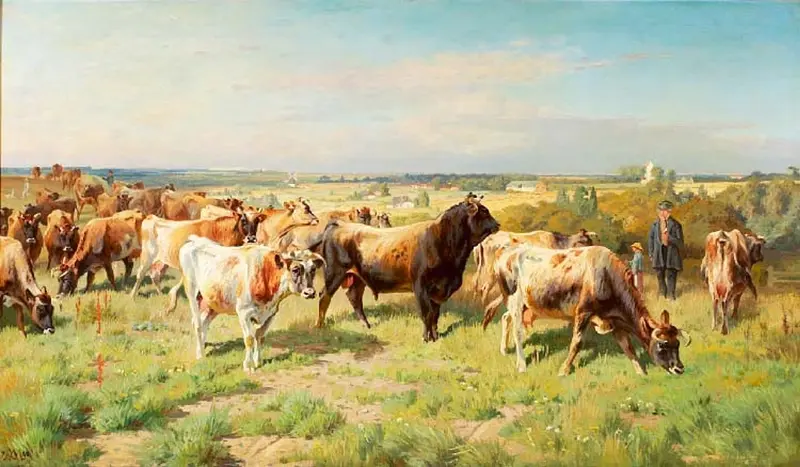
Cattle in the fields.
Adolf Mackeprang

Dogs chasing through a forest.
Adolf Mackeprang
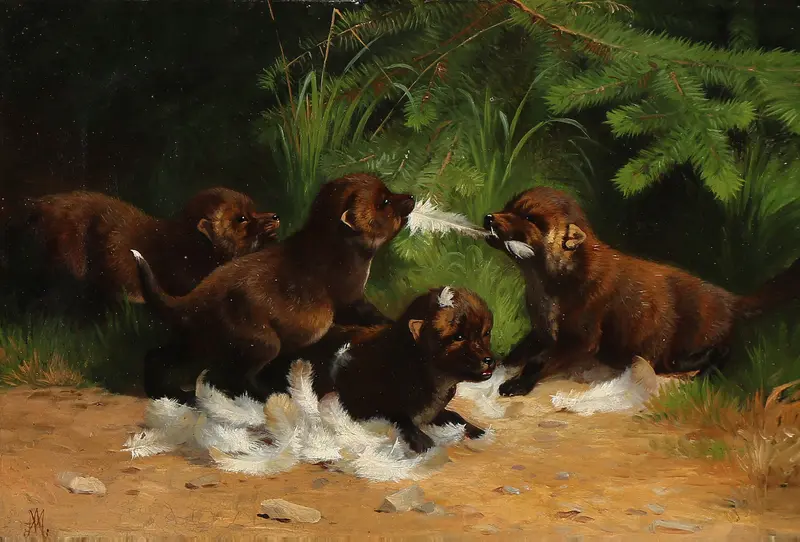
Forest scene with fox pubs fighting over the remains of a bird.
Adolf Mackeprang





